
Tech
What Is My Real Salary: German Tech-Salary Calculator
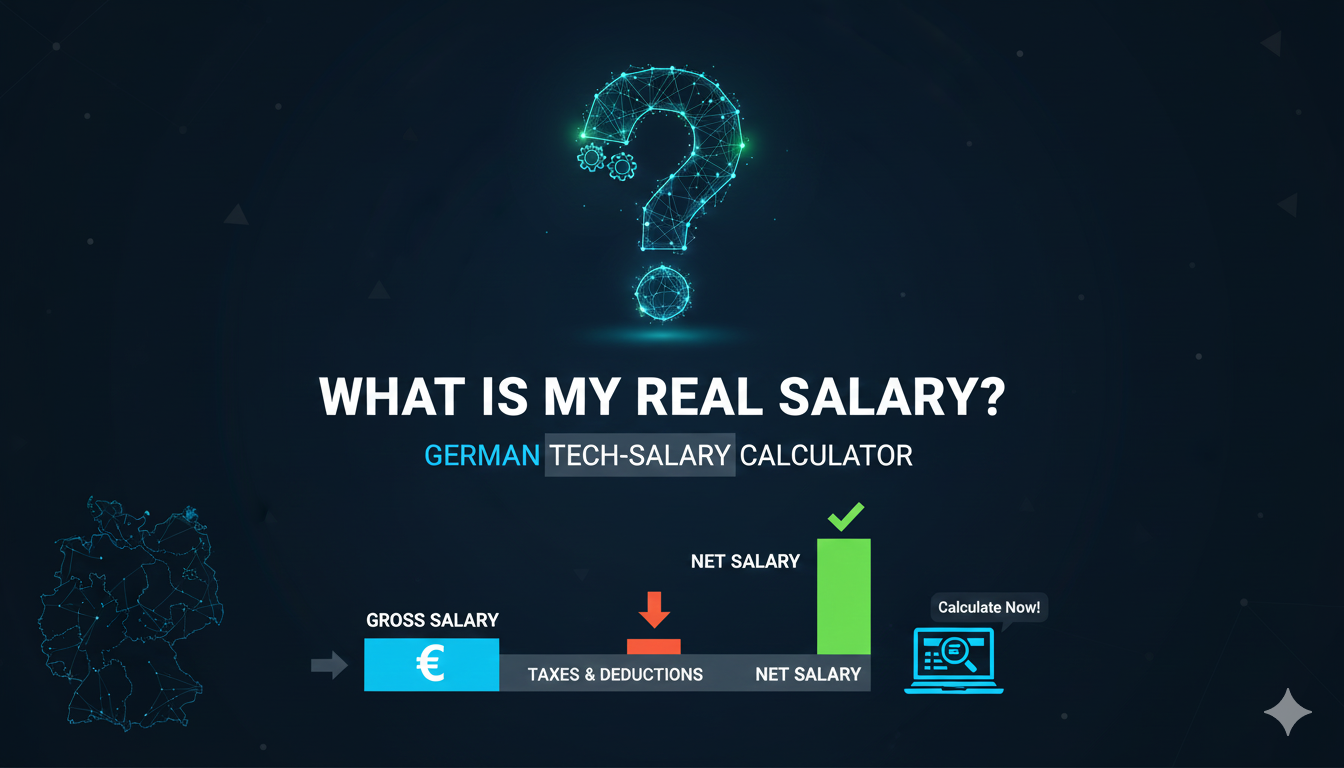
It would be challenging to navigate the compensation packages in the technology sector of Germany’s booming economy using just the gross salary. If the tech workers move to Berlin, Munich, or any other German city, they often find that they must do a number of calculations, including the income tax rate, social security benefits, and other deductions, before they can calculate their take-home pay. In this case, using certain tools is necessary to make well-informed career decisions.
Why It’s Hard to Use German Salary Calculators
Germany has a progressive taxation system, i.e., the more the income, the higher the percentage of tax the earner is supposed to pay. This complication is exacerbated among the tech workers through solidarity surcharges, church tax choices, and mandatory social contributions, which cover health insurance, pension, unemployment, and long-term care insurance. The German net salary calculator helps demystify these calculations by breaking down exactly what happens between gross salary and actual take-home pay.
German payroll implies a number of layers in comparison to simple percentage deductions. An engineer in Munich making EUR 80,000 annually is not going to automatically pay a flat tax of 30% on that income. Rather, it is calculated considering tax class (Steuerklasse), which is different depending on marital status and family status, and regional variations that influence the ultimate net income calculator in Germany.
Understanding Gross to Net Salary in Germany
The journey from gross to net salary in Germany follows a specific calculation sequence. The first and most obvious is the deduction of social security contributions, which is normally approximately 20%, shared between the employee and the employer. The contributions fund healthcare, pension plans, and unemployment insurance, which cover one out of every person in the course of his/her career.
The social contributions are followed by the income tax, which is gradually imposed. In the existing laws, the first level of earnings is protected by the tax-free allowance incremental rates. The solidarity surcharge is a small percentage tax that is utilized to fund infrastructure building in the eastern states of Germany. For tech professionals, understanding these layers proves essential when comparing job offers across cities, like Berlin, where salary calculator searches might show opportunities in Hamburg salary calculator regions or positions requiring a Munich salary calculator assessment.
The German tax deduction calculator reveals that tech workers in higher salary brackets might see 40-45% total deductions, while those earning below EUR50,000 annually often experience deductions closer to 30-35%. These statistics demonstrate how effective calculation tools are for financial planning.
Salary Calculator Ultimate Guides Germany
With monthly earnings keyed into a special German income calculator, there is instant understanding. German tax algorithms are applied to your gross income, and applicable social contributions are charged; the system gives the correct net amounts of income. This German tax calculator functionality helps tech professionals understand exactly what will appear in their bank account each month.
Such transparency is handy, particularly in salary negotiations. Tech professionals can confidently discuss compensation, knowing their actual take-home pay calculator Germany results, rather than being surprised by their first paycheck. The tool essentially functions as a comprehensive German employee cost calculator from the worker’s perspective.
Global Salary Analyzer: Compare Your Salaries around the World
International salary comparison tools are important because tech talent is increasingly considering opportunities across multiple countries. crucial. Professionals can use a salary calculator to determine German salaries and compare them to those in the US, Japan, China, and other European countries. This global salary comparison tool takes into consideration the cost of living, social benefits, and distinct tax systems of each nation.
The international salary calculator reveals surprising insights. Considering the spending in healthcare, we find that the pension schemes and the purchasing power mean that a EUR70,000 position in Berlin can receive higher pay than a 95,000 position in San Francisco. Similarly, comparing German opportunities against Asian markets through a cross-country salary calculator shows how comprehensive social benefits in Germany often compensate for nominally lower gross salaries compared to places with minimal social safety nets.
Global salary calculator tools provided by platforms like Salary-Calculator.ai incorporate real-time market data and tax regulations across regions. This global salary benchmarking capability helps tech professionals make strategic career moves based on actual earning potential rather than gross figures alone. The worldwide wage data considers not just taxation but also mandatory contributions, healthcare costs, and typical deductions that vary dramatically between countries.
How to handle Regional Disparities in Salaries in Germany
The difference in the technology wages in the German states and cities is massive. Since the environment in Munich is highly technical and the cost of living is also high compared to Leipzig, a senior developer job in Munich would gross higher. But due to progressive taxation, higher gross earnings are not necessarily the same as higher net earnings, as is shown by the comparison of the German city salaries.
Salary calculator Germany functionality reveals regional nuances. The city of Stuttgart, with its technology industries in cars, and the state of Baden-Württemberg do not share the compensation patterns with the startup culture in Berlin or the electronics agency industry in Hamburg. Understanding these variations through average salary in Germany calculator tools helps professionals target job searches effectively.
The compensation package of tech locations like Munich, Berlin, or Hamburg is not the same. In most of the technology jobs, Munich is a leader in terms of gross salaries on an absolute basis, but it has the highest living costs in Germany. Berlin has decent salaries and an equally low cost of living compared to Hamburg, which balances the pay of good technology with the quality of life allowances.
How Can Salary-Calculator.ai Help Improve Global Decision-Making?
Salary-Calculator.ai is an AI-powered tool to address these calculation issues, specifically, and it is an intuitive one. Rather than incurring the expense of conducting manual research on the tax rates, as well as the social contribution rates, the tech professionals are made aware of their own salaries according to their positions, industries, and locations across the entire globe. The software combines feedback from users and real market data to deliver accurate forecasts.
The presence of concrete calculators in France, Germany, Japan, the UK, the US, and China can enable the user to pursue opportunities in significant tech markets simultaneously. The system illustrates the impacts of income taxes, deductions, and contributions in each location on the net salary in a particular place. This global salary insights capability transforms abstract gross figures into concrete take-home pay calculator information.
To any software engineer thinking of the opportunities, Salary-Calculator.ai offers a reply to the following significant inquiries: How much am I able to earn in Berlin or London? or tally my post-tax income in Munich and Tokyo. The platform’s international compensation planning tools eliminate guesswork from career decisions.
Conclusion:
In a valuable manner, the tech workers may plan their career path with the appropriate salary information that is offered by such tools as Salary-Calculator.ai. Regarding efforts to venture into Germany and pursue opportunities, as well as international careers, the real earning potential can be determined to inform decision-making. The platform’s global workforce compensation insights reveal not just numbers but career possibilities.
The future is salary transparency; available, specific calculation applications will demystify complex tax systems around the globe. As remote work increases opportunities across borders, the ability to swiftly compare salaries internationally is becoming increasingly crucial. If tech workers have access to a comprehensive salary benchmarking tool, they can optimize their careers based on actual financial outcomes rather than just gross salary figures.
To any German-based user or a user who is just window shopping around the world of technology employment, the task of the compensation analysis can be made into a digestible and not a perplexing affair, and the process of making a decision can be done on a holistic financial platform, once using AI-assisted salary calculation tools.