
10th Indian Delegation to Dubai, Gitex & Expand North Star – World’s Largest Startup Investor Connect
AgriTech

VCs Elad Gil and Sarah Guo on the risks and rewards of funding AI: “The biggest threat to us in the short run is other people”


Last week, at our first StrictlyVC evening of the year, prominent AI investors Elad Gil and Sarah Guo joined us in San Francisco to talk about how they think about AI investing in a world where deals were getting bid up feverishly two months ago, and where reportedly, some startup teams are now looking to sell because of the costs involved with building their software.

We talked about some of their deals, whether valuations have gotten wildly ahead of themselves, and also how the two — who cohost a popular AI podcast together —  operate.

Gil, for example, has reportedly raised more than $2 billion from investors in the last couple of years, money that he is investing almost single-handedly. At the event, he declined to confirm that amount but said that he always pulls in support of some kind. For example, after a former chief of staff founded his own company, Gil hired a couple of “highly technical” hired hands to help him understand some of the new tech bubbling up. One of these is Shreyan Jain, a former software engineer at Ramp who has two computer science degrees from MIT,  and who has “built an embedding playground” with another engineer in Gil’s orbit so they can “basically swap in and out any underlying vector [database] in any embedding framework, so we can play around with different tools,” said Gil.

Gil — who also pours his own capital into deals despite raising so much from outsiders — also underscored the importance of creating clear guidelines with one’s own investors to get ahead of perceived conflicts of interest. “If you have that clarity of how you’re going to act, it makes a huge difference. It gets rid of ambiguity, it gets rid of uncertainty, it gets rid of the [bad] feelings,” he said.
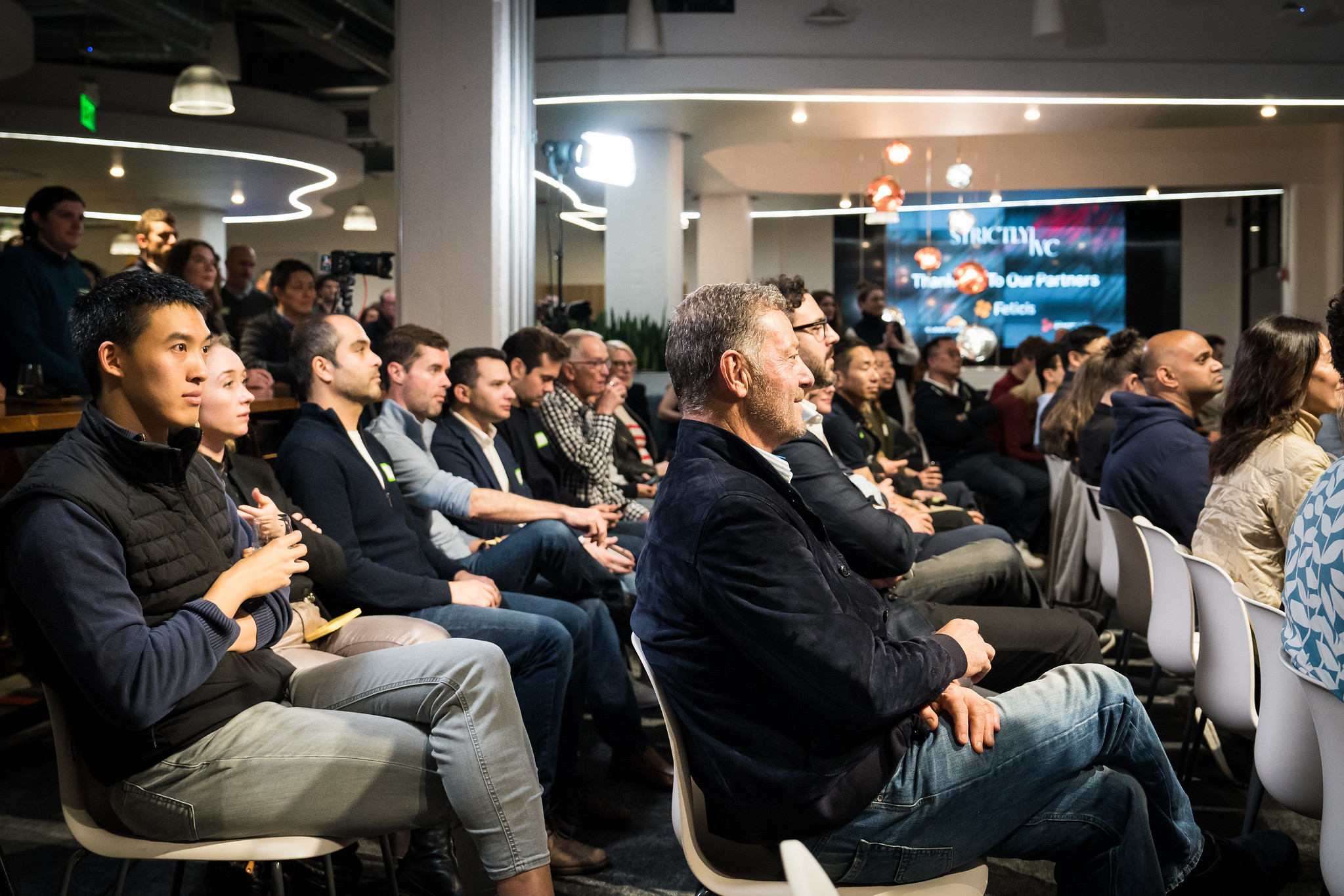
Image Credits: Slava Blazer /


Guo is taking a more traditional approach with her year-old firm, Conviction. Calling it a “baby little $100 million fund” compared with Gil’s billions of assets under management, Guo says she has already brought aboard two other investors, a talent partner, and an operations person. She also said she has enough skin in the game that she doesn’t take lightly any decisions in the “relatively concentrated portfolio” that her team is building. “I’m a large investor in my own fund,” she said. “Like, I actually need the companies to work over time.”

If you want to hear more specifics about their respective approaches to funding deals (they have both invested in Harvey and Mistral, among other companies); how they protect themselves in case they fund AI tech that’s later abused; what they see as the biggest questions as it relates to today’s foundation models like GPT-4, and why Gils is so concerned with “French values,” do check out our conversation.

For what it’s worth, Gil says during this discussion that he has probably invested the most over time in the defense tech company Anduril, whose cofounder Trae Stephens, is speaking at our next StrictlyVC event in Los Angeles on February 29.

If you want to check that one out in person, you can learn more here. Our San Francisco event sold out (and was very fun). We expect this next one to sell out, too, so don’t wait too long if you’d like to come.

(Special thanks to Cloudflare for letting us use its beautiful San Francisco headquarters.)



Source link

by Vivek Kumar

Atlassian, a leading provider of team collaboration and productivity software, has launched its latest research report, the AI Collaboration Index 2025. The report highlights that 77% of Indian knowledge workers now use generative AI daily, a significant rise from 46% in 2024. This outpaces counterparts in regions including the US (59%), Germany (54%), France (47%), and Australia (45%). The report, commissioned by Atlassian’s Teamwork Lab, surveyed more than 12,000 knowledge workers worldwide, including over 2,000 respondents in India. It explores how individuals and teams are adapting to the surge in AI adoption, highlighting both major productivity gains and persistent challenges in collaboration. Even during the early stages of AI adoption, India’s workforce is seeing significant individual productivity benefits. The report found Indian professionals are saving an average of 1.3 hours a day using AI – compared to a global average of just under one hour. How Indian business leaders model AI use has also had an immense impact on their teams. The Index found workers whose managers model AI use are four times more likely to integrate it throughout their daily workflows and three times more likely to become ‘strategic AI collaborators’, meaning they use AI as a team of expert advisors who can enhance decision making. Molly Sands, Head of the Teamwork Lab at Atlassian, said, “India has become one of the fastest-growing regions for everyday AI use in the workplace. But our research shows that ramping up individual productivity with AI isn’t necessarily translating into real business impact. The next wave of value comes from using AI to connect knowledge, coordinate work, and align teams – bridging silos and driving action on shared goals – we must see knowledge workers shift to become strategic AI collaborators. Organisations that move beyond isolated efficiency gains, of simple AI users, and focus on AI-powered collaboration will unlock the full potential of their people and resources.” Additional Key Findings from India: While much research focuses on AI adoption, the Atlassian AI Collaboration Index 2025 goes further, exploring how people perceive AI’s role in the workplace and its broader impact on how we work. The report emphasizes the need for a mindset shift to unlock AI’s full potential, moving from AI as a tool for individual efficiency to AI as a collaborative teammate capable of transforming teamwork. This shift is crucial for Indian organizations to fully capitalize on AI’s opportunities. The AI Collaboration Index 2025 also warns that overemphasis on personal productivity could cost the Fortune 500 an estimated $98 billion annually in lost returns on AI investments. Instead, Atlassian advocates for a shift towards AI-powered teamwork practices, including:

by INC42

Whatever we gather for cooking isn’t consumed entirely. In fact, a large part of the food meant for human consumption remains unused every day. That’s where food can be converted to feed. It’s green, it’s clean, and it guarantees zero landfill, claims Wastelink.  “The science behind our business lies in the food that was destined for humans but could not reach humans for supply chain issues. It can be best utilised to feed animals,” said Saket Dave, whose Wastelink is trying to address two issues with one solution.  After… Source link

by Vivek Kumar

Two Brothers Organic Farms (TBOF), the farmer-owned regenerative food company, recently launched a compelling new brand film this August in celebration of India’s Independence Day. Premiered on the company’s official YouTube channel, the film delivers a bold and timely message: true freedom lies in the power to choose food that is pure, honest, and deeply rooted in intention, food that nourishes both people and the planet. The film traces the journey of TBOF from a single farm in Maharashtra started by two brothers, to a nationwide movement empowering 20,000+ farmers and reaching 700,000+ customers in over 65 countries. “We industrialised, globalised, standardised. But we broke our food system, our soil, our health” says Ajinkya Hange, Co-founder & Farmer of Two Brothers Organic Farms. The narrative is based on the real-life journey of co-founders Mr. Satyajit and Mr. Ajinkya Hange, who left their corporate careers to return to their ancestral village in Maharashtra and rebuild a system that puts farmers and the soil first. Two Brothers Organic Farms seeks to inspire a new generation not just to eat better, but to think differently about food, sustainability, and agriculture. Launched during India’s Independence Day week, the brand film is a compelling call to action: to seek freedom from artificial ingredients, and factory-processed foods. Through this campaign, the brand aims to spark a deeper conversation around food and freedom, urging consumers to question what’s on their plate, make conscious choices, and take pride in India’s rich agricultural heritage. It’s a reminder that true independence lies in everyday decisions that shape our health, our farmers’ livelihoods, and the future of the planet. The film also captures TBOF’s scale and integrity, showing its mega kitchens in Bhodani, its real-time traceability technology, and its upcoming warehouse expansions. Every aspect of the brand’s supply chain is backed by third-party testing and global certification standards, while farmer training programs continue to expand across India. The film reinforces that TBOF’s greatest strength lies in its people -farmers, cooks, villagers, and the communities who are redefining what it means to grow and consume food. “We are not just a brand; we are a movement to Fix the broken food system” says Satyajit Hange, Co-founder & Farmer of Two Brothers Organic Farms, the brand is redefining what it means to build a brand rooted in purpose, powered by people. “Through this campaign, we want to highlight that food sovereignty is a form of freedom too, the freedom to grow, eat, and live with dignity. We are redefining what it means to build a brand rooted in purpose and powered by people” The film reflects TBOF’s mission to build a future where food is nourishing for the soil, the farmer, and the consumer and redefines progress by returning to roots.






