
10th Indian Delegation to Dubai, Gitex & Expand North Star – World’s Largest Startup Investor Connect
Tech

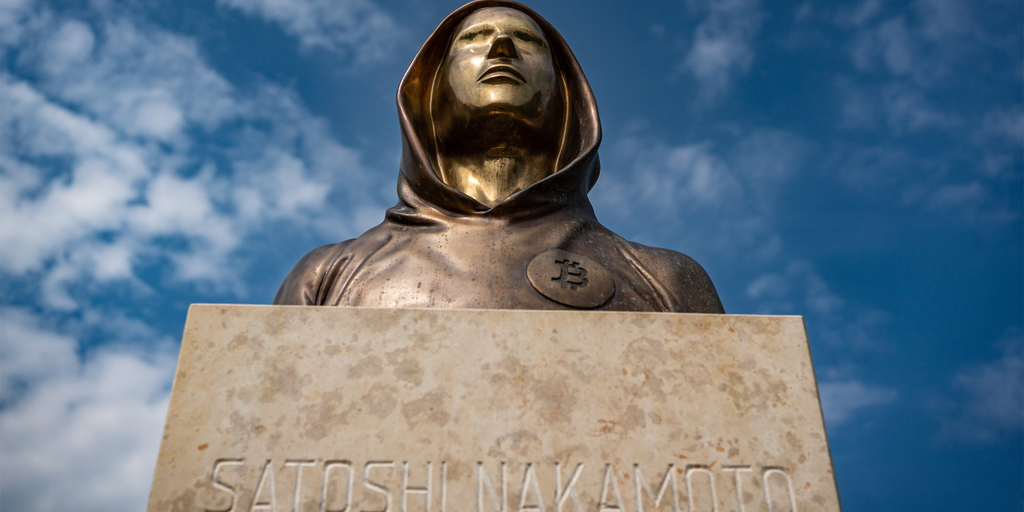
Satoshi Lore Grows as More Bitcoin Inventor Emails Emerge


The court case between the Crypto Open Patent Alliance (COPA) and self-proclaimed Bitcoin inventor Craig Wright isn’t likely to yield any blockbuster revelations. But the release of emails attributed to Bitcoin’s pseudonymous creator, Satoshi Nakamoto, has provided a surprisingly nuanced history lesson for the heralded cryptocurrency.

The latest batch of emails from the creator of Bitcoin—dated between February 5, 2009, and July 12, 2010—were addressed to computer scientist and software developer Martti Malmi, an early Bitcoin contributor who went by the nickname Sirius. Malmi took the stand to testify in the COPA vs. Wright case on Wednesday.

“Sending cash in the mail may have its risks, but maybe it’s still the best anonymous option,” Nakamoto wrote at one point, favoring the analog method as a way to protect identities.  “We can also ask for donations in BTC on the forum.”

The messages between Nakamoto and Malmi were entered into evidence as the U.K. court mulls the Bitcoin creator’s contested identity. Since 2016, Australian computer scientist Craig Wright has claimed to be the investor of Bitcoin.

On Thursday, the court received first batch of emails, addressed to cryptographer and cypherpunk Adam Back—CEO and co-founder of Blockstream—to accompany Back’s testimony. Those emails included mention of computer scientist Hal Finney, who received the first Bitcoin transaction from Nakamoto—and who some believe to be the real Satoshi Nakamoto.

As with the previous email dump, the 120-page batch of messages came to light through Bitcoin historian and editor of Bitcoin Magazine, Pete Rizzo, on Twitter.

While Bitcoin remains the number one cryptocurrency with a trillion-dollar market capitalization, the emails show Nakamoto did not coin the term “cryptocurrency” and was uncomfortable with calling Bitcoin an investment.

“That’s a dangerous thing to say and you should delete that bullet point,” Nakamoto told Malmi. “It’s okay if they come to that conclusion on their own, but we can’t pitch it as that.”

Even though politicians and pundits continue to refer to Bitcoin as anonymous, the messages showed that Satoshi also wanted to remove that language from the Bitcoin.org website.

“Also, anonymous sounds a bit shady. I think the people who want anonymous will still figure it out without us trumpeting it,” Nakamoto said. “I removed the word ‘anonymous,’ and the sentence about ‘anonymity means’—although you worded it so carefully—can be kept hidden… it was a shame to remove it.”

In one message, Nakamoto detailed how Bitcoin might scale in the future, suggesting that the network would have a maximum of 100,000 nodes.

“100,000 block-generating nodes is a good ballpark large-scale size to think about,” Nakamoto wrote. “Propagating a transaction across the whole network twice would consume a total of [$0.02] of bandwidth at today’s prices.”

In his commentary, Rizzo noted that there are currently 50,000 nodes running the Bitcoin software.

Looking to add more server administrators, Nakamoto suggested Gavin Andresen.

“It should be Gavin,” Nakamoto said. “I trust him, he’s responsible, professional, and technically much more Linux capable than me.”

While Proof-of-Stake is lauded for its reduced drain on the environment, in the messages, Nakamoto championed the Proof-of-Work as the only solution for making peer-to-peer “e-cash work without a trusted third party.”

“Even if I wasn’t using it secondarily as a way to allocate the initial distribution of currency, PoW is fundamental to coordinating the network and preventing double-spending,” Nakamoto wrote.

In his quest to prove his claim of being Satoshi Nakamoto, Wright separately submitted over 160,000 documents accounting to BitMex Research on Wednesday.

“A real proof of Satoshi would only be like 150 bytes in total,” BitMex Research said, replying to a tweet by prominent Bitcoiner, software engineer, and cypherpunk Jameson Lopp. “Instead he produced a 160,000 page fake proof.”

Edited by Ryan Ozawa.

Stay on top of crypto news, get daily updates in your inbox.


Source link

by Siliconluxembourg

Would-be entrepreneurs have an extra helping hand from Luxembourg’s Chamber of Commerce, which has published a new practical guide. ‘Developing your business: actions to take and mistakes to avoid’, was written to respond to  the needs and answer the common questions of entrepreneurs.  “Testimonials, practical tools, expert insights and presentations from key players in our ecosystem have been brought together to create a comprehensive toolkit that you can consult at any stage of your journey,” the introduction… Source link

by WIRED

B&H Photo is one of our favorite places to shop for camera gear. If you’re ever in New York, head to the store to check out the giant overhead conveyor belt system that brings your purchase from the upper floors to the registers downstairs (yes, seriously, here’s a video). Fortunately B&H Photo’s website is here for the rest of us with some good deals on photo gear we love. Save on the Latest Gear at B&H Photo B&H Photo has plenty of great deals, including Nikon’s brand-new Z6III full-frame… Source link

by Gizmodo

Long before Edgar Wright’s The Running Man hits theaters this week, the director of Shaun of the Dead and Hot Fuzz had been thinking about making it. He read the original 1982 novel by Stephen King (under his pseudonym Richard Bachman) as a boy and excitedly went to theaters in 1987 to see the film version, starring Arnold Schwarzenegger. Wright enjoyed the adaptation but was a little let down by just how different it was from the novel. Years later, after he’d become a successful… Source link







