
10th Indian Delegation to Dubai, Gitex & Expand North Star – World’s Largest Startup Investor Connect
All News

New-Age Tech Stocks Rally On Bull Run In Broader Market


SUMMARY

Eighteen out of the 23 new-age tech stocks under Inc42’s coverage gained this week in a range of 0.1% to over 27% with TAC Infosec emerging as the top gainer

Following a major block deal, Mamaearth became the biggest loser this week; shares fell 2.2%

Benchmark indices Sensex and Nifty50 gained 0.39% and 0.75%, respectively. While Sensex ended the week at an all-time high close at 76,992.77, Nifty50 too ended at a record close at 23,465.60

Riding on the back of the bull run in the broader market sentiment, Indian new-age tech stocks witnessed significant northbound momentum this week.

Eighteen out of the 23 new-age tech stocks under Inc42’s coverage gained this week in a range of 0.1% to over 27%. TAC Infosec emerged as the top gainer, followed by Yudiz. Both the NSE Emerge-listed stocks rallied over 27% during the week.

Among the other gainers were ideaForge (up 13.2%), Paytm (up 11.5%), DroneAcharya (up 11.1%), Awfis (up 8.4%), Nazara, and PB Fintech (both up over 6%).

Meanwhile, following a major block deal, Mamaearth became the biggest loser this week. Its shares fell 2.2%. 

Despite its shares touching an all-time high mid-week following strong FY24 earnings, newly-listed Go Digit also fell 0.3% this week. The insurance tech platform posted over a 400% jump in profit after tax (PAT) to INR 182 Cr FY24 from INR 36 Cr in the previous fiscal year.

The other losers of the week were Tracxn, CarTrade, and MapmyIndia.

In the broader market, benchmark indices Sensex and Nifty50 gained 0.39% and 0.75%, respectively. While Sensex ended the week at an all-time high close at 76,992.77, Nifty50 too ended at a record close at 23,465.60.

Speaking on the market performance this week, Vinod Nair, head of research at Geojit Financial Services, said that the mid and small-cap sectors demonstrated outperformance during the week, on positive sentiment for growth-based stocks. 

Meanwhile, domestic CPI data suggests a gradual decline in inflation, he noted. 

“Though the last mile towards the inflation target remains sticky, given the expectation of a normal monsoon, investors are hopeful that the MPC will be one step closer to the easing cycle,” Nair said. “In the upcoming week, attention will be on the release of industrial production data from India, China, and Eurozone inflation as investors seek insights into the economic outlook of these countries.”

Meanwhile, the US Federal Reserve kept its key interest rate unchanged this week and signalled just one cut before the end of the year.

Prashanth Tapse, senior VP (research) at Mehta Equities, said that as expectations start building up from the government in the run-up to the Budget next month, markets might face bouts of intra-day volatility going ahead.

Next week will also see the listing of another new-age tech stock, ixigo. This week, the traveltech startup’s public issue was oversubscribed 98.34X

Now, let’s dive deeper into understanding the performance of the new-age tech stocks this week.
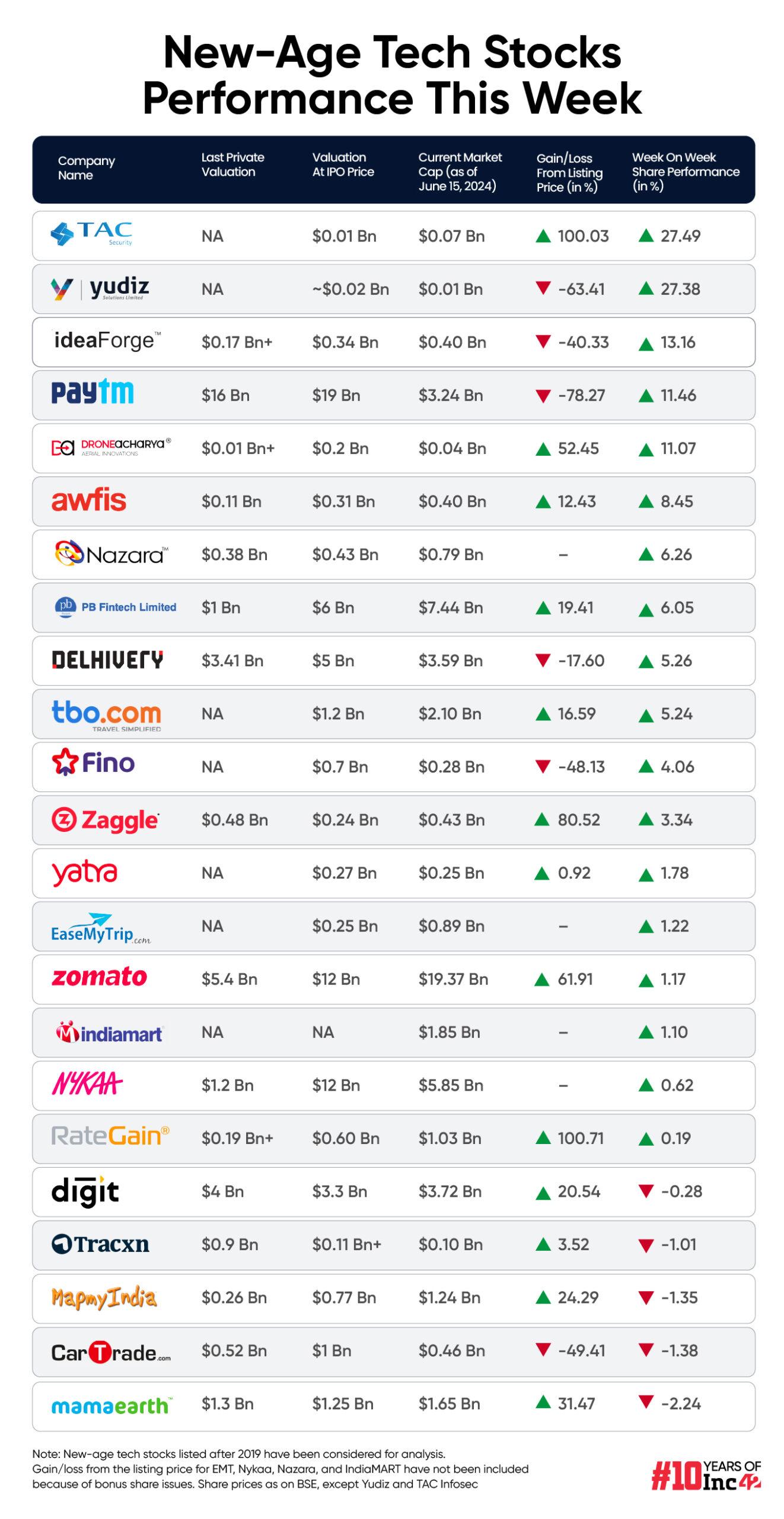
tech stocks performance tech stocks performance

The 23 new-age tech stocks under Inc42’s coverage ended the week with a total market capitalisation of $55.2 Bn as against around $54 Bn last week.
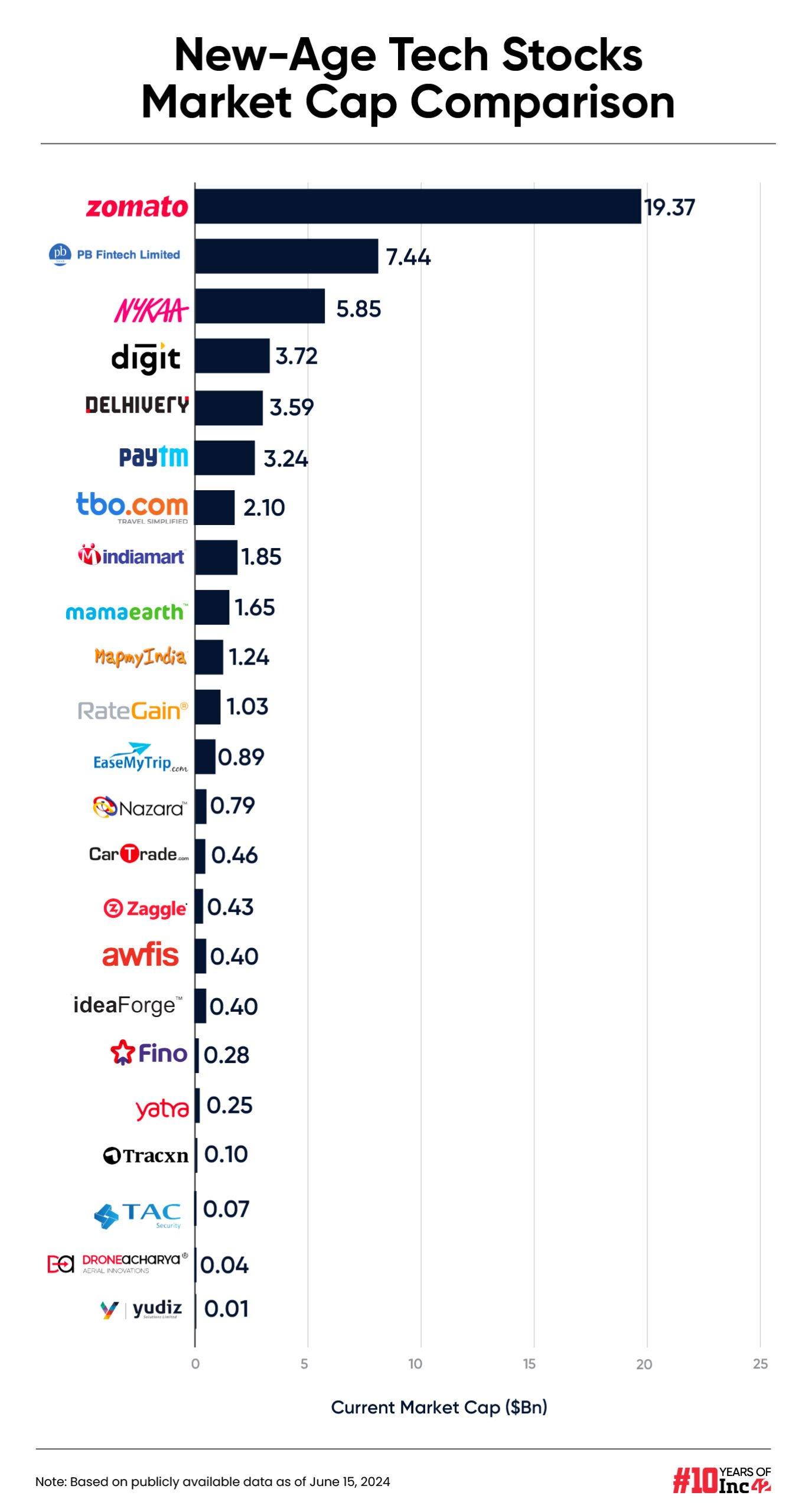
tech stock market captech stock market cap

Paytm’s Mixed Week

After being under selling pressure for months, shares of fintech major Paytm witnessed a sudden rally this week. The stock gained about 11.5%, ending the week at INR 424.9 on the BSE.

The company’s shares last closed above the INR 400 level at the beginning of April this year.

Though the shares rallied largely on the back of positive developments around restructuring, it was a mixed week for the company. 

In The News For:

  • Inc42 learned from multiple sources that Paytm has been asking employees to resign voluntarily or face disciplinary action. Besides, the company is also trying to retrieve various bonuses already paid to the employees. The company has denied the allegations.
  • Paytm informed its stakeholders about a few positive developments, including its partnership with Samsung Wallet for flight, bus, movie, and event ticket bookings.
  • The Insurance Regulatory and Development Authority of India (IRDAI) has accepted Paytm General Insurance’s registration withdrawal application. Paytm will now focus on the distribution of insurance products of other insurers.

Booking some profit from the share price surge, hedge fund Marshall Wace offloaded 5.85 Lakh shares worth INR 25.08 Cr in the company in a block deal on Friday (June 14). The shares were lapped up by BNP Paribas.

Though Paytm shares gained quite a bit this week, Rupak De, senior technical analyst at LKP Securities, said that currently there is no clear trend emerging from the movement.

De sees support for the stock in INR 420-INR 400 range while he has a bullish stance on Paytm if it crosses INR 440 level. 

Paytm is still trading over 33% lower year to date.
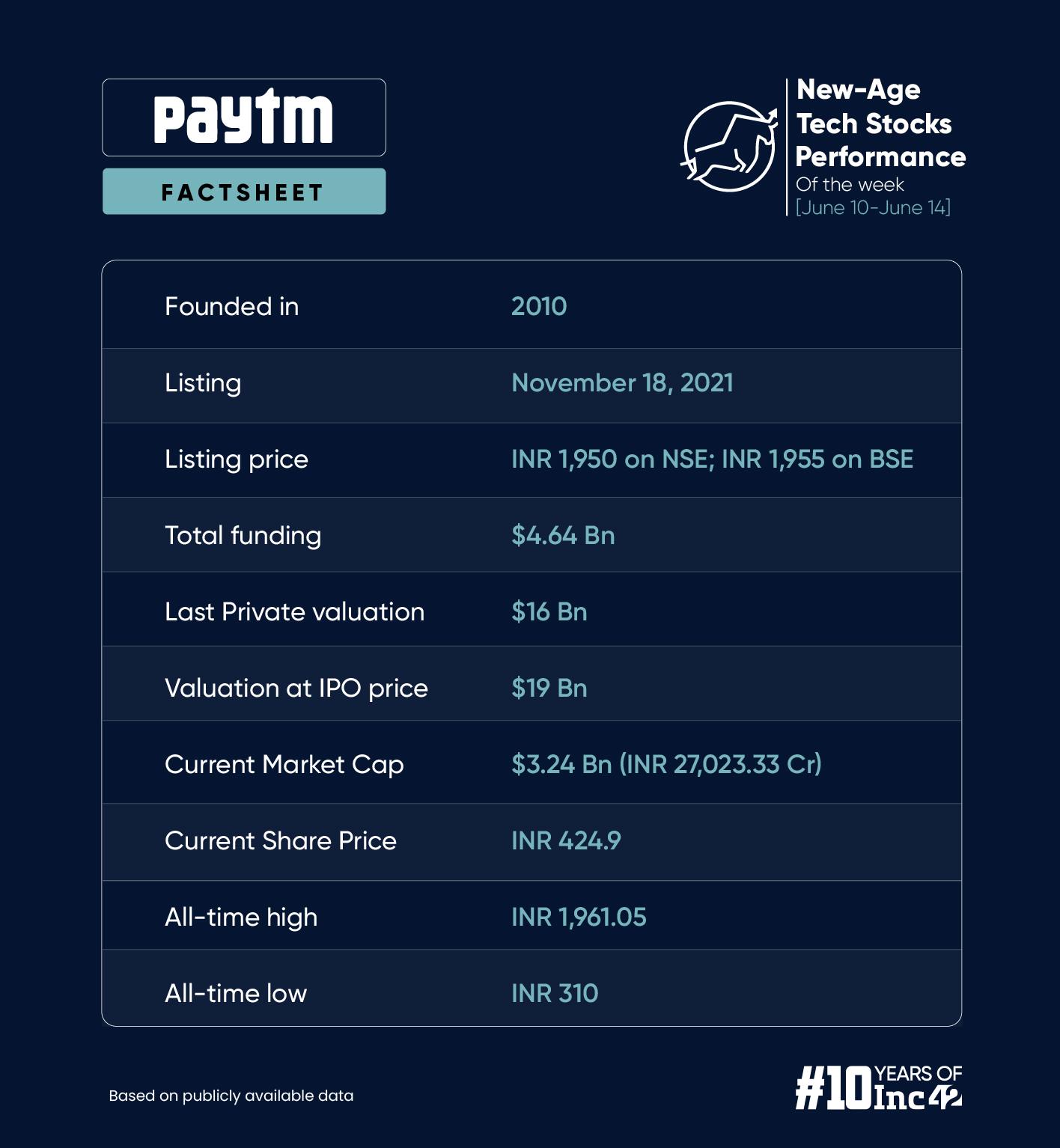
Paytm’s Mixed WeekPaytm’s Mixed Week

Nykaa’s Growth Projections

Shares of Nykaa continued to trade sideways this week. The stock gained 0.6% overall, ending the week at INR 170.95 on the BSE.

However, on the company’s ‘Annual Investor Day’ on Friday, its shares surged almost 5% to INR 175.15 during intraday trading.

Here are a few key developments from the meeting:

On the other hand, Nykaa also announced expanding its ESOP pool size by allocating more than 4.73 Lakh equity shares to its employees. The newly allotted shares are worth over INR 9.72 Cr.

It is pertinent to note that shares of Nykaa have largely witnessed a range-bound movement since the beginning of the year. LKP Securities’ De sees INR 167 as the immediate support for the stock.

He sees a bull case for the stock only after Nykaa closes above INR 174.
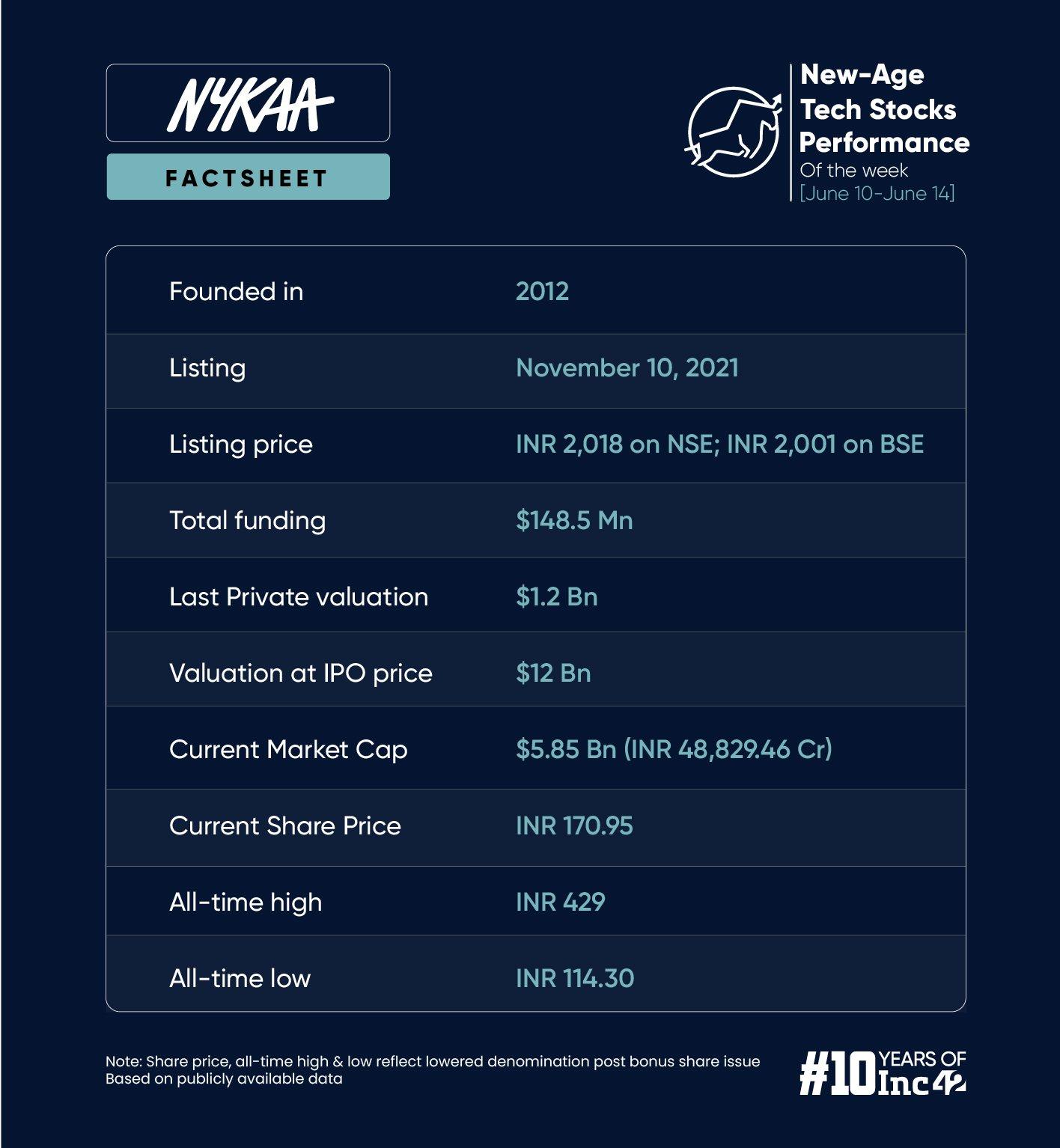
Nykaa’s Growth ProjectionsNykaa’s Growth Projections

Large Block Deal At Mamaearth

Shares of D2C beauty brand Mamaearth were volatile this week. Partially hurt by two large share offloading, the stock fell 2.2% during the week to end at INR 427.65 on the BSE and emerge as the biggest loser.

Its two major pre-IPO shareholders, Fireside Ventures and Sofina Ventures, offloaded 32.42 Lakh shares each in the company worth INR 141.21 Cr and INR 141.06 Cr, respectively.

In the quarter ended March 2024, Fireside held 1.71 Cr shares and Sofina held 1.99 Cr shares in the company.

Following the offloading on Tuesday (June 11), Mamaearth shares fell almost 5% on the day. The next day, its shares fell further.

Meanwhile, the company also announced this week that its partnership with Reliance Retail has taken its store count to 1,000 in Smart Bazaar or Smart Point stores. 

Shares of Mamaearth are currently trading 2.9% lower year to date.
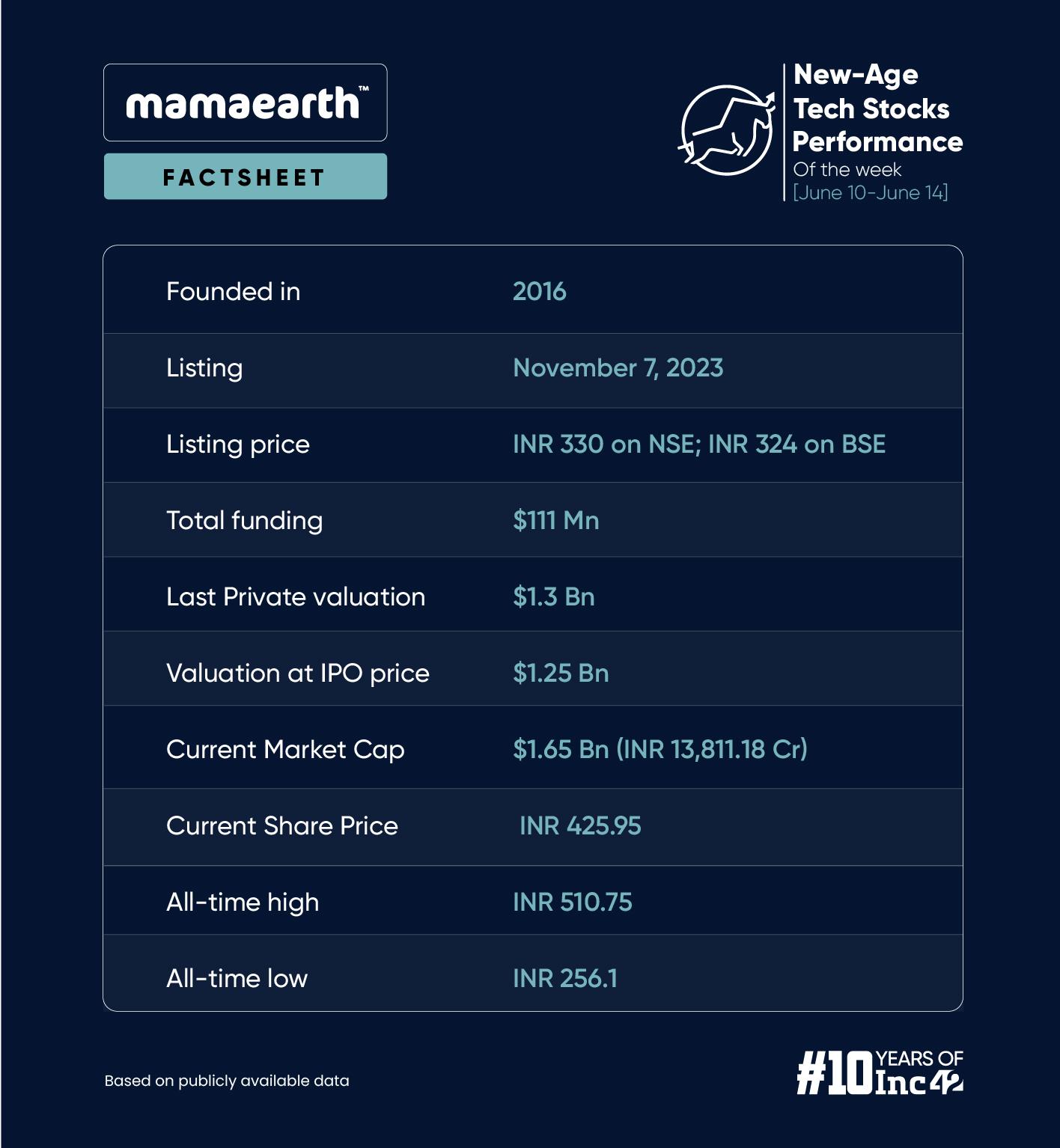
Large Block Deal At MamaearthLarge Block Deal At Mamaearth


Source link

by Sameera

Binance Responds to User Complaints Global crypto exchange Binance has announced that it will increase compensation for customers who were liquidated during the recent crypto market selloff. The move follows widespread criticism after thousands of traders suffered sudden losses due to extreme volatility earlier this month. According to internal reports, Binance will refund part of the unrealized losses to affected users through its User Protection Fund, which currently holds over $1.2 billion in reserves. The compensation applies mainly to futures traders whose positions were automatically liquidated during rapid price swings in Bitcoin and other major tokens. Bitcoin’s Price Plunge Sparks Liquidations The crypto market experienced one of its sharpest downturns in 2025, with Bitcoin (BTC) falling below $50,000 for the first time in eight months. This triggered billions in forced liquidations across major exchanges, including Binance, OKX, and Bybit. Analysts suggest that a combination of high leverage, macroeconomic uncertainty, and institutional selloffs contributed to the crash. Binance faced particular backlash for what users described as “slippage and server delays” during the event. Binance Enhances Transparency In response, Binance’s management pledged to improve system transparency and risk management mechanisms. The exchange stated it is reviewing its liquidation protocols to ensure fairer treatment of users during periods of extreme volatility. A spokesperson confirmed that Binance would also begin publishing weekly protection fund audits to reassure investors. Why It Matters for Investors Looking to Buy Bitcoin The compensation announcement comes at a crucial time for retail traders considering whether to buy Bitcoin on Binance amid renewed volatility. Analysts note that Binance’s proactive stance could restore confidence among users after months of regulatory scrutiny and market turbulence. Crypto strategist Michael Wu from Amber Group commented, “This move reinforces Binance’s commitment to customer protection. It may also attract new users who are hesitant to trade during volatile periods.” Still, experts warn that volatility remains high, and investors should exercise caution before re-entering the market. The Bigger Picture The event underscores the need for stronger investor safeguards as the crypto industry matures. Binance’s decision to compensate affected users sets a potential precedent for other exchanges facing similar backlash. Meanwhile, Bitcoin prices have started to stabilize around $52,300, with cautious optimism returning to the market. Stay ahead with the latest in crypto, startups, and financial technology on StartupNews.FYI — your source for real-time business insights and innovation updates.

by Sameera

Leadership Change at Indonesia’s Flag Carrier Indonesia’s state-owned airline Garuda Indonesia has appointed Glenny Kairupan as its new Chief Executive Officer, according to a government official cited by Reuters. The decision marks another major leadership shift for the national carrier as it continues efforts to stabilize finances and restore operational efficiency after years of restructuring. While the official announcement did not specify the reason for Kairupan’s appointment, it comes at a critical time for Garuda Indonesia, which has been navigating challenges including post-pandemic recovery, debt management, and fleet modernization. A Strategic Appointment Glenny Kairupan, an experienced aviation executive, steps into the role previously held by Irfan Setiaputra, who led the company through one of its most turbulent periods. Under Setiaputra’s leadership, Garuda Indonesia completed a complex court-led debt restructuring worth more than $9 billion, reducing the airline’s liabilities and securing new lease terms for its fleet. Kairupan is expected to continue implementing efficiency strategies while expanding Garuda’s international partnerships and improving profitability. His appointment aligns with the government’s long-term plan to enhance state enterprise governance and ensure transparency across Indonesia’s aviation sector. Challenges Ahead Despite a return to profitability earlier in 2025, Garuda Indonesia still faces significant operational hurdles. Rising fuel prices, global aviation competition, and the need for sustainable modernization remain key issues for the new CEO. The airline is also working on expanding domestic connectivity to boost tourism and regional economic development, a strategic priority under Indonesia’s national infrastructure plan. Industry analysts believe Kairupan’s leadership will be instrumental in balancing financial discipline with growth ambitions. His experience in corporate restructuring and aviation management is seen as critical to guiding Garuda through the next phase of transformation. Government Support and Public Expectations Garuda Indonesia holds symbolic importance as the nation’s flag carrier. The Ministry of State-Owned Enterprises has reiterated its commitment to supporting the airline’s stability while ensuring it remains competitive in the Southeast Asian aviation market. Kairupan’s appointment is viewed as part of a broader strategy to professionalize state-owned enterprise leadership and rebuild public confidence. Outlook With Glenny Kairupan now at the helm, the airline’s immediate focus will likely be on improving operational reliability, expanding profitable routes, and investing in digital transformation to enhance customer experience. As Indonesia’s aviation industry continues to recover, Garuda Indonesia’s success under new leadership will serve as a key indicator of how effectively the country can balance government oversight with corporate agility in a post-pandemic world. For the latest updates on aviation, business, and global leadership trends, visit StartupNews.fyi for comprehensive coverage and analysis.

by Sameera

Company to Cut Jobs Amid Strategic Consolidation Under “Servus Media” Red Bull, the Austrian beverage giant known globally for its energy drinks and sports ventures, has announced a significant restructuring of its media division, including job cuts at Servus TV and other Red Bull Media House operations. The decision, first reported by ORF Salzburg and Der Standard, marks a pivotal shift in Red Bull’s media strategy as the company aims to streamline operations under a unified brand. Red Bull Media Division Undergoes Major Reorganization According to official sources, Red Bull employs roughly 600 people across its various media activities — including Servus TV in Wals-Siezenheim (Flachgau) and the Red Bull Media House headquarters in Vienna. The company now plans to consolidate its media businesses under a new umbrella brand called “Servus Media”, leading to the elimination of about 60 positions. The restructuring aims to bring together the company’s television, digital, and publishing arms to improve efficiency and focus resources on the most profitable channels. “The goal is to create a more integrated and agile media organization,” a company spokesperson told local outlets. Leadership Overhaul and Strategic Refocus The reorganized Red Bull media unit will be managed by Dietmar Otti, alongside executives Matthias Bruegelmann, Marlene Beran, and Stefan Ebner. The new leadership team is expected to oversee the realignment of editorial direction, digital transformation efforts, and international partnerships. Servus TV, long known for its regional programming and documentaries, will continue broadcasting under the new structure. However, insiders suggest that the channel’s content strategy may shift toward more cost-effective formats, including digital-first productions. Layoffs Signal a Broader Trend in European Media The job cuts at Servus TV and Red Bull Media House come amid a wave of media industry restructurings across Europe, as companies grapple with declining ad revenues, rising production costs, and the growing dominance of streaming platforms. For Red Bull, the restructuring represents a broader shift from traditional broadcasting to digital storytelling, leveraging the brand’s massive global reach in sports, lifestyle, and entertainment. “This isn’t just about cost-cutting — it’s about repositioning for the future,” said media analyst Thomas Heigl. “Red Bull is refocusing on content that aligns more closely with its global sports and brand marketing ecosystem.” Servus TV’s Future Servus TV has been a cornerstone of Red Bull’s Austrian media presence since its launch in 2009, known for its cultural programs, documentaries, and coverage of Red Bull-sponsored events. However, as the company consolidates under Servus Media, it is expected to scale back certain local productions to reduce overlap and operational costs. While the network’s editorial independence and regional focus will likely remain, Red Bull’s new direction suggests a leaner, more digitally integrated future for the brand. Industry and Employee Reaction Reports indicate that notifications of the planned layoffs have already reached Austria’s public employment service (AMS). However, the company has not yet disclosed the exact distribution of job cuts across departments. Employee representatives have expressed concern over the reduction, urging management to ensure fair severance terms and internal …







