

Felicis, the 16-year-old Bay Area-based early-stage venture firm, has a reputation for investing globally. Indeed, firm founder Aydin Senkut — who spent a handful of years at Google as a product manager in its earlier days — was born in Turkey and talks often of the hustle he sees in founders around the world. Felicis is also known for the very strong track record it has established over time, with early bets on some breakout companies as Notion, Canva, Adyen, Cruise, Flexport, and Shopify, to name just a handful.
The firm isn’t content to rest on its laurels, however. On the contrary, Senkut and team often appear at — and also sometimes sponsor — industry events to which founders flock, and such was the case last week at a StrictlyVC event, which the firm volunteered to anchor as a partner. Thankfully, they’re the best kind of partner to have, given that both Senkut and partner Viviana Faga, who joined the firm in 2021 from Emergence Capital, happened to have a lot of interesting insights to share about the AI companies that they are meeting and sometimes competing aggressively to land as portfolio companies. (Among Felicis’s related bets: it has funded the app development company Supabase and the content creation company Runway AI.)
We talked with the two in a warm-up chat that you can see at page bottom, and excerpts from which have been edited lightly below for length and clarity.
We’re hearing every other day about this or that AI research team that’s spinning out of one of the big companies. These are hot tickets right now. How do you compete with the many venture firms trying to nab their attention?
AS: It’s funny, I was at Google when there were only 30 people now there are, like, 200,000 people. So a lot of these people are like family, we know them. So that’s one huge advantage. . . We’re also thesis driven, as well, so we try to do a really good job of [conveying that] there are certain areas that we have confidence [and that we think are] really gonna pick up, and we’re educated about [them]. [But] you don’t have to be in every AI company to do well. You just have to be in the right ones. I’m just really happy there’s a lot of activity [and that] people in AI [are] picking up the startup ecosystem again. For you aspiring founders [in the audience], I hope you find success in some way. It’s bringing some positivity back into our ecosystem.
Obviously not everyone is cut out to be a founder. How do you know who has what it takes? Social proof?
AS: I hope that we’re not making our decisions just on social proof. There are a lot of AI researchers, but some of the top ones have the highest number of citations. Then there are research people who’ve worked on research that’s much more broad reaching and much more critical than others. When we were working with Runway, they actually co-authored [the deep learning model] Stable Diffusion and were arguably one [set] of maybe 20 people in that area.
[Even still] building a company is not an easy thing, so what market you pick is very important. One of the brutal laws that I’ve learned since I left Google is that you have to really pick your area because if you’re going against incumbents that have amazing distribution, you can come up with [something] that’s even 10x better, but it’s much easier for [that outfit] that has 100 million users to offer an AI feature and charge $1 a month than for a new company to come up with a brilliant product. So that’s where you have to really make a judgment call in terms of, how critical is this and does this truly have a chance of carving a niche of its own? That’s why there are many fewer companies that can rise above that noise.
VF: Back to that point, does a founder know how to leverage that distribution? [Runway CEO and cofounder] Cris [Valenzuela] was very methodical and now has a partnership with Canva, and with Getty. This is some of what you have to look for when you’re backing these AI researchers — do they have that commercial go-to-market mind?
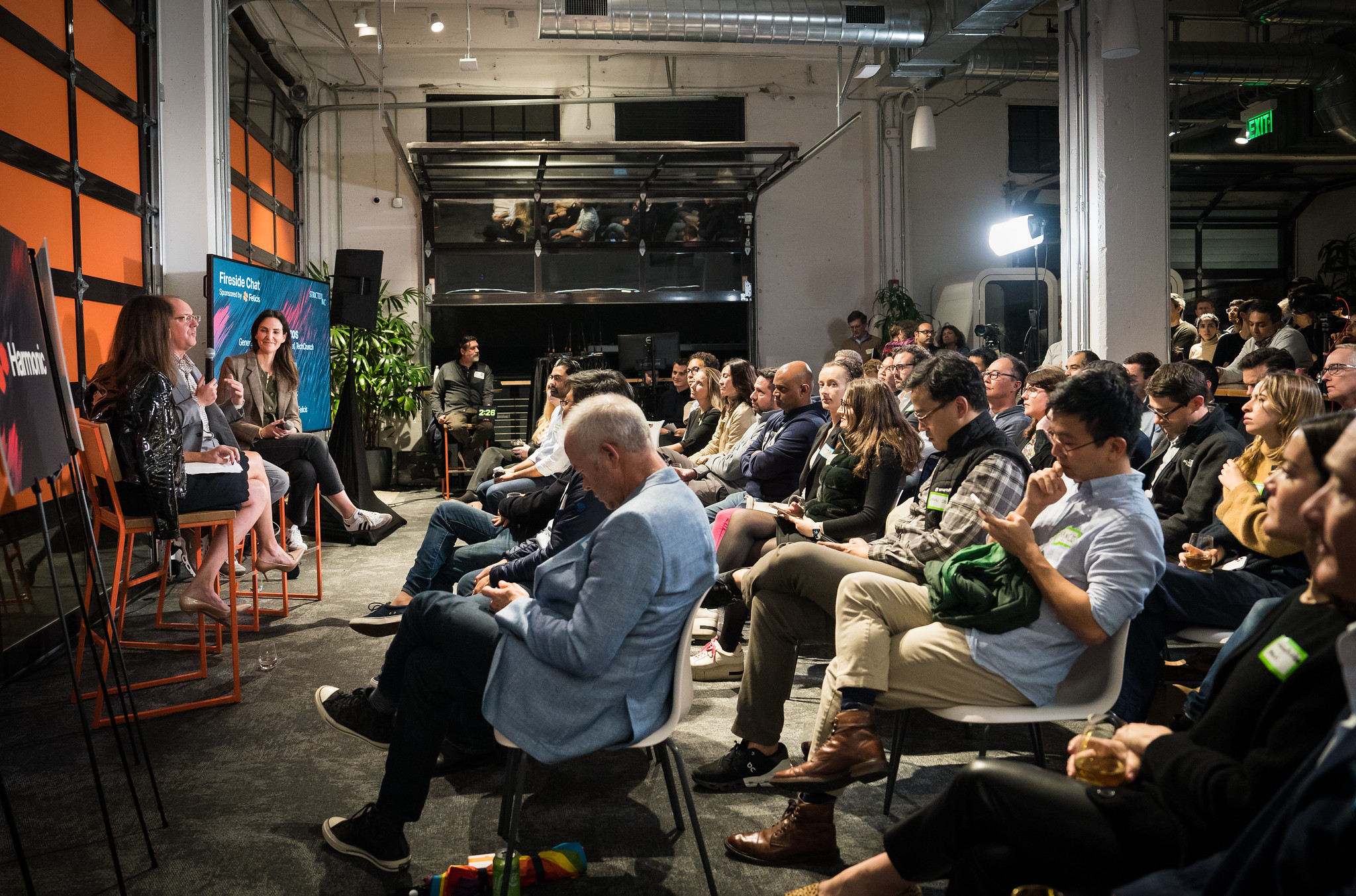
Image Credits: Slava Blazer / TechCrunch
How are these teams able to compete for talent? Google just laid off a lot of people; I wonder if that”s impacting anything.
VF: The war for talent is absolutely brutal. It’s a board level conversation when you have Google, Meta, etcetera offering $1 million-plus packages. So it really comes down to finding these folks at an early stage, giving them a large equity package, and hopefully, they believe in the mission of building an iconic category-defining company, right. That’s what has worked for us, but it is incredibly hard right now.
AS: Who you work with also matters. One of the things I learned by working at Google with [Google’s chief scientist] Jeff Dean, is that the world’s best and smartest people want to work with the world’s other best and smartest people. So if you start with an A or A+ team [it matters]. There are only so many people who are really well-respected in the industry, and everybody does their research, the same way they do their research on us. So if you don’t have a good story, you don’t have a mission and you don’t have an A+, I don’t think you’re going to have great success.
Viviana, you mentioned go-to-market strategies. Are these much different when it comes to today’s AI companies versus “traditional” enterprise companies?
VF: It is quite different, go-to-market in the AI era versus what it was for the last 10 to 20 years with SaaS. A couple of things that we talk about a lot [as a firm] is speed of iteration. It used to be that you could launch a web page and launch a couple of features over a couple of months and that was enough. Now, AI companies launch new features on a daily basis, and those are always the best-performing features. We talk a lot about community, too. Companies are launched on Discord now; that is an effective marketing channel. So yes, it’s quite different, and I think it’s really exciting. 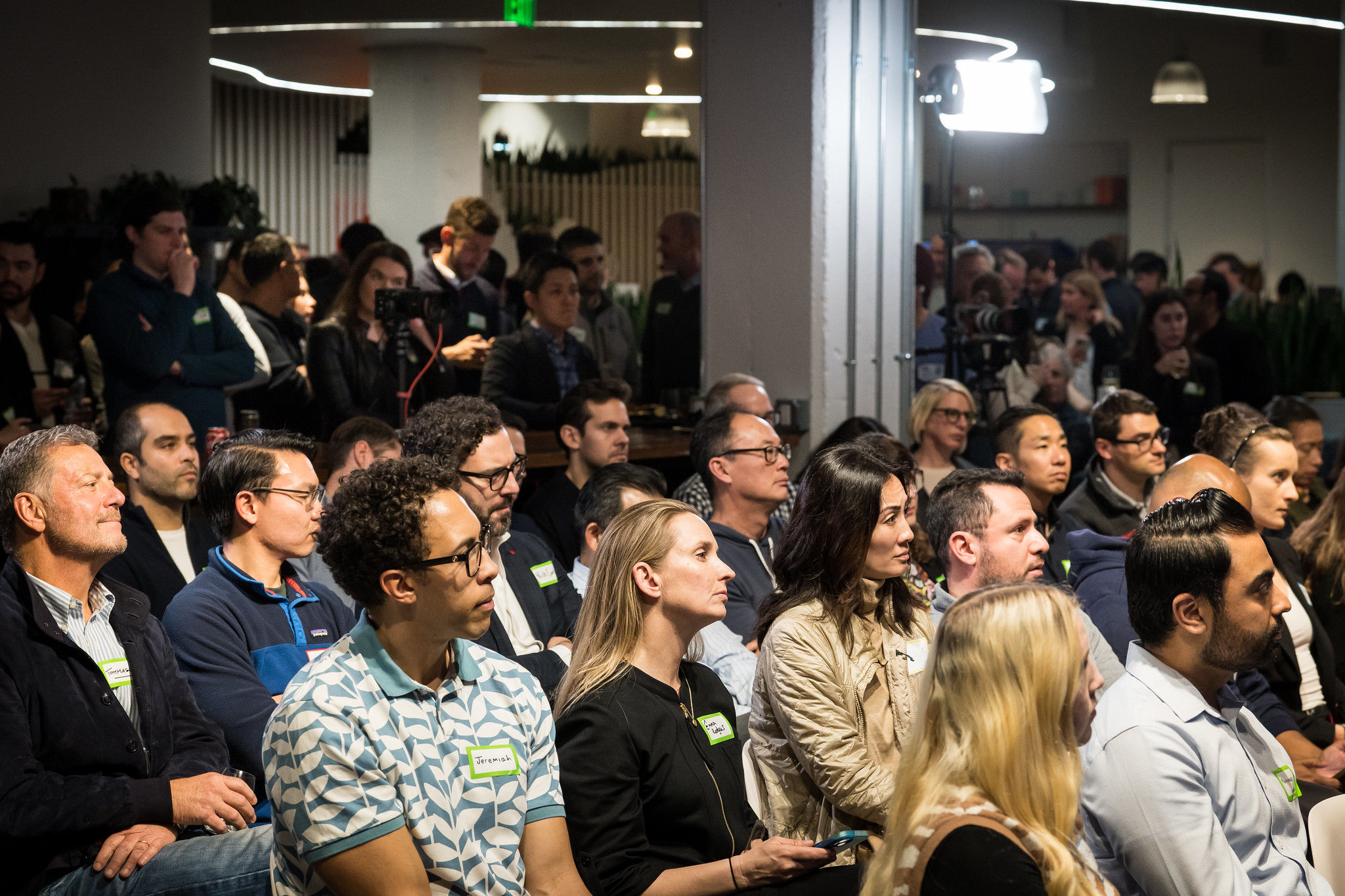
Image Credits: Slava Blazer / TechCrunch
You have a marketing background and I’ve heard you say before that a good marketing strategy can change a company’s trajectory. Out of curiosity, I wonder what you make of two very different AI device rollouts that recently captured everyone’s attention: the Humane AI pin, which the company teased for months before debuting before a small group of reporters, and the Rabbit R1 device, which rolled out without fanfare in a conference room of a casino during CES.
VF: I saw the Humane launch and I’d love to buy one . . .You have to do something that’s true to you. For Humane, it made perfect sense to build up a lot of quiet buzz and anticipation. It depends on the market and who a founder is selling to and who the buyer is. But the best products don’t win [automatically]. It’s very easy to copy. So companies that look different, act different, and talk differently to their users are the ones that are going to stand out and win.
AS: A lot of great products follow science fiction. [Humane’s rollout] was one of those things. Like, are we gonna have something that’s omnipresent and is very easy to use that you don’t even think of using and is always there? The scary thing about marketing is that sometimes you can do everything right, and it might still take a while for the product to take off. But being original, being different — it really matters. Being first doesn’t win, but having the most differentiation makes a difference, and marketing amplifies that positioning.







