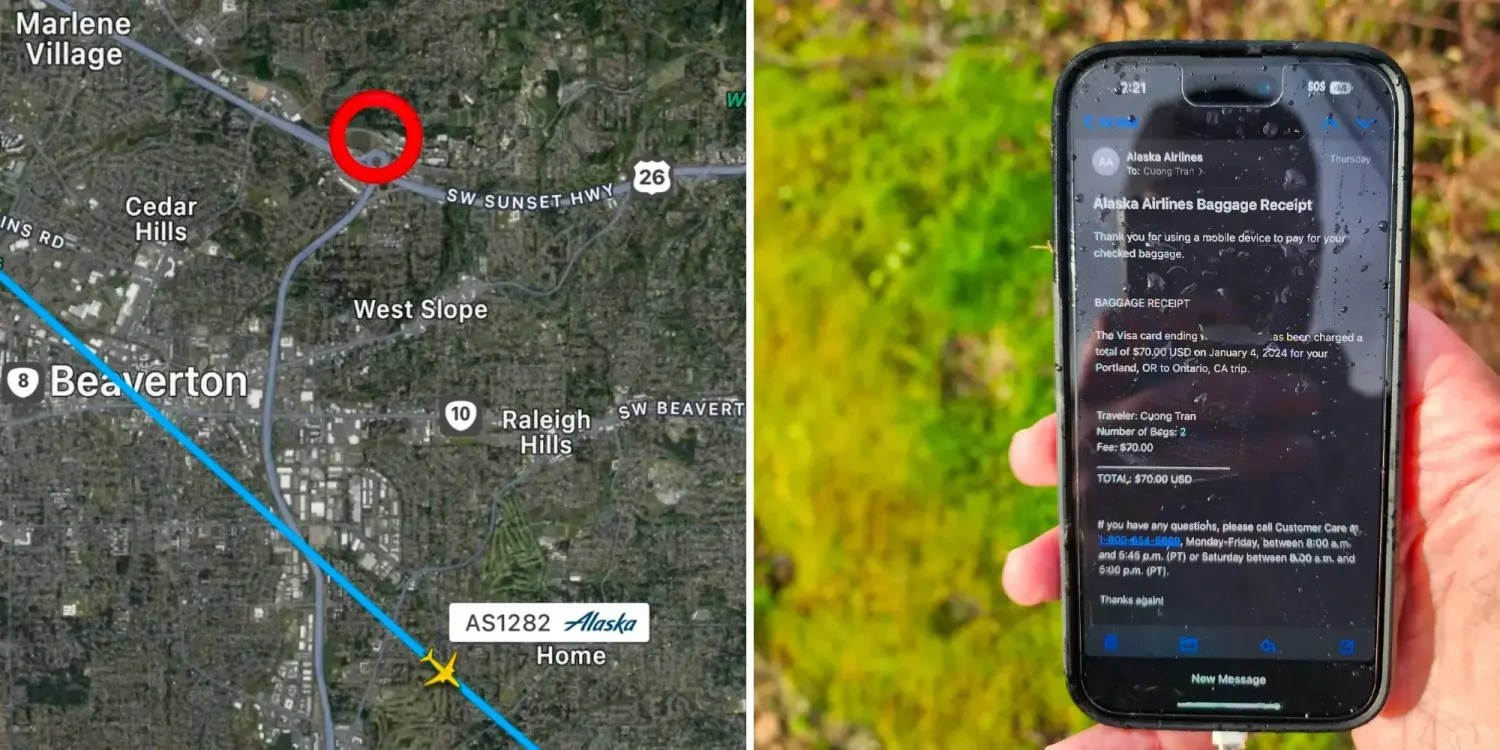
Back in January, a fully intact iPhone was discovered along the side of the road after plummeting 16,000 feet when a door blew off an Alaska Airlines flight. At the time, we pointed out that it was pretty incredible the iPhone 14 Pro Max survived such a dramatic fall.
The Wall Street Journal’s Joanna Stern, however, was determined to get more answers.
As a refresher, the iPhone 14 Pro Max that plummeted 16,000 feet from the Alaska Airlines flight had a case on it and landed on the grass.
Joanna performed a series of drop tests using an iPhone 14 and a Samsung Galaxy S23. The results varied between different tests, but the key test was dropping both phones from 300 feet high, without cases, onto a grassy area.
The result of Joanna’s 300-foot drop onto grass? Both phones “sustained no real damage” other than some dirt and grass grime.
Joanna set out to get an explanation, talking to multiple experts for a bit of a science lesson. Why can an iPhone survive a drop from a plane, but not from a bathroom counter?
“It doesn’t matter if you drop the phone from 300 feet up or from space,” said Mark Rober, a former NASA mechanical engineer turned YouTuber. “It’s going to be the same result because of something called terminal velocity.”
I called Rhett Allain, an associate professor of physics at Southeastern Louisiana University. He explained that, because of the mass, size and shape of a smartphone, it will increase in speed until it hits about 60 miles an hour. At that point, air resistance keeps it from getting any faster.
He assured me that 300 feet in the air was enough height for all of these devices, with and without cases, to reach their terminal velocities.
There’s another physics concept to take into account: deceleration, commonly called “smashing into something.” Rober and Allain explained that grass cushions the falling object, allowing for slower deceleration. Harder surfaces like asphalt—or your bathroom tiles—cause a much more abrupt deceleration.
You can watch Joanna’s full video below. It’s a good one! Check out her full post on the WSJ’s website.
FTC: We use income earning auto affiliate links. More.