
10th Indian Delegation to Dubai, Gitex & Expand North Star – World’s Largest Startup Investor Connect
CleanTech

COP16 report warns three-quarters of global land ‘permanently drier’


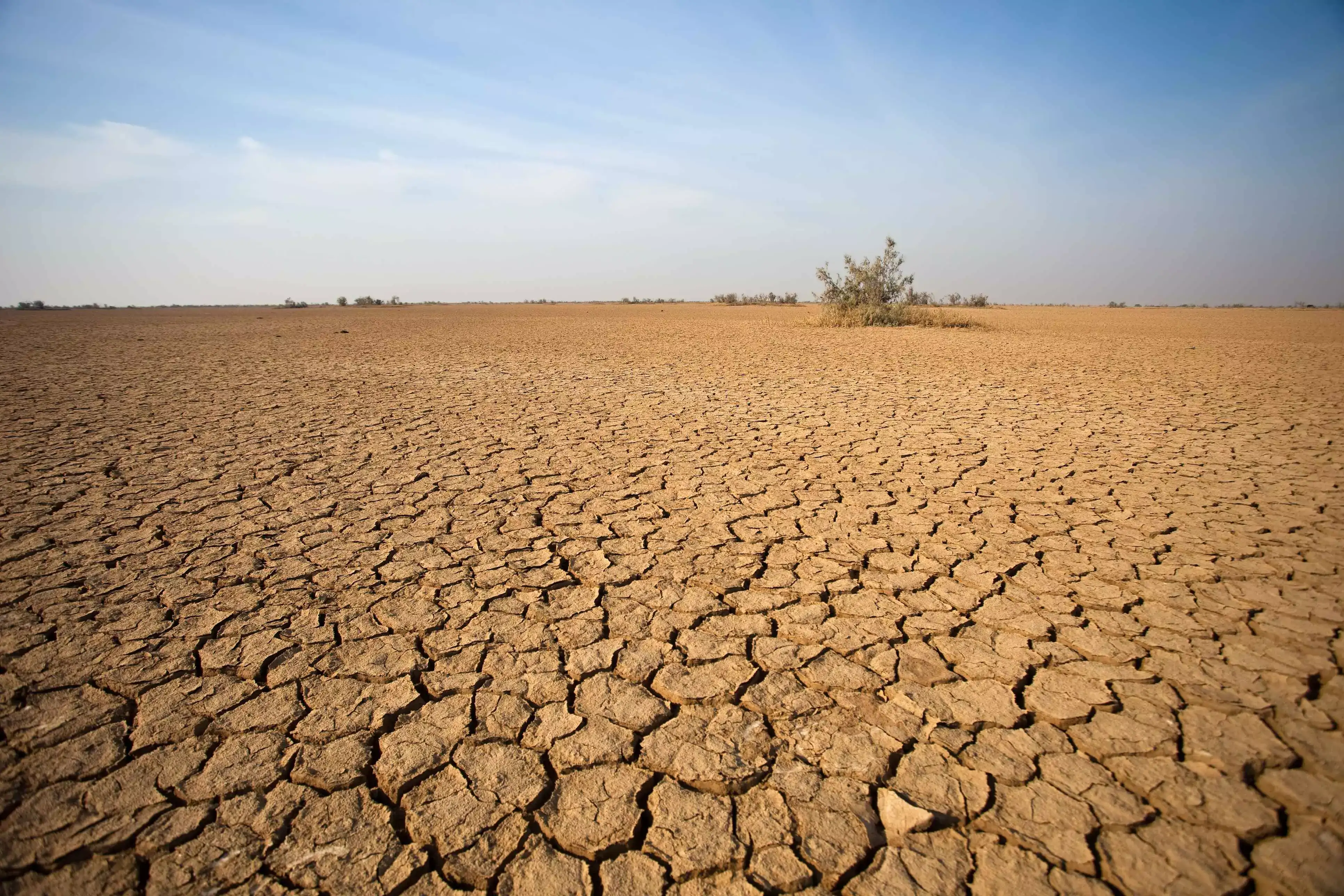
Just over 75 percent of the world’s land has been left “permanently drier” over the previous three decades, a UN-backed report coinciding with COP16 talks on desertification in Saudi Arabia said on Monday. Dry land now covers around 40 percent of the Earth’s land mass, excluding Antarctica, the United Nations Convention to Combat Desertification (UNCCD) study found, cautioning the shift could affect up to five billion people by 2100.“Some 77.6 percent of Earth’s land experienced drier conditions during the three decades leading up to 2020 compared to the previous 30-year period,” the report said.

It indicates an “existential threat” posed by the seemingly irreversible trends and showed that dry land — regions where agriculture is difficult — increased by 4.3 million square kilometres (1.7 million square miles) between 1990 and 2020, an area a third the size of India.

The warning comes during a 12-day meeting in Riyadh, which began last week, for the 16th session of the Conference of the Parties (COP16) under the UNCCD and seeks to protect and restore land and respond to drought amid ongoing climate change.

Aridity, a chronic shortage of water, now extends over 40.6 percent of the Earth’s land mass, again excluding Antarctica, compared with 37.5 percent 30 years ago, the report warns.


It also cautions the areas most affected include the nations bordering the Mediterranean, southern Africa, southern Australia and certain regions of Asia and Latin America.”Unlike droughts -— temporary periods of low rainfall -— aridity represents a permanent, unrelenting transformation,” said Ibrahim Thiaw, UNCCD Executive Secretary. “The drier climates now affecting vast lands across the globe will not return to how they were and this change is redefining life on Earth,” he added.

The changes are largely attributed to global warming caused by greenhouse gas emissions, which alter rainfall and increase evaporation, the report said.

“For the first time, a UN scientific body is warning that burning fossil fuels is causing permanent drying across much of the world,” lead UNCCD Chief Scientist Barron Orr said.

He added this could have “potentially catastrophic impacts affecting access to water that could push people and nature even closer to disastrous tipping points”.

The effects of the chronic water shortages include soil degradation, ecosystem collapse, food insecurity and forced migration, according to the scientists.

Already, 2.3 billion people live in expanding dry areas, according to the report, with projections showing a “worst-case scenario” of five billion people living in the conditions as the planet continues to warm.

To counter this trend, the scientists urged members to “integrate aridity metrics into existing drought monitoring systems”, improve soil and water management, and “build resilience in vulnerable communities”.


Nominations for ET MSME Awards are now open. The last day to apply is December 31, 2024. Click here to submit your entry for any one or more of the 22 categories and stand a chance to win a prestigious award.


Source link

by The Economic Times

As sustainability evolves from a boardroom priority to a consumer expectation, packaging has quietly become the next frontier of India’s green transition. With single-use plastic bans tightening and eco-consciousness deepening among urban consumers, demand for bio-based, compostable materials is rising across the food, fast-moving consumer goods (FMCG), and hospitality sectors. According to industry estimates, India’s sustainable packaging market is expected to grow at over 18% annually, driven by new regulations under the Plastic Waste Management… Source link

by The Economic Times

BELÉM, BRAZIL: As the United States torpedoes climate action and Europe struggles to realise its green ambitions, a surprising shift is taking hold in many large, fast-growing economies where a majority of the world’s people live. Countries like Brazil, India, and Vietnam are rapidly expanding solar and wind power. Poorer countries like Ethiopia and Nepal are leapfrogging over gasoline-burning cars to battery-powered ones. Nigeria, a petrostate, plans to build its first solar-panel manufacturing plant. Morocco is creating a battery hub to supply… Source link

by The Economic Times

Promoting sustainable farming is central to our agricultural strategy, says Yashika Singh, Chief Corporate Affairs Officer and Head of Sustainability, PepsiCo India & South Asia. In an interaction with ET Digital, Singh highlights the range of sustainable initiatives undertaken by PepsiCo India to support farmers through technology, training, and improved market access. She notes that, globally, PepsiCo aims to implement regenerative farming practices that improve soil health, optimise water use, and strengthen livelihoods across 10 million acres by… Source link





