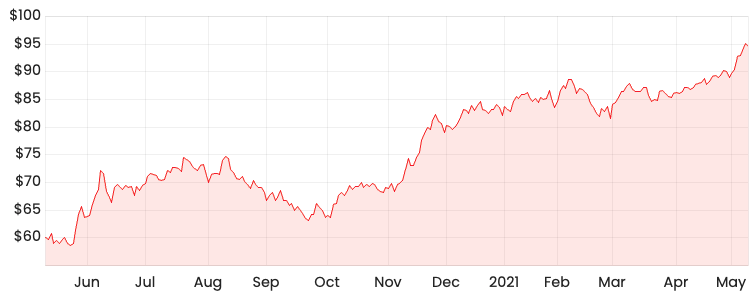
The CBA share price took a sharp hit on Tuesday, sliding 7% and dragging the broader ASX lower, as investors reacted to mounting concerns over profit margins and rising operating costs. Despite strength in gold and lithium stocks, heavy selling in Commonwealth Bank of Australia (CBA) shares weighed on the overall market, according to the Australian Financial Review.
CBA Share Price Slump Impacts ASX Performance
The S&P/ASX 200 Index dipped 0.2%, closing at 8818.8 points, with nine out of 11 sectors remaining in the green. The exception was the financials sector, hit hard by declines in major banks, particularly CBA (ASX: CBA).
Market analysts noted that the CBA share price decline was driven by concerns over the bank’s net interest margin compression — the difference between what banks earn on loans and what they pay on deposits. With higher funding costs and competition from smaller lenders, CBA’s profitability outlook has come under pressure.
Reasons Behind the Decline in CBA Share Price
Investor sentiment toward CBA and the broader banking sector has turned cautious in recent weeks. While CBA remains Australia’s largest bank by market capitalization, several factors have contributed to the sudden CBA share price drop:
- Narrowing Margins – Rising competition for deposits and lower loan growth have reduced the bank’s profit margins.
- Higher Operating Costs – Increased compliance and technology investment costs have impacted earnings expectations.
- Investor Rotation – Funds have shifted away from banks toward resources, particularly gold and lithium stocks, amid global economic uncertainty.
Despite CBA’s strong balance sheet and history of consistent dividends, short-term market sentiment remains negative as investors await further financial updates.
Broader Market Context: ASX Supported by Gold and Lithium
While the CBA share price slump dragged the financial sector down, other areas of the ASX saw notable strength. Gold producers rallied as investors sought safe-haven assets amid global economic concerns. Lithium miners also posted strong gains, reflecting renewed optimism in the electric vehicle supply chain.
Meanwhile, tech-related optimism, partly driven by Nvidia’s megacap rally on Wall Street, provided some support to the Australian market. However, the heavy weighting of the banking sector in the ASX 200 meant that CBA’s fall significantly offset gains elsewhere.
What This Means for CBA Investors
The CBA share price decline has prompted renewed debate about the outlook for Australian banks. Some analysts argue that the sell-off may present a buying opportunity for long-term investors, particularly if the stock stabilizes once margin pressures ease.
However, others caution that the macroeconomic backdrop — including potential interest rate adjustments and slowing credit demand — could keep the banking sector under pressure through early 2026.
CBA’s recent results highlighted a resilient loan book and continued growth in digital banking services, but investors remain focused on cost efficiency and capital management in the months ahead.
CBA and the ASX Outlook
Market strategists suggest that the CBA share price will be a key indicator of sentiment for the broader financial sector in the coming weeks. If CBA stabilizes, the ASX could regain momentum, especially given positive trends in commodities and global tech.
Meanwhile, the Australian dollar and bond yields are expected to remain relatively steady, as global investors await fresh economic data and central bank commentary.
Conclusion
The CBA share price slump underscores the fragility of market confidence in the banking sector amid shifting economic conditions. While other sectors of the ASX continue to perform well, CBA’s performance remains pivotal to the overall market outlook.
Investors are now watching closely for signs of stabilization, as well as updates from the Commonwealth Bank’s management on cost control and profitability measures.For more financial and market updates, visit StartupNews.fyi.