

When Apple began assembling iPhones in India, it changed the game. It was the first major tech company to move out of the China smartphone manufacturing hubs and turned its focus to India, but it didn’t stop there.
Apple has consistently increased the contribution of ‘India-made’ phones in its global supply of units, and of late, it’s looking at India even for NPI (or New Product Introduction), which has been a stronghold of large contract manufacturers in China thus far.
However, with Apple’s entry and the Indian government’s PLI scheme in place, India’s place in the smartphone manufacturing market is fast changing, moving towards contract manufacturing.
Since Apple’s entry into the Indian market and having helped create over 100K jobs (150K by some accounts) through contract manufacturing, Motorola and Xiaomi too have entered into agreements with Indian company Dixon Technologies for their smartphones’ assembly in India. This is just the beginning. Smartphone contract manufacturing is said to create another 250K jobs in India in the next 12 months.
The Apple Effect
India’s electronics manufacturing sector has become the world’s second-largest mobile phone producer, achieving its decade-old target, says ICEA.
The country manufactured 2.45 Bn phones worth INR 4.1 Lakh Cr in FY23, up from INR 18,900 Cr in 2014-15. The sector has moved from 78% import dependency in 2014 to 97% self-sufficiency, with only 3% of phones being imported.
The Indian government has allocated over INR 4,400 Cr to major smartphone manufacturers, including Apple, Samsung, and others, under this scheme.
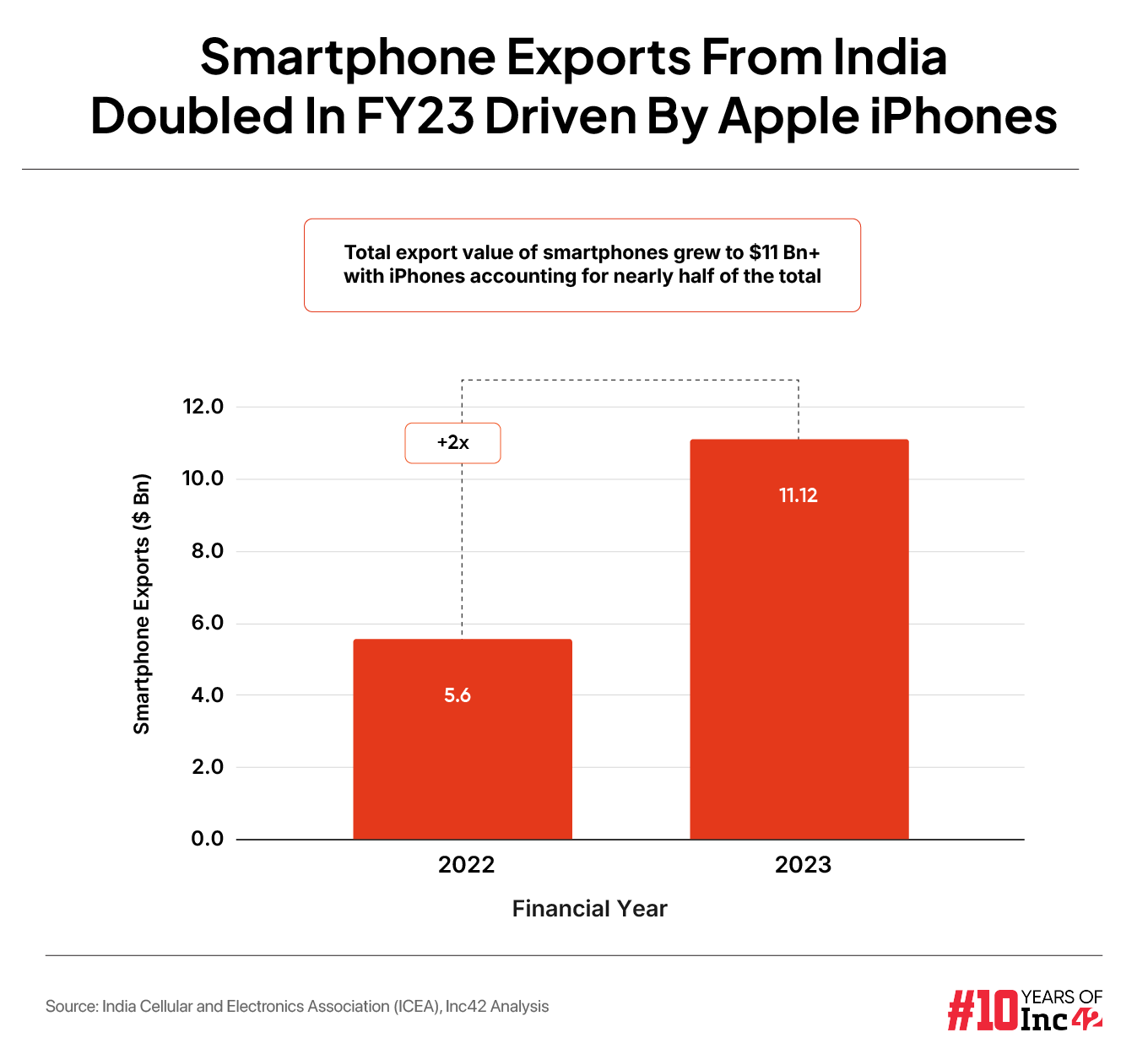
The total financial outlay for the PLI scheme was revised in 2023 to INR 38,601 Cr over five years, down from an initial INR 40,951 Cr. The PLI scheme has generated an estimated revenue of INR 1.10 Lakh Cr, yielding a return of nearly 19 times the initial investment made by the government.
Apple is setting the stage to capitalise on the next big inflection point in contract manufacturing, after setting the pace on the smartphone assembly front. The big focus for the tech giant is increasing the value addition from domestic components for every iPhone.
Apple iPhone production achieved a $10 Bn FOB (Freight On Board or value of goods at the time of shipping) value between April and October 2024, up 37% from $7.3 Bn in the same period last year. With an estimated market value of $15 Bn, 70% of these units were exported, while the rest catered to the demand in the India market.
Registering a growth of 23% in FY24, Apple India is expected to surpass Samsung India’s revenue in the next couple of years. While Samsung India has been growing at around 3% y-o-y, Apple India has registered a growth of 23% and is expected to continue this momentum for the next few years, believe experts Inc42 spoke to.
“One of the biggest factors supporting Apple’s dramatic growth in India is its strong ecosystem. The company has the strongest cross-sales among all the other manufacturers. However, with Android becoming fully compatible with Windows OS, the gaps between Apple and other makers are narrowing,” opines Mohammad Faisal Ali Kawoosa, chief analyst at Techarc.
Besides Apple, Google has inked a pact with the Tamil Nadu government to explore manufacturing of its ‘Made in India’ Pixel 8 smartphones and future models, skill development and build an industrial ecosystem, enabling MSMEs to create scalable AI solutions.
Questions sent to Apple with regards to its India manufacturing business and the roadmap ahead did not elicit a response.
Apple’s India Manufacturing Playbook
The Cupertino-headquartered giant also hit another milestone in October 2024, surpassing $2 Bn in production in its India lines within a single month for the first time. However, this is on the back of assembling iPhones in India — what about a fully made-in-India iPhone?
That remains a pipe dream at the moment, but to its credit, Apple is looking to increase the share of locally-made components in its India manufacturing stack in the near future. What’s the situation right now?
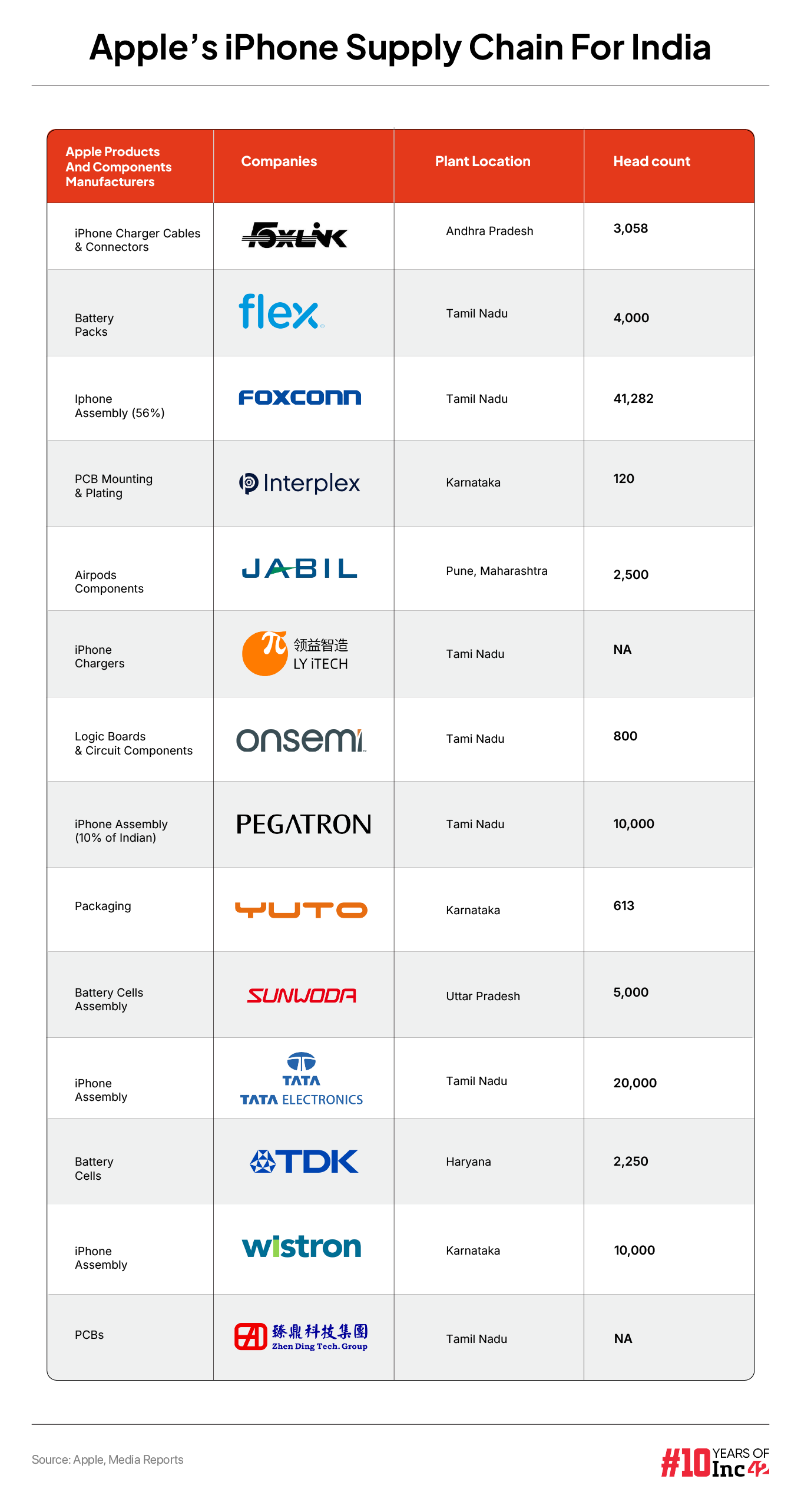
The first signs of Apple scaling up iPhone production in India appeared in 2021, because that’s when the government’s production-linked incentive (PLI) scheme for smartphone makers kicked in. To support this initiative, three of Apple’s Taiwanese manufacturing partners—Foxconn, Pegatron, and Wistron (acquired by Tata Electronics)—established large-scale manufacturing facilities in the country.
Currently, Apple assembles and manufactures iPhones in India, along with some accessories for the smartphone. However, almost all other products, including the famed MacBook and Mac lineup of computers, iPads, Apple TV boxes, Apple Watches, and other devices are imported into India from either China or Vietnam.
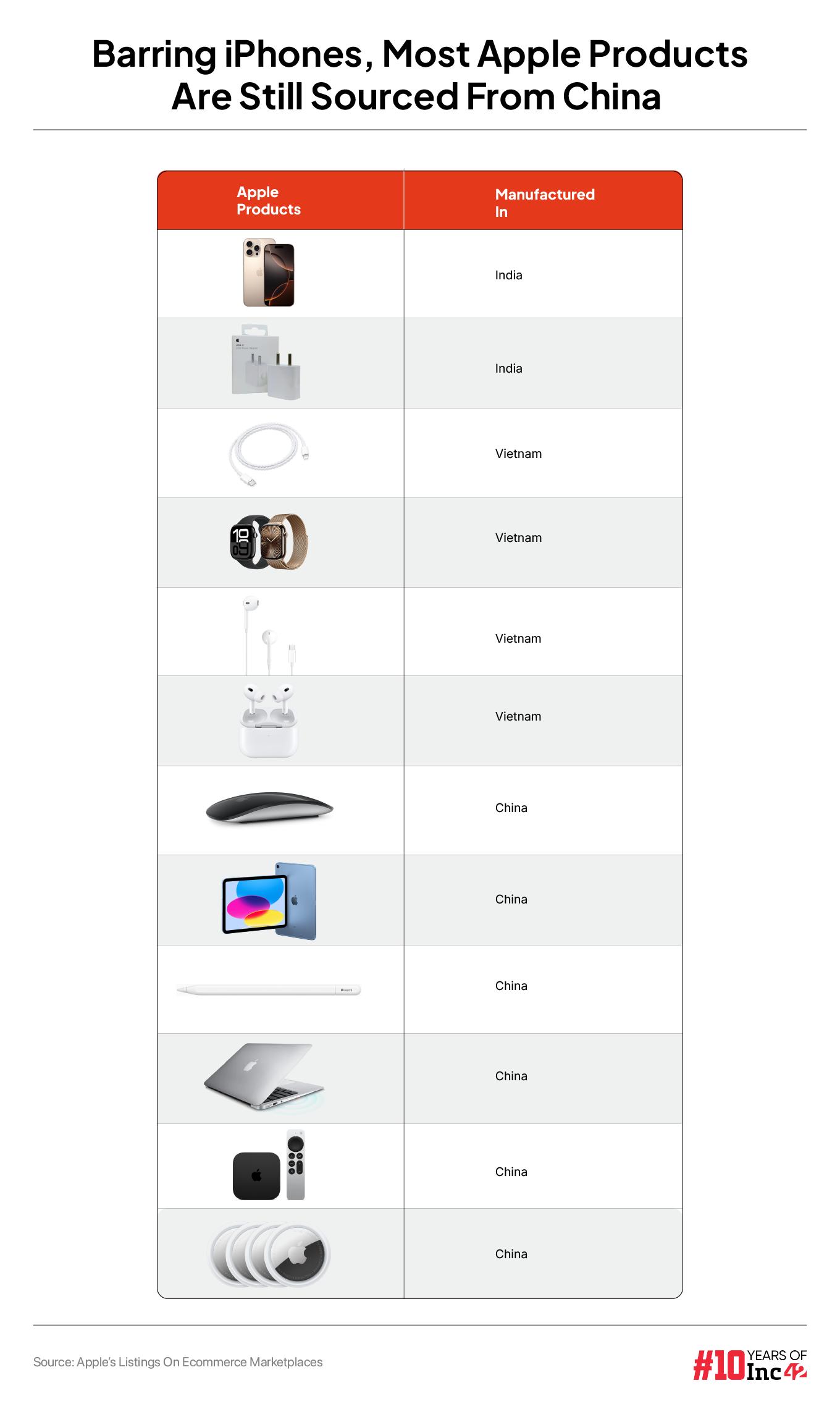
Apple India currently does not have plans to assemble Macbook, and other products but iPhones only. The company is instead focussing on expanding the iPhone manufacturing stack, by sourcing the iPhone components locally including all the accessories, that’s the plan.
Who Are Apple’s Suppliers?
According to Apple’s suppliers list, out of 188 suppliers globally, it has 14 direct suppliers in India. Barring Tata Electronics which has one iPhone assembly plant in Hosur, Tamil Nadu and has acquired another Wistron Corporation’s plant in Karnataka. Tata Electronics also has a 60% stake in Pegatron’s assembly line in Tamil Nadu.
Currently, an estimated 14% of iPhones are manufactured in India, making India the largest producer of smartphones for Apple outside China. Apple plans to increase this share to 25% between 2027 and 2028.
However, given that there could be a shortage of components from any particular vendor and mishaps like Tata Electronics Hosur Plant which caught fire in September this year causing significant disruption in its operations, Apple India is eyeing for more vendors.
There’s one more reason, said a consultant without wanting to be named.
Apple has relied on most Chinese contract manufacturers for some of the critical components. However, these contract manufacturers are finding it very difficult to set up plants in India, the consultant added.
There are geopolitical forces at play with some of these manufacturers. Some of these players were even denied approval by the Indian government. Even as the China +1 sentiment prevails among electronics OEMs, moving operations wholesale to India or Vietnam is simply not feasible at this time, according to the analyst who closely monitors this space.
It’s worth noting that by 2024, Apple has already met most of the PLI targets, but it is looking to go beyond this and establish India as a key market for its complete manufacturing stack, at least for the iPhone.
High-end and current Apple models such as the iPhone 16 Pro and Pro Max are manufactured in India today. But most critical components such as chipsets, camera sensors, displays and other internals are still being sourced from China, US or South Korea.
Given this situation, and the fact that it has to continue meeting production targets to be eligible for PLI, Apple is left with no choice but to partner with Indian manufacturers and grow this ecosystem in the long run, by courting other partners.
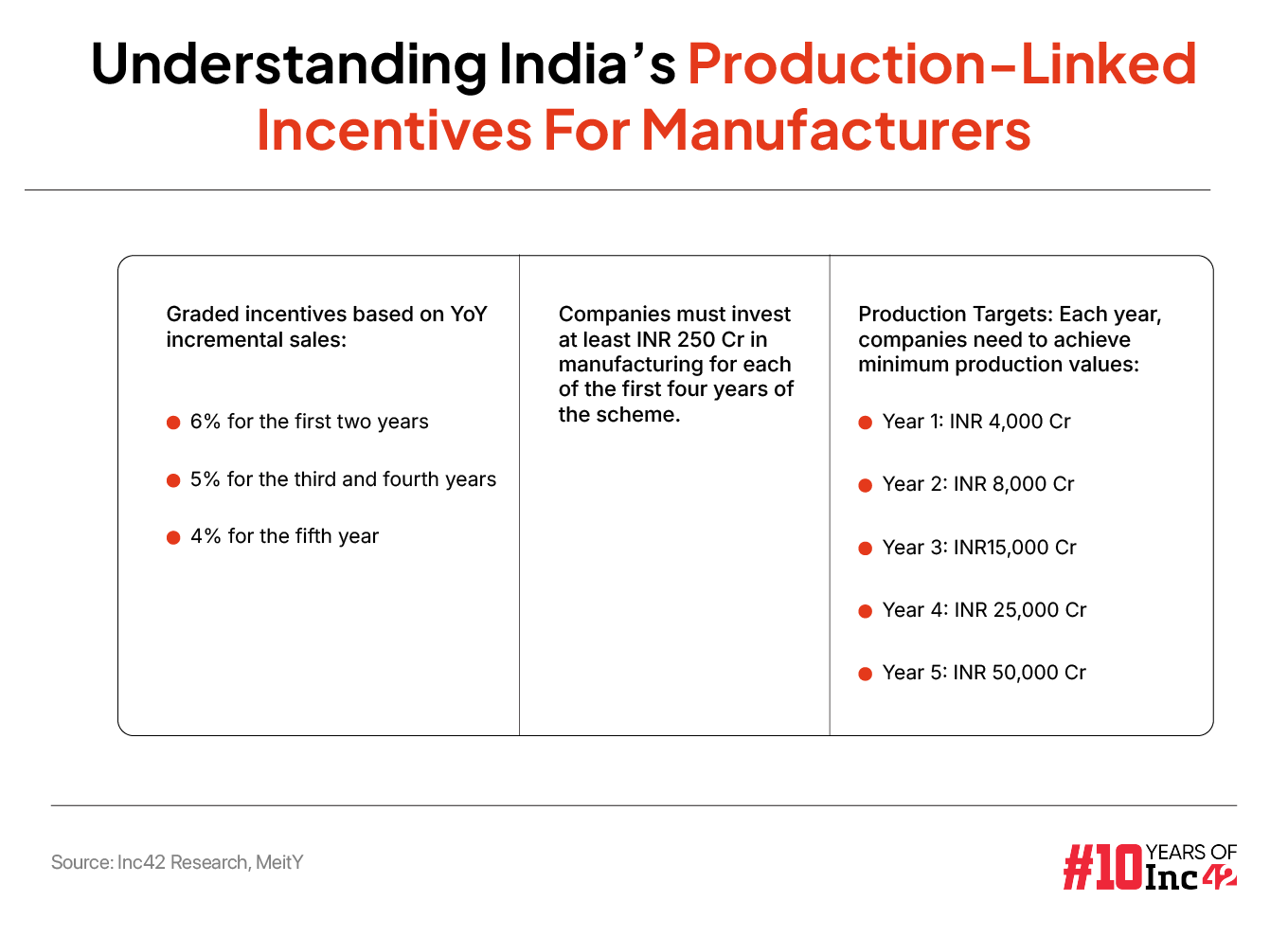
For instance, Apple has also set targets in terms of exports, investment, the freight on board (FoB) value and most importantly domestic value addition i.e. increasing the proportion of India-made components in an iPhone.
Can Indian Manufacturers Step Up?
Apple is reportedly in talks with 40 Indian companies to expand the components and tech support base in India. “However, with ESG as one of the critical parameters, while selecting a supplier partner, not many of them would be immediately shortlisted. In some cases, Apple would allow them time to become ESG compliant that are ready to meet Apple’s green target,” said a senior employee of Apple India.
It’s worth noting that Apple maintains 100% clean energy at its data centres and aims to achieve carbon neutrality by 2030. This immediate burden comes to the direct suppliers.
Apple works with partners across India that are advancing critical work to protect the environment. Its recent joint venture with CleanMax provides additional clean energy capacity and a local solution to power Apple’s offices, its two retail stores, and corporate operations in India, as part of Apple’s commitment to be 100% carbon neutral for its supply chain and products by 2030.
Among the current talks, Apple is reportedly in advanced discussions with Murugappa Group and Titan to source iPhone’s camera modules.
The company is also in talks with Dixon Technology to extend the iPhone assembly line further. Dixon technology has engaged in producing Xiaomi, Motorola, Google Pixel and OnePlus phones in India.
Besides Dixon, Apple has also reportedly also roped in other major tech companies like Amber Electronics, HCLTech, Wipro, and Motherson Group. However, these partnerships are only expected to deliver locally-made components after a few years.
One of the Apple employees quoted earlier told Inc42 that currently, the company does not want to independently outsource critical components like camera sensors, display, and memory chips from Indian manufacturers. Instead, it is asking its global manufacturing partners to do this in India. This situation will likely to remain so for at least the next couple of years, until domestic players can meet Apple’s standards.
The question is whether India’s manufacturing ecosystem can mature as rapidly as Apple and other electronic giants need them to.
Dreaming Of A 100% Made-In-India iPhone
It’s not just Apple of course. Several other brands manufacturing in India, still have to import critical components that make up a modern-day smartphone. This begs the question of when we might see a completely made-in-India Apple iPhone.
Without a component manufacturing ecosystem that can compete with Chinese contract manufacturers, the Indian smartphone manufacturing dream does fall a bit flat. However, to its credit, the government has looked to sharpen the PLI schemes over the years, and has promised investments in areas to become a true replacement for China.
For instance, at the India Mobile Congress (IMC) 2024, Prime Minister Narendra Modi said, “We now aim to provide the world with a fully Made-in-India phone, from the chip to the finished product. We are making significant investments to create a semiconductor ecosystem.”
Established in 2022, the India Semiconductor Mission has already seen government investments to the tune of $11 Bn and is likely to receive a second budgetary allocation of another $10 Bn according to reports.
India’s population and large workforce are seen as analogues to China, and the government is bringing in the funds to back manufacturing of high-end tech products, even beyond smartphones.
A key part of this is India’s ambition of becoming a semiconductor powerhouse. These are very early days. Displacing Taiwan, China and South Korea will not exactly be easy as these countries have established infrastructure for semiconductors and geopolitical situations can easily change in their favour in the mid to long term.
Developing the talent base and expertise needed to build semiconductor products independently will be a challenge for India, as in this situation, economic interests of the incumbents might outweigh their propensity to share knowledge.
In this regard, the US is a major ally for India, and with the upcoming Donald Trump administration looking unfavourably at China-origin supply chains, geopolitical chips are likely to fall in favour of a 100% made-in-India Apple iPhone sooner rather than later.
Edited By Nikhil Subramaniam







