

Amid Hodlnaut’s crisis, Opnx, connected to 3AC’s collapse, proposes rescue. The court must choose between their involvement and dissolving the firm.
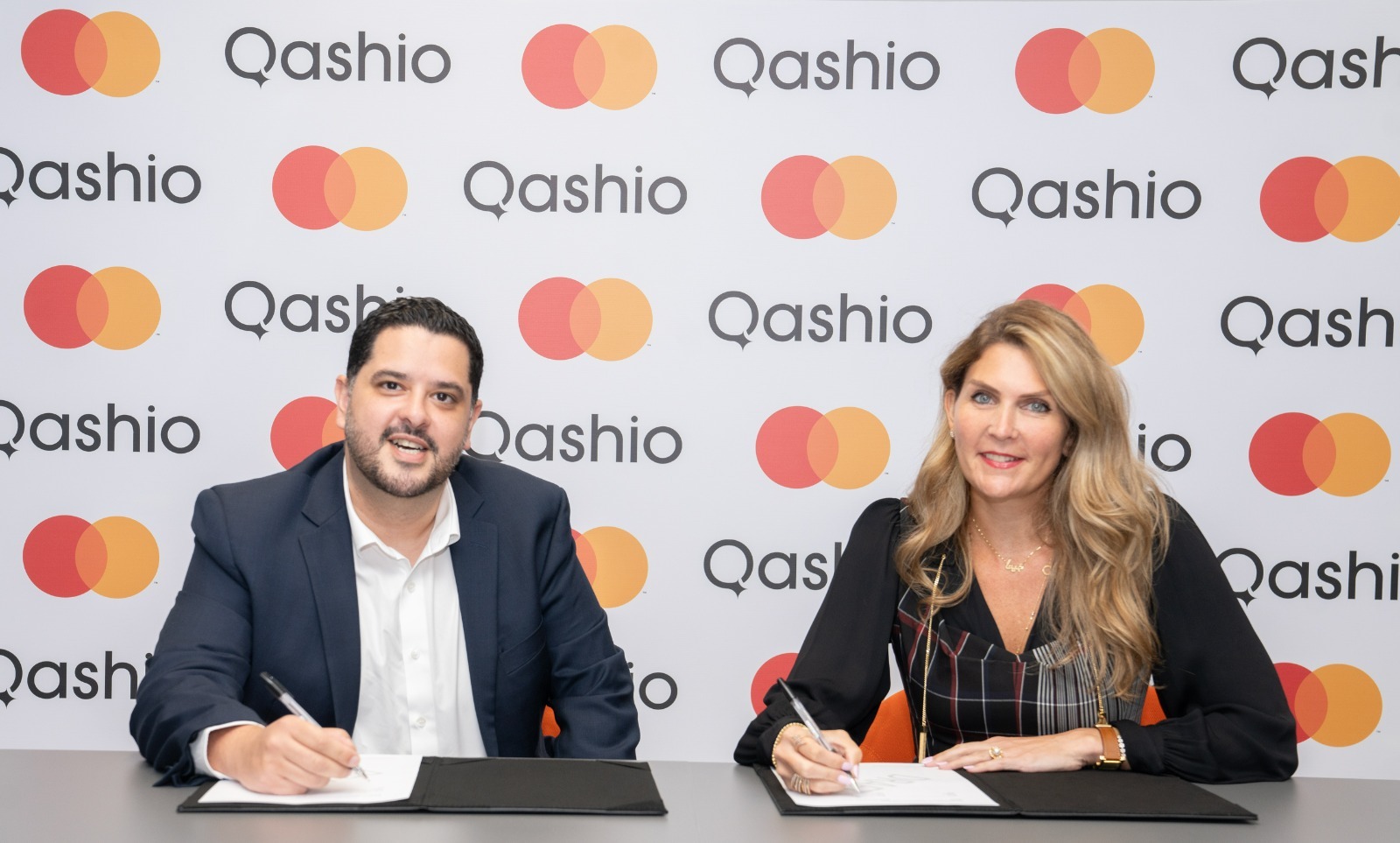
Mastercard, a global technology company, is partnering with UAE-founded spend management fintech company Qashio to launch corporate credit cards, while enabling them with virtual issuance capabilities across the region. The strategic partnership aims to make the future of expense management cashless, transparent and flexible for corporates.
In line with the UAE government’s vision to grow a robust digital economy, Mastercard and Qashio are expanding access to commercial B2B solutions that can help SMEs digitize and transform their operations with a digital-first mindset and approach. The announcement builds on Mastercard’s ever-expanding capabilities in the B2B commercial space, while Qashio continues to grow its reach and network of corporates.
Businesses can count on convenient, cashless, and automated expense management that also simplifies digitization and enables seamless modernization of corporate spend management.
Armin Moradi, CEO and Co-founder of Qashio said: “Collaborating with Mastercard is a huge opportunity for the MENA fintech industry. Mastercard has provided access to global learning opportunities and lends the stability and security of a multinational firm that is well-known and highly respected in the payments and fintech sectors.”
Gina Peterson-Skyrme, Vice President and Country Business Development Lead for the UAE & Oman, Mastercard commented: “The UAE is on an accelerated path towards achieving a cashless economy. By playing an active role in the fintech and SME sectors, Mastercard enables businesses to achieve operational efficiencies through our innovative technology and solutions while supporting the country’s vision of a digital-first economy. Qashio’s robust end-to-end spend management platform offers exciting new opportunities for SMEs, and we are pleased to collaborate with them to bring convenient and rewarding commercial B2B payments to more businesses.”
A significant portion of corporate spending is often done using personal cards, petty cash, and checks. This highlights the importance of digitizing and modernizing corporate spend management, which in turn, reduces the reconciliation and manual work by accountants, resulting in significant time savings.
Qashio’s virtual and physical cards and software allow businesses to manage their spending more automated and transparently, saving hundreds of man-hours and reducing petty cash leakage in the process. Finance and HR departments benefit from better expense reporting, better visibility, control of cash flows and an empowered workforce.
About Qashio
Qashio is a comprehensive management platform where companies can manage their expenses, corporate cards and automate their payments with suppliers. Qashio integrates the company’s accounting tracking and provides real-time reporting to offer better visibility and control of all expenses in order to help its customers make cash flow decisions. With Qashio’s comprehensive software set and overall support, brands can control their finances, reduce expenses as well as identify areas of cash overspending. Some of the best-known companies in the Middle East use Qashio’s system for their internal management, such as Kitopi, EFS, R-Holdings, Radisson Hotels and Alabbar Enterprises.

Burgrill, a cutting-edge culinary startup that has redefined the way people experience food, announced today that it is seeking its first external fundraise to accelerate its growth and expansion plans. The bootstrapped brand has created a niche for itself in the mass-premium category through a focus on innovation & customization.
Burgrill has quickly risen to prominence by introducing a novel dining concept that fuses the traditional charm of a classic burger joint with modern culinary techniques and an emphasis on a personalized dining experience. With its mouth-watering gourmet burgers, handcrafted with premium ingredients and innovative flavours at affordable pricing, Burgrill has gained a loyal following of food enthusiasts and gastronomes. The brand offers a unique menu with equal vegetarian & non-vegetarian options across burgers, wraps, subs & salads.
“We’re thrilled to embark on this exciting journey as we seek to funding to fuel our expansion and enhance the Burgrill experience for our customers,” said Ankur Madan, CEO & Co-Founder, Burgrill. “Our unique concept has struck a chord with diners who are looking for more than just a meal — they want an immersive culinary adventure. This funding will enable us to introduce Burgrill to new markets. Thus, enhance our menu offerings, and invest in technology to further elevate our customer interactions. Client Associates Investment Banking team is advising us on this transaction “
The funding will be used to support key initiatives, including:
Expansion
Burgrill plans to open new flagship locations in high-traffic areas to attract a wider audience and provide more people with the opportunity to savor its exceptional burgers.
Menu Innovation
The company aims to continuously evolve its menu with inventive burger creations and exciting sides. Thus, staying ahead of culinary trends and surprising customers with delightful flavors.
Technology Integration
Burgrill plans to integrate technology solutions to enhance the ordering process, streamline operations, and improve the overall customer experience.
Team Growth
Expand its team of culinary experts, marketing professionals, and operations specialists to support its growth trajectory.
Burgrill’s commitment to sustainability and ethical sourcing is an integral part of its ethos. The company prides itself on sourcing ingredients locally whenever possible and minimizing its environmental footprint.
About Burgrill
Launched in 2016, Burgrill was conceptualized by three food fanatics to venture into an untapped segment of fast-food with healthier alternatives and became its pioneer in India. A homegrown QSR brand i.e., an amalgamation of the best that High-end Cafes and International QSR chains have to offer to their patrons but on a much healthier yet pocket-friendly budget. Burgrill launched over 49 outlets in more than 22 cities in India in the last eight years and intends to launch another 40 CoCo stores Pan India. The brand is rapidly growing in the northern states of the nation. And aims to capture t- key metros in the next 4-5 years. So far the business crossed 45 Crores in Brand Revenue whilst remaining completely Bootstrapped. It has registered double digit EBITDA Margins and is growing at 50% Y-o-Y.

Illustration by Alex Castro / The Verge
Instagram and Facebook users in Europe are getting more options to opt out of Meta’s recommendation algorithms, the company has explained in a blog post today. According to Meta’s president of global affairs Nick Clegg, European users will be able to access features like Reels, Stories, and Search on Facebook and Instagram without seeing content that’s been ranked by Meta’s recommendation algorithms.
“For example, on Facebook and Instagram, users will have the option to view Stories and Reels only from people they follow, ranked in chronological order, newest to oldest,” Clegg writes. “They will also be able to view Search results based only on the words they enter, rather than personalized specifically to them based on their previous activity and personal interests.”
“Users will have the option to view Stories and Reels only from people they follow, ranked in chronological order”
Meta is making the changes to comply with the EU’s Digital Services Act (DSA), a new piece of regulation that will impact how tech companies moderate content on their platforms. In particular, the DSA requires very large online platforms to allow users to opt out of receiving personalized recommendations. TikTok announced a similar change to its service in Europe earlier this month. Meta says it will need to comply with the DSA by later this month.
Instagram and Facebook users are already able to view select parts of the services using chronological feeds without algorithmically-recommended content. Instagram introduced a purely chronological feed in March 2022, while Facebook announced a “Feeds” tab a couple months later in July. In both cases the announcements concerned the main feeds offered by both services, with no mention of being able to access Reels or Stories content chronologically.
According to Clegg, the changes made to the companies Stories, Reels, and Search are just part of a raft of work Meta is doing to comply with the DSA this month. Meta apparently has over 1,000 employees currently working on complying with the new rules. Clegg says the company has released an expanded Ad Library to offer more transparency on ads that run on its platforms, has offered more details on its recommendation algorithms, and has introduced new limits on how advertisers can target teens. It’s also attempting to make reporting illegal content easier on its platforms, and will give users in the EU more information on moderation decisions.
Fintech startup RapiPay grew at a rapid clip with a 78% growth during FY22 but its growth rate decelerated in the following fiscal year. Nevertheless, the firm clocked nearly Rs 440 crore in revenues during FY23. RapiPay’s revenue from operations increased 18.3% to Rs 439 crore in FY23 from Rs 371 crore in FY22, according …
Continue reading “RapiPay nears Rs 440 Cr revenue in FY23, losses surge 2.3X”
The post RapiPay nears Rs 440 Cr revenue in FY23, losses surge 2.3X appeared first on Entrackr.
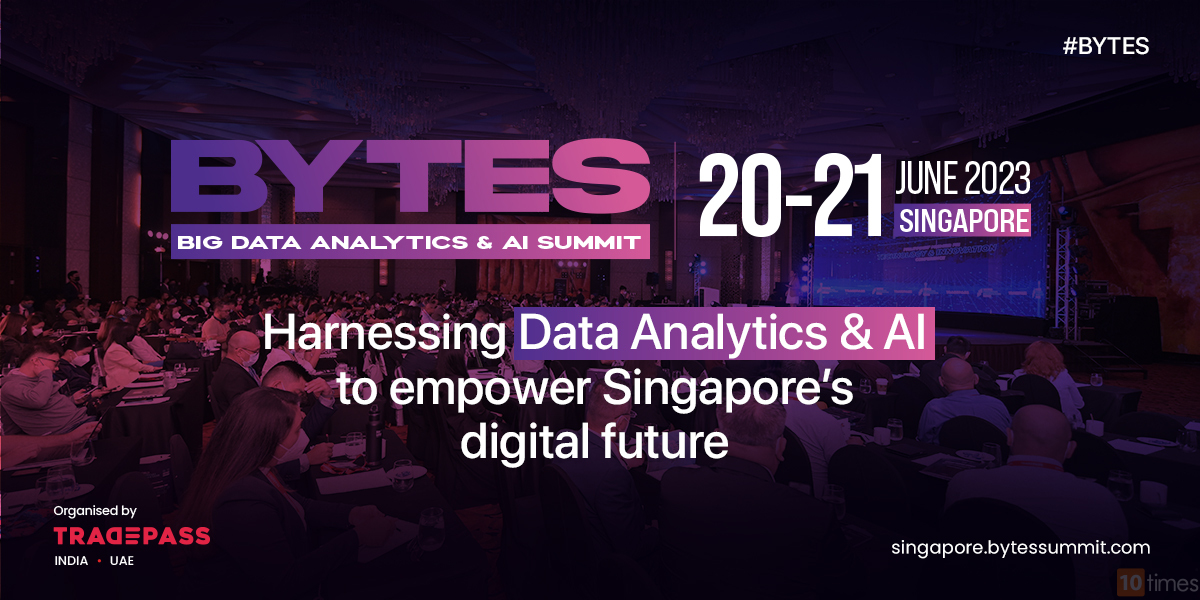
Government of Singapore’s massive ICT strides have started the next wave of transformations in the country’s digital industries. Having spent $12.6 billion on ICT in the last four years, the government has been attracting multinational conglomerates to establish their regional headquarters in the island country.
With surveys estimating Singapore companies to reach the top in APAC with Data Analytics and RPA usage, Tradepass organized BYTES – Big Data Analytics & AI Summit on 25 – 26 June at Sands Expo & Convention Centre, Singapore.
Giving a quick feedback on the platform, Milind the Data Science Product Owner and AI Specialist from Mercedes Benz expressed, “This was a very well organised event and the quality of speakers, the quality of panel discussions were quite outstanding.”
Overwhelmed by the heavy flow of delegates at the platform the exhibiting companies projected a strong competitive spirit and went all out with their products showcase. Companies like Alteryx, Amplitude, Fivetran, SingleStore, Alation, OpenText and Altair took up the entire exhibition space and initiated conversations, fixed one-on-one meetings & demonstrated their solutions throughout the event days.
On the other side, the products showcase was extremely well received by the delegates who wasted no time in exchanging business cards for potential collaborations. The platform hosted 350+ Big Data Analytics & AI professionals including but not limited to CDOs, CIOs, Heads of IT, Data & Business Intelligence, Modelling & Mining, Analytics and Directors of AI, ML & Robotics.
One of the key speakers for the event, Kenny Tay (CEO, Singapore Digital Chamber Of Commerce) gave quite a perspective on AI, “I believe that with the development of current AI especially the generative AI model – The world will change, processes will change and people have to change.”
The event also received a fair share of publicity as it attracted close to twenty Media Partners. Above all, BYTES 2023 – Singapore got the strong backing from Singapore Digital Chamber of Commerce (SGDCC) who took the initiative to become the supporting partner for the event.
While the products & solutions were all cutting-edge, the platform also addressed some of the most pressing topics from Big Data Analytics & AI through its conference. The agenda covered, ‘The Trends and Journey of AI in 2023’, ‘The Blueprint for Driving Data Culture’, ‘GenAI and Business Implications’, ‘Data Democratization’, ‘Harnessing The Power of Generative AI’, ‘Adoption of Data Mesh Architecture’ and many other insightful topics.
The Principal Data Scientist from London Stock Exchange Group, Nitish Ramkumar who took a crucial session on ‘Natural Language Processing in Sustainable Finance’ expressed his opinion on the event, “It has been very good and I think all the speakers, people I am seeing here are very diverse and the topics which have been covered shows the strength of Data Science and AI.”
From automobile, logistics, banks, cosmetics to FMCG, F&B and many others, the event attracted participation from a wide range of sectors. While talking about how AI can make a lot of things easier, the Director for Marketing Science at Meta Singapore Pte Ltd, Vikram Bansal said, “By letting AI become your assistant, it frees you up from looking at things more strategically, it also frees you up to think of innovations and new ideas.”
For more information about the summit, log on to: https://singapore.bytessummit.com/
About Tradepass
Providing access to the global emerging markets, Tradepass brings together people, products and solutions to power events for unparalleled business and networking opportunities. Being the most accredited event company, it helps organizations: enter new markets, grow sales pipeline, close prospects, raise capital and identify the right solution-providers. As a deal facilitator, Tradepass is always determined about exposing the most agile liquid growth markets, to enable all-round scalability and growth.
M1xchange, a platform that facilitates digital invoicing and discounting for MSMEs, corporates, and financiers, has posted over two-fold growth in its operating scale during the fiscal year ending March 2023. The company also managed to cut down losses marginally. M1xchange’s revenue from operations grew to Rs 29.52 crore during FY23 as compared to Rs 14.32 …
Continue reading “Amazon-backed M1xchange’s scale grows 2X in FY23, losses shrink”
The post Amazon-backed M1xchange’s scale grows 2X in FY23, losses shrink appeared first on Entrackr.

The Verge
X, which was formerly known as Twitter until its recent rebranding, is having a problem displaying old posts that came with images attached or any hyperlinks converted through Twitter’s built-in URL shortener. It’s unclear when the problem started, but it was highlighted on Saturday afternoon in a post by Tom Coates, and a Brazilian vtuber, @DaniloTakagi, had pointed it out a couple of days earlier.
As it is, it appears to affect tweets published prior to December 2014, judging by posts visible on my own account. No videos are affected (Twitter only added native image support in 2011 and built-in videos in 2016), but links to YouTube, for example, are now just text with a t.co URL that doesn’t work.
On Monday afternoon, the @Support account posted about the issue, saying, “We fixed the bug, and the issue will be fully resolved in the coming days.”
Image: Screenshot of Twitter.com
The image in Ellen DeGeneres’ tweet has been restored, but a reply shows that not everyone has been granted that privilege.
On Saturday afternoon, as Coates pointed out, the glitch claimed the picture from one of the most famous tweets ever (back when they were still called tweets), this selfie posted by 2014 Oscars host Ellen DeGeneres flanked by celebs like Bradley Cooper, Jennifer Lawrence, and others, taken during the show’s broadcast.
It quickly became the “most retweeted ever,” with over 2 million shares on the platform.
I haven’t seen any public comments from owner Elon Musk or X CEO Linda Yaccarino about the problem, but at some point on Saturday night / early Sunday morning, the picture in that post was restored.
Despite speculation that it could be an intentional cost-cutting move by Musk, the fact that the actual media posted hasn’t been deleted suggests an error or bug of some kind, one of many that have arisen since last year’s takeover and mass layoffs.
There’s also at least one other old tweeted image that still worked — the one posted to President Barack Obama’s account after winning his 2012 campaign for reelection, showing a hug between him and the First Lady. It’s unclear if that one had been manually restored, but it was still visible on Saturday afternoon.
The timing for the cutoff in pictures and links that are broken seems related to changes Twitter made in 2016, adding “enhanced URL enrichment” to show previews for linked websites and native attachments that didn’t count against Twitter’s 140-character limit. According to developer documentation, the metadata for these additions “began emerging” in December 2014.
From the X Developer Platform Data Dictionary:
In March 2012, the expanded URL enrichment was introduced. Before this time, the Tweet payloads included only the URL as provided by the user. So, if the user included a shortened URL it can be challenging to match on (expanded) URLs of interest. With both Historical PowerTrack and the Search APIs, these metadata are available starting in March 2012.
In July 2016, the enhanced URL enrichment was introduced. This enhanced version provides a web site’s HTML title and description in the Tweet payload, along with Operators for matching on those. With Historical PowerTrack, these metadata become available in July 2016. With the Search APIs, these metadata begin emerging in December 2014.
In September 2016 Twitter introduced ‘native attachments’ where a trailing shared link is not counted against the 140 Tweet character limit. Both URL enrichments still apply to these shared links.
Twitter, X, or whatever it’s currently called, did not respond to requests for comment beyond an automated message from its press inbox.
Update August 21st, 5:50PM ET: Noted a post by @Support claiming the bug has been fixed and the issue will be resolved soon.
The Verge
X, which was formerly known as Twitter until its recent rebranding, is having a problem displaying old posts that came with images attached or any hyperlinks converted through Twitter’s built-in URL shortener. It’s unclear when the problem started, but it was highlighted on Saturday afternoon in a post by Tom Coates, and a Brazilian vtuber, @DaniloTakagi, had pointed it out a couple of days earlier.
As it is, it appears to affect tweets published prior to December 2014, judging by posts visible on my own account. No videos are affected (Twitter only added native image support in 2011 and built-in videos in 2016), but links to YouTube, for example, are now just text with a t.co URL that doesn’t work.
On Monday afternoon, the @Support account posted about the issue, saying, “We fixed the bug, and the issue will be fully resolved in the coming days.”
Image: Screenshot of Twitter.com
The image in Ellen DeGeneres’ tweet has been restored, but a reply shows that not everyone has been granted that privilege.
On Saturday afternoon, as Coates pointed out, the glitch claimed the picture from one of the most famous tweets ever (back when they were still called tweets), this selfie posted by 2014 Oscars host Ellen DeGeneres flanked by celebs like Bradley Cooper, Jennifer Lawrence, and others, taken during the show’s broadcast.
It quickly became the “most retweeted ever,” with over 2 million shares on the platform.
I haven’t seen any public comments from owner Elon Musk or X CEO Linda Yaccarino about the problem, but at some point on Saturday night / early Sunday morning, the picture in that post was restored.
Despite speculation that it could be an intentional cost-cutting move by Musk, the fact that the actual media posted hasn’t been deleted suggests an error or bug of some kind, one of many that have arisen since last year’s takeover and mass layoffs.
There’s also at least one other old tweeted image that still worked — the one posted to President Barack Obama’s account after winning his 2012 campaign for reelection, showing a hug between him and the First Lady. It’s unclear if that one had been manually restored, but it was still visible on Saturday afternoon.
The timing for the cutoff in pictures and links that are broken seems related to changes Twitter made in 2016, adding “enhanced URL enrichment” to show previews for linked websites and native attachments that didn’t count against Twitter’s 140-character limit. According to developer documentation, the metadata for these additions “began emerging” in December 2014.
From the X Developer Platform Data Dictionary:
In March 2012, the expanded URL enrichment was introduced. Before this time, the Tweet payloads included only the URL as provided by the user. So, if the user included a shortened URL it can be challenging to match on (expanded) URLs of interest. With both Historical PowerTrack and the Search APIs, these metadata are available starting in March 2012.
In July 2016, the enhanced URL enrichment was introduced. This enhanced version provides a web site’s HTML title and description in the Tweet payload, along with Operators for matching on those. With Historical PowerTrack, these metadata become available in July 2016. With the Search APIs, these metadata begin emerging in December 2014.
In September 2016 Twitter introduced ‘native attachments’ where a trailing shared link is not counted against the 140 Tweet character limit. Both URL enrichments still apply to these shared links.
Twitter, X, or whatever it’s currently called, did not respond to requests for comment beyond an automated message from its press inbox.
Update August 21st, 5:50PM ET: Noted a post by @Support claiming the bug has been fixed and the issue will be resolved soon.
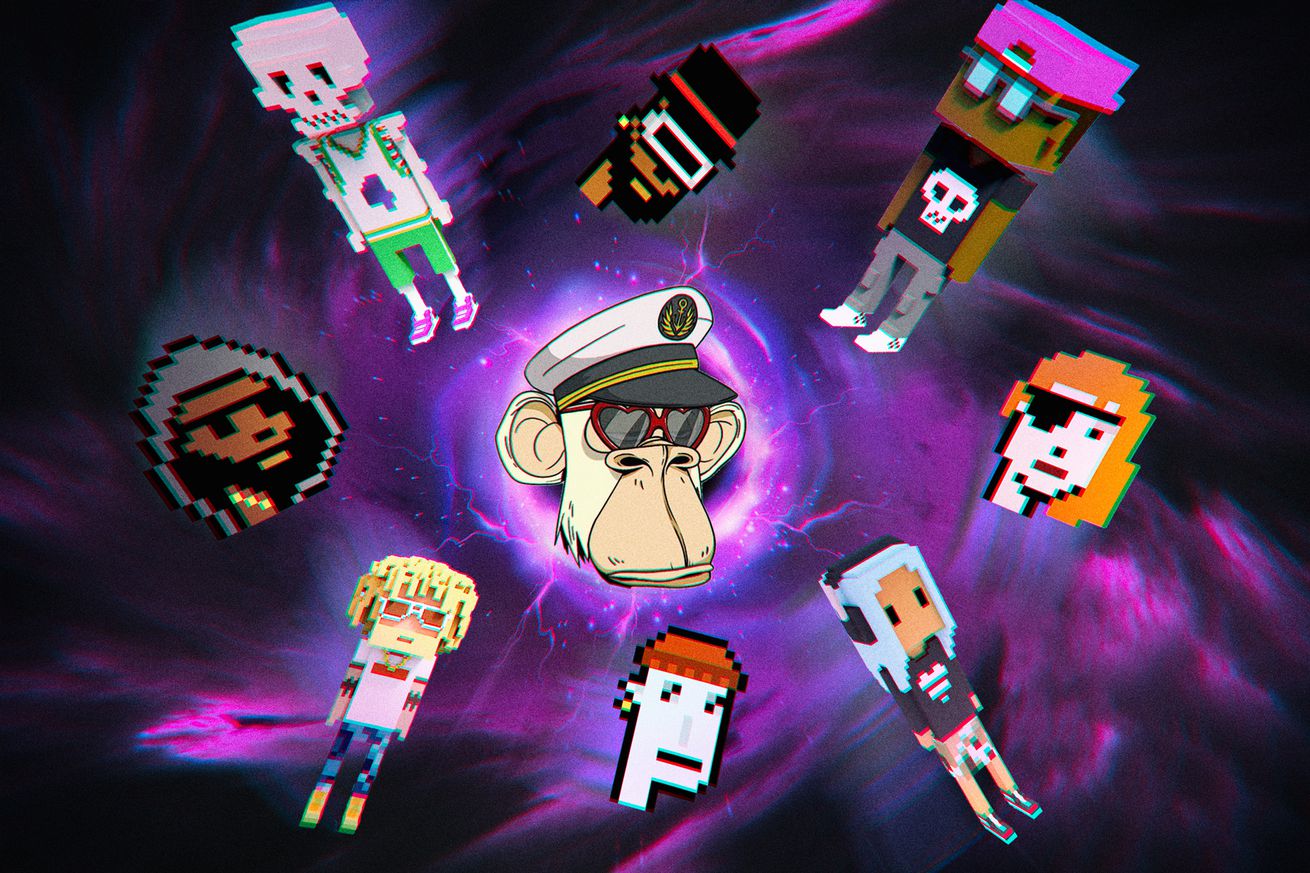
Yuga Labs owns Bored Ape Yacht Club, CryptoPunks, Meebits, and other NFT series. | Illustration by Alex Castro / The Verge
Two of the biggest names in the NFT space are clashing over the future of how the tokens’ creators get paid. Yuga Labs, the company behind Bored Ape Yacht Club and CryptoPunks, said today that it would block the ability to trade its newer NFTs on OpenSea by February 2024. The move is meant to protest OpenSea’s decision to stop collecting royalties on behalf of NFT creators — a huge blow to Yuga’s business.
One of the big promises of NFTs was that their original creator would get a cut every time they were resold. For companies like Yuga, which saw explosive prices on its Bored Ape collection for a time, those royalty fees added up to tens of millions of dollars (a blog post suggests the number was $35 million for Bored Apes alone just via OpenSea trades as of November 2022).
But despite the many promises of Web3, it was ultimately up to NFT marketplaces to enforce and distribute those fees for artists. And as the NFT market has deflated, more marketplaces have been happy to cut artists out of the picture as a way to lower fees and attract sellers. The leading marketplace, Blur, only enforces a 0.5 percent fee in most cases, far lower than the 5 to 10 percent fee that artists typically set.
The ban only applies to newer NFTs
Not all of Yuga’s NFTs will be blocked from OpenSea because of technology constraints. The company said it would drop OpenSea support on “all upgradable contracts and any new collections,” which means that older collections — including its most famous, Bored Ape Yacht Club and CryptoPunks — will likely continue to be traded there, dulling the impact of this protest.
“We’ll be working toward disallowing OpenSea’s marketplace to trade our collections as they phase out royalties,” Emily Kitts, a Yuga Labs spokesperson, told The Verge. She declined to offer details on which collections would be affected.
OpenSea tried for a time to find ways to enforce creator fees, but on Thursday the company threw in the towel. It announced that as of March 2024, all royalty fees for artists would be optional — tips, essentially, that the seller could choose to distribute or not. Fees will be optional for all new collections starting August 31st.
Many NFT businesses rely on those fees. They’ll create a limited number of NFTs, sell them for a low-ish price, and then focus on growing the value of the tokens so they can pocket the resale fees later. (Bored Apes were sold for around $220 at launch, which is a lot less than the $216,000 Jimmy Fallon is believed to have paid for one less than a year later.)
Resale fees aren’t the only way that NFT businesses can make money — CrytoPunks don’t have a fee, for instance — but it’s certainly among the primary ways. The Bored Ape collection has a 2.5 percent fee, and after acquiring the Meebits NFT collection, Yuga added a 5 percent fee.
“Yuga believes in protecting creator royalties so creators are properly compensated for their work,” Yuga CEO Daniel Alegre said in a statement this afternoon. Yuga Labs has previously blocked certain transactions from happening on Blur and other marketplaces that don’t enforce royalty fees.