

A clever new app called Slingshot is combining the serendipity of BeReal snaps with the friends-only photo sharing popularized by apps like Snapchat. But while the app’s inspirations are familiar, the way you interact with Slingshot offers something unique. As the name suggests, you pull down on the screen — as if pulling back on […]
Amid its ongoing tussle with X (formerly Twitter) over takedown orders, the Indian government reportedly told a Karnataka High Court (HC) bench that the social media platform was a ‘habitual non-compliant platform’.
As per filings seen by Reuters, the Centre told the HC that the platform did not adhere to its content takedown orders for years, thereby undermining the government’s role.
This was part of submissions by the Ministry of Electronics and Information Technology (MeitY) before the court on August 24 in response to a challenge filed by X against a previous ruling and fine imposed on it by the HC. Meanwhile, the HC was slated to hear the social media platform’s petition in the coming days.
Arguing for X’s plea to be quashed, the Centre, in its 28-page filing, reportedly stated that the social media platform undermined ‘the role of the government in a democratic setup’. Citing its rationale for this, MeitY said that the company previously unblocked certain handles, which were ordered to be blocked, without the government’s knowledge.
The ministry also argued that the social media giant was ‘advocating a dangerous trend’ by being the arbitrator of the government orders. It contended that if X was allowed such concessions, it could make all platforms the ‘final arbitrator of lawful orders’.
Meanwhile, earlier in the day, X informed the Karnataka HC that it deposited INR 25 Lakh with the Registry in compliance with the previous order issued by a single bench of the court. The HC, in early August, ordered the platform to deposit half of the INR 50 Lakh penalty imposed on the company in June this year by August 14.
The matter harks back to the period before Elon Musk took over the reins of the social media platform. In July last year, Twitter filed a petition in the Karnataka HC seeking to dismiss content takedown orders issued by MeitY under Section 69A of the IT Act.
Twitter’s plea alleged that the Centre asked it to take down content that pertained to alleged misinformation during farmer’s protest and the pandemic. In retort, the union government challenged the locus standi of Twitter’s plea citing foreign credentials of the latter. The Centre argued that only Indian citizens possessed the right to challenge fundamental rights to freedom.
Subsequently, in June this year, a single-bench of the HC ruled in favour of the government and imposed a penalty of INR 50 Lakh on the social media platform. Following this, the company approached a divisional bench against the order.
In August after much back and forth, the bench comprising Chief Justice Prasanna Varale and Justice MGS Kamal heard preliminary submissions in the case and directed X to pay half of the amount for the time being. The court added that the reduced penalty ought not be treated as the court’s acceptance that ‘some equity lies in favour of X Corp.’
The post Centre Calls Twitter A ‘Habitual Non-Compliant Platform’ appeared first on Inc42 Media.
The company is building an AI-enabled data platform for companies that want to know more about the carbon credits they buy.
Jess Murrey isn’t your typical founder. After 10 years working in nonprofits to train young activists, Murrey and behavioral change researcher Alicia Clifton decided that mobile gaming could be an unexpected way to broaden their reach. And so, Wicked Saints was born. “American teens care very deeply about the planet, equality and mental health, but […]
Artifact, the personalized news aggregator built by Instagram’s co-founders, is launching a new feature today that takes the app in a different direction beyond tracking, summarizing and commenting on the news. Now, users will be able to share any link from the web in order to view a personalized feed of links based on their […]

At Betterhalf, we firmly believe in the mantra – “Be the change you want to see in the world.” In the Indian startup ecosystem, it’s not common for companies to offer Employee Stock Ownership Plans (ESOPs) to their employees until they reach the Series A funding stage. However, as advocates of change, we have decided to break this tradition by introducing an ESOP buyback program for our employees at the Pre-A stage. We extended this opportunity to 7 of our employees, and we’re delighted to share that all of them enthusiastically participated.
As an organization, we always seek growth-centric opportunities, and we believe that providing ESOPs to our employees is the right step. A company can truly thrive when its people also grow. With the ESOP buyback option, our goal is to ensure that those contributing to Betterhalf’s rapid growth can also share in that growth. We also aimed to encourage our employees to partake in wealth creation opportunities, regardless of their roles and responsibilities, as ESOP Buyback can be an excellent avenue for wealth creation. Additionally, we hope that this initiative will attract external talent to join us, as people are drawn to a culture that nurtures their personal growth.
While announcing the ESOP buyback program to our employees, our co-founder and CEO, Pawan Gupta, stated:
“We have experienced tremendous business growth in the past year and wanted our team to grow alongside us. Unlike many other startups, we offered ESOP buyback to our employees, giving them an equal opportunity in wealth creation. It’s not common to see companies offering buyback at such an early stage of business. But we are pleased to challenge this norm and hope that more companies will follow the path we are pioneering. I also believe that our initiative will inspire other startups to realize that they don’t need to wait until the Series B stage or beyond to offer buybacks; it can happen at an early stage.”
In the past year, our business has witnessed remarkable growth. Our user base has expanded from 500,000 to 1.2 million, and the connections on our app have soared from 500,000 to 2.5 million. Regarding marriages facilitated through our platform, the number has surged from 1,000 to 5,000. And these numbers are only set to rise!
Just 12 months ago, our company had a team of 15 people. Currently, our overall headcount stands at 50 employees. What’s particularly remarkable is that 50% of our current workforce comprises women, underscoring our commitment to an inclusive work culture and progressive talent policies. In the upcoming year, as we progress toward our Series A funding round, we plan to expand our team to double or even triple its current size while maintaining our commitment to inclusivity.
Betterhalf could be the ideal platform to find your life partner, as we arrange love marriages on your terms and conditions. Don’t hesitate; sign up now and start your search!

A report by KPMG suggests that Indian companies have the potential to unlock an additional $200 billion in value by implementing effective customer experience (CX) strategies. KPMG India’s “Mastering Intentional Experiences – India CX Report” focuses on how leading brands have successfully cultivated intentional customer experiences in sectors such as retail, financial services, travel, telecom, and utilities.
The report gathers insights from a primary survey involving over 5,000 Indian consumers, aiming to identify organizations excelling in providing superior customer experiences. It delves into how Indian businesses are adapting to changing consumer expectations, significantly influenced by global events. Furthermore, it highlights the potential for Indian companies to tap into an additional $200 billion by implementing effective CX strategies.
A global survey covering 25 markets was conducted to benchmark leading brands based on their CX performance.
The report presents notable findings from the Indian region, showcasing superior customer experiences achieved through well-defined tools and approaches. India surpasses the global average in terms of the customer experience excellence (CEE) score, with an emphasis on personalized experiences and effective fulfillment of customer expectations. Many brands in the survey have raised the bar by improving their CEE score (average +5%), primarily driven by enhancements in the expectations pillar (average +7%). Among various sectors, the retail sector stands out with a CEE metric of 8.33, indicating strong loyalty, low customer churn, and a willingness to pay more due to perceived value. Consumers in this sector exhibit the highest loyalty score (8.45), while the logistics sector records the lowest (8.09). The report spotlights key brands in the retail sector, such as Nike, Puma, Kalyan Jewellers, Crossword, and Sketchers.
Manuj Ohri, Partner, Business Consulting, KPMG India, emphasizes, “It is imperative for businesses to recognize and appreciate that customer experience is much beyond transactional. In the Indian market, leading companies and brands have recognized customer experience as imperative to sustained value creation. Personalization has emerged as a key pillar to drive customer loyalty.”
He adds, “Focusing on customer needs and experience will be necessary for brands to stay relevant in the current scenario and to make consumers their biggest advocates.” The report also highlights brands that have made significant advancements in their CEE ranking, including ICICI Prudential Life Insurance, Airtel, Hotstar, Crossword, and HDFC Standard Life Insurance.
A wireless charging stand or pad makes life a little easier. You don’t have to fumble with a cable for your device when you need fast charging at the end of a long day, and you’re less likely to trip over wires, too. But finding a truly good charger isn’t as simple as looking for the model with the best charging speed and most impressive spec sheet. We’ll let you know what to look for when shopping, and recommend some of the best wireless chargers that are worth your attention whether you use an iPhone or Android smartphone.
What to look for in a wireless charger
It’s tempting to buy a wireless charging pad optimized for the size and features of the phone you have right now. Resist that urge — this is an accessory you’ll probably use with multiple devices, and you don’t want to replace it every time you buy a new handset. Instead, think about the phones you’re likely to use down the road. If you’re sure you’ll use iPhones for a long time, an Apple MagSafe charger will be faster and more convenient. If you use Android phones or think you might switch sides, however, you’ll want a more universal design.
You’ll also want something that accepts a variety of device sizes. Certain wireless charging stations don’t work well with the iPhone 13 mini or other particularly small phones, for instance. If you think you may change phone sizes at some point, a pad charger is a wiser choice. With that said, you’ll still want to pay attention to any potentially limiting design features, such as prominent cradles and lips.
Also, consider wireless chargers with modular components. While you’ll have to invest exclusively in one company’s ecosystem, this gives you room to grow as your gadget needs change. You can add a charger for a second phone or smartwatch, and some systems even offer modular batteries to supply power on the go. Just be sure to look at a multi-device charger if there’s a very good chance you’ll expand your setup in the future.
Where and how will you use your charger?
Pontus Wellgraf on Unsplash
Odds are that you have a specific use case in mind for your charger. You may want it by your bedside for a quick charge in the morning, or on your desk for at-a-glance notifications. You might even keep it in your bag for convenient travel charging. If you intend to place your charger on a nightstand, you’ll usually want a pad. With a stand, even a dim always-on display can prove distracting when you’re trying to sleep. You may also want a wireless charging pad if your phone will sit on a low table, as it might be easier to grab in a rush. Look at compact models if space is tight.
On your desk, you may prefer a stand to quickly glance at alerts or make video calls. Want something more travel-friendly? A puck or similarly minimalist design is typically best. You may also want a charger with a battery (either modular or built-in) for camping or whenever an outlet isn’t nearby.
Performance matters, to a point
Although wireless charging is usually slower than its wired equivalent, speed and wattage are still important considerations. A fast charger can supply enough power for a long night out in the time it takes to change outfits.
In general, a 15W charger is more than quick enough for most situations, and you’ll need a MagSafe charger to extract that level of performance from an iPhone. With that said, even the slower 7.5W and 10W chargers are fast enough for an overnight power-up. If anything, you’ll want to worry more about support for cases. While many models can deliver power through a reasonably thick case (typically 3mm to 5mm), you’ll occasionally run into examples that only work with naked phones.
There are some proprietary chargers that smash the 15W barrier if you have the right phone. Google’s second-generation Pixel Stand, for example, delivers up to 23W for a Pixel 6 Pro or Pixel 7 Pro. Optimized designs like this can make sense if you’re loyal to one brand. Be sure to get a charger that still works well with other manufacturers’ phones, though, as you don’t want to replace your accessory (or endure sluggish speeds) if you switch brands.
Quality, box contents and the little details
Michael Soledad on Unsplash
Once you’ve chosen the form factor and performance levels that meet your needs, you’ll want to consider the fit and finish. You’re likely going to use your wireless charger every day, so even small differences in quality could make the difference between joy and frustration.
If your charger doesn’t use MagSafe, textured surfaces like fabric or rubberized plastic are more likely to keep your phone in place. The base should be grippy or weighty enough that the charger won’t slide around. If you’re buying a stand, check that it won’t tip over or wobble.
Pay attention to what’s included in the box. Some models don’t include power adapters, and may even ask you to reuse your phone’s USB charging cable. What may seem to be a bargain may prove expensive if you have to buy extras just to use it. Also, some cables and chargers are better than others. A USB-C charger is more future-proof, while braided cables may be less likely to break or tangle.
You’ll also want to think about the minor conveniences. Status lights are useful for indicating correct phone placement, but an overly bright light can be distracting. Ideally, the light dims or shuts off after a certain period of time. And while we caution against lips and trays that limit compatibility, you may still want some barriers to prevent your device falling off its perch on the charging station.
By now, you should know what to look for. While it would be impossible for us to test every charger, we’ve tried numerous models and have some favorites.
Best overall wireless charging pad: Otterbox OtterSpot Wireless Charging System
There’s no shortage of portable wireless chargers, but it’s rare that you can find one which is as well-suited to your desk as it is your bag. The Otterbox OtterSpot system is our top pick precisely because it’s so versatile. The base unit is stable, includes a power adapter and accommodates a wide range of phone sizes. But it really shines when you want to leave home. You can buy as many as three 5,000mAh portable batteries that optionally stack on top of the base to recharge, and serve as completely wireless chargers on the go. Those batteries can power wired devices through USB-C ports, too.
This isn’t the fastest charger given its 10W output, and the base alone is normally expensive at $55 (though it’s down to $38 as we write this). If you want a station you really can use everywhere, though, the OtterSpot is a top pick that can grow along with your needs.
Runner up wireless charging pad: Belkin BoostCharge Pro Portable Wireless Charger Pad
It’s easy to find wireless charging pucks that are fast or portable, but rarely both — and certainly not as well-considered as Belkin’s BoostCharge Pro Portable Wireless Charger Pad. Its extremely compact design not only offers 15W MagSafe charging (plus Qi charging when flat), but includes a kickstand that lets you watch videos while you power up. Add a long 6.6ft braided cable and this is an ideal charger whether you’re traveling or catching up on TV shows.
The emphasis on MagSafe may make the Belkin BoostCharge less appealing for Android devices. It’s a definite step up from Apple’s more affordable but simpler MagSafe Charger, however. And importantly, you have the choice of buying Belkin’s accessory with ($80) or without ($60) a power adapter.
Best budget wireless charging pad: Anker 315 Wireless Charger
If you just need the basics, Anker’s 315 Wireless Charger offers significant value from a well-known name. It tops out at 10W (7.5W for iPhones), doesn’t include a power adapter and relies on a microUSB cable, but it also costs only $15. Even if you have to buy an adapter, you’ll be hard-pressed to find a better deal.
Best overall wireless charging stand: Belkin BoostCharge 15W Wireless Charging Stand
There’s fierce competition in the wireless charging stand space, and it’s easy to get a good 15W charger if you’re willing to pay. Belkin, however, is one of the few that promises truly solid value. Its $45 BoostCharge 15W Wireless Charging Stand costs less than some alternatives while including a power adapter in the box. The lip at the bottom will keep your phone stable, and dual charging coils let you use the device while watching a video in landscape mode.
There’s no MagSafe or other device-specific charging optimizations on this one. And like many wireless charging stands, this doesn’t officially support the iPhone 13 mini and similarly small handsets. But there’s otherwise little to complain about here — this is a no-nonsense power solution at a good price.
Runner-up wireless charging stand: Spigen ArcField PF2102
There aren’t many great options for wireless chargers that use Samsung’s fast power delivery technology, particularly if you want a stand. Thankfully, Spigen’s ArcField PF2102 is up to the job. It delivers 15W to all Samsung Galaxy phones that support Super Fast Wireless Charging, and it’s a well-made (if unspectacular) perch that prevents your device from sliding around. The universal form factor works with other phone brands, too.
You’ll want to shop carefully. Some versions don’t include a power adapter, and some stores sell for less than the official $80. If you can score a good deal, though, this is an ideal way to charge your Galaxy device while providing a clear view of the always-on display.
Best budget wireless charging stand: Anker 313 Wireless Charger
Anker’s strong value in pad chargers also applies to stands. The 313 Wireless Charger tops out at 10W (5W for iPhones), doesn’t include a power brick and uses a microUSB cable, but it’s also $20. You can buy an adapter and still undercut the price of some equally competent alternatives. It can charge while your phone is in landscape orientation, too. You might want to look at competing products if they cost under $40 with an adapter included, but the 313 is otherwise difficult to top.
This article originally appeared on Engadget at https://www.engadget.com/best-wireless-charger-140036359.html?src=rss
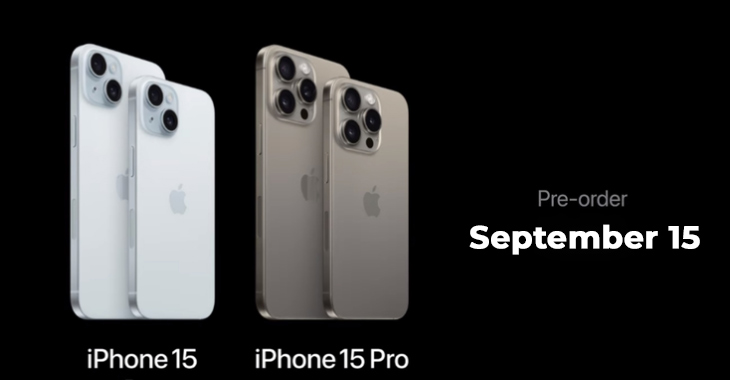
Apple has officially launched its much-anticipated iPhone 15 series and the latest Apple Watch Series 9 during the Apple Wonderlust Event 2023, leaving tech enthusiasts eagerly awaiting the arrival of these new devices.
Apple enthusiasts across the country are eagerly anticipating the opportunity to own these brand-new devices. According to official sources, pre-orders for the Apple iPhone 15 smartphone will commence on September 15.
Pre-booking for the new iPhone series is scheduled to begin at 5:30 pm IST on September 15, with the base model of the iPhone 15 128 GB variant available for pre-order at Rs 79,900.
The iPhone 15 series is set to make its entry into the market with four variants: iPhone 15, 15 Plus, 15 Pro, and 15 Pro Max. The starting price for the base model featuring 128 GB of memory is nearly Rs 79,900. Customers seeking higher storage options can choose the 256 GB model priced at Rs 89,900 or the top-tier 512 GB variant, retailing for Rs 1,09,900.
In addition to the iPhone 15 series, Apple has introduced the Apple Watch Series 9, expanding its renowned line of smartwatches. The product will be available for pre-order starting September 13, allowing customers to explore its latest features and enhancements.
The iPhone 15 series is poised to deliver exceptional performance, a sleek design, and a range of advanced features, while the Apple Watch Series 9 aims to elevate the smartwatch experience for users.
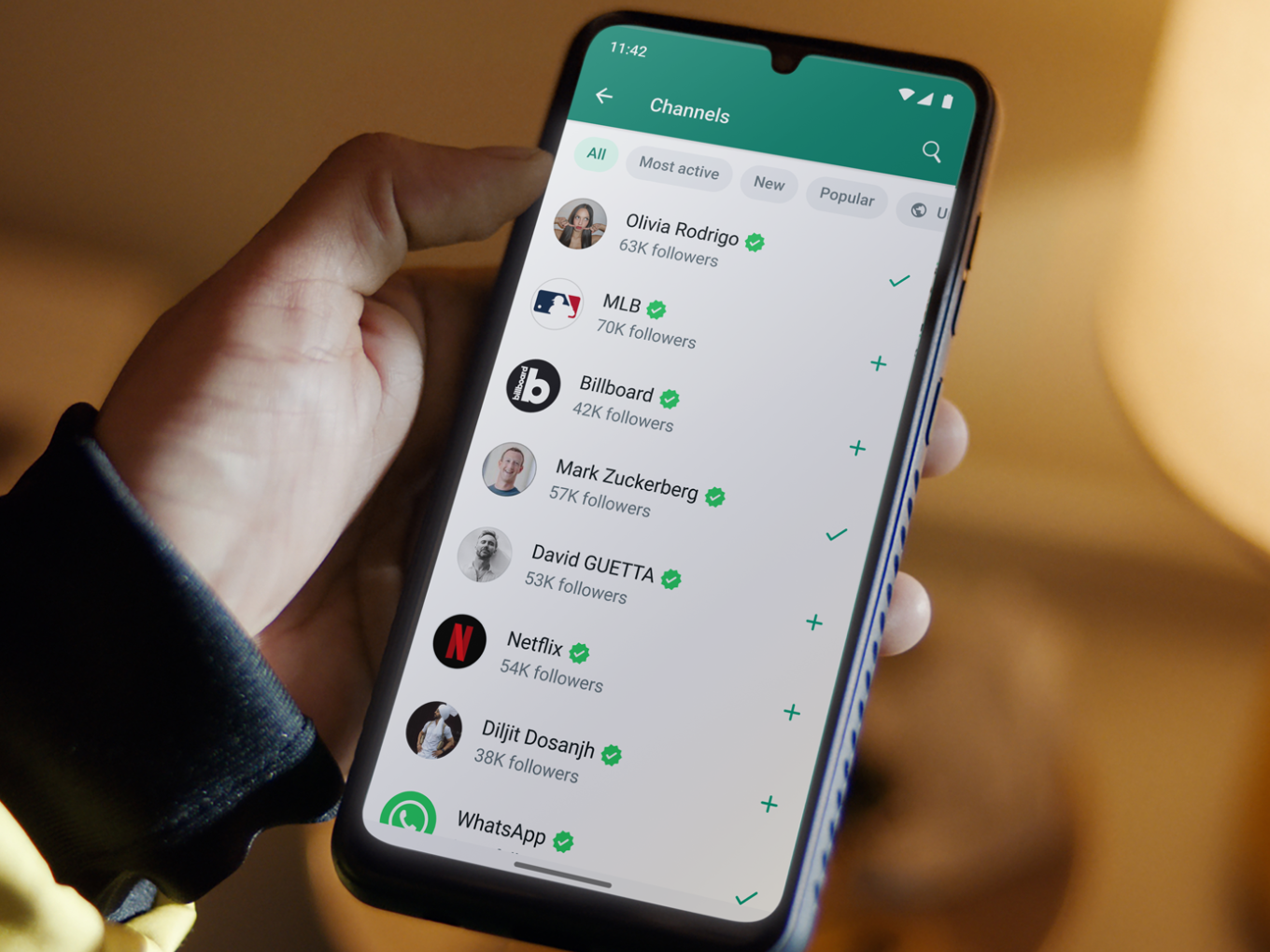
Meta-owned messaging platform WhatsApp officially announced the launch of WhatsApp Channels in over 150 countries, including India, on Wednesday (September 13).
WhatsApp Channels is a private way to receive updates that matter to the users on the WhatsApp platform, the tech major said in a blog post.
“Channels are separate from your chats, and who the users choose to follow is not visible to other followers,” the company said.
“We’re welcoming thousands of organisations, sports teams, artists, and thought leaders that people can follow, right within WhatsApp,” it added.
Meta CEO Mark Zuckerberg also announced the launch on his WhatsApp Channel saying, “Excited to introduce you all to WhatsApp Channels, a new private way for you to get updates from people and organizations you follow. I’m starting this channel to share Meta news and updates. Looking forward to connecting with you all around the world.”
On expanding Channels globally, WhatsApp has introduced several updates for Channels, including enhanced directory, reactions, editing, and forwarding.
Users can find channels to follow, which are automatically filtered based on their countries. They can also view channels that are new, most active, and popular based on the number of followers.
Users can also react using emojis to give feedback and see a count of total reactions. However, other followers will not be able to view how other followers have reacted.
WhatsApp Channels will allow forwarding an update to other chats and groups in which there will be a link back to the channel.
“This is just the beginning, and we’ll continue to add more features and expand Channels based on feedback we get from users. Over the coming months, we’ll also make it possible for anyone to create a channel,” the company said.
Meanwhile, WhatsApp has also stated that it protects the personal information of both admins and followers.
Amid regulations around privacy becoming more stringent, WhatsApp has also taken a few measures to ensure better data protection.
Recently, increasing instances of fraud cases were reported on WhatsApp. At the core of these were international mobile numbers. Following this, the company agreed to proactively deregister several suspicious phone numbers.
Recently, the Indian government had to ban over 66,000 WhatsApp accounts while cracking down on spam job calls.
The post WhatsApp Launches Channels Feature In Over 150 Nations, Including India appeared first on Inc42 Media.