
In The Checkout this week, we look at why Southeast Asia’s parenting firms lag behind their India-based peers and why ShopBack pulled the plug on BNPL.
Source link



In The Checkout this week, we look at why Southeast Asia’s parenting firms lag behind their India-based peers and why ShopBack pulled the plug on BNPL.
Source link
In The Checkout this week, we look at why Southeast Asia’s parenting firms lag behind their India-based peers and why ShopBack pulled the plug on BNPL.
Source link


The SEC voted on Wednesday to require public companies to report a portion of their greenhouse gas emissions and their exposure to risks from climate change.
The rules will require certain companies to report their Scope 1 and 2 emissions, those that result from direct operations and energy use, but omits Scope 3 emissions, or pollution that they generate indirectly, including throughout their supply chains or when customers use their products or services.
While the new rules do not apply to privately held companies like startups, they do create opportunities for those focused on the carbon tracking, accounting and management space. Many already exist to serve companies interested in discovering and reducing their carbon footprints, and the SEC’s new regulations could inspire more founders to jump in.
The SEC began considering climate-related disclosures in 2022, and in the process of developing the regulations, the agency received more than 24,000 comments. The proposal was met with split opinions from the publicly traded companies that fall under the regulator’s purview.
Some, like Amazon, Vanguard, Ralph Lauren and Chevron, supported Scope 3 disclosures; already, many public and private companies voluntarily track those emissions. But others, like Walmart, Fidelity, Gap, Southwest Airlines and BlackRock, were opposed, arguing in some cases that Scope 3 was still too inaccurate.
In recent years, a number of startups have turned to AI to automate and improve Scope 3 estimates. Expect that trend to continue.
In adopting the new rules, the SEC is playing catch-up with other large economies, including China and the EU, which both have greenhouse gas reporting requirements. While the new rules are significantly watered down from what was first proposed, they still represent a stake in the ground: Disclosures related to emissions and climate risk are going to become key data points for which investors can evaluate companies.
Listen here or wherever you get your podcasts.
Hello, and welcome back to Equity, the podcast about the business of startups, where we unpack the numbers and nuance behind the headlines.
This is our Wednesday show, focused on startup and venture capital news that matters. If you are a founder or an investor, this one is for you!
Here’s the day’s rundown:
For episode transcripts and more, head to Equity’s Simplecast website.
Equity drops at 7 a.m. PT every Monday, Wednesday and Friday, so subscribe to us on Apple Podcasts, Overcast, Spotify and all the casts. TechCrunch also has a great show on crypto, a show that interviews founders and more!
“We want to be India’s most efficient credit management company, which fundamentally makes us ubiquitous for all things credit,” – Aditya Soni, founder of CheQ.
In July last year, Aditya Soni firmly expressed his belief that his nascent fintech startup CheQ could transform the credit management landscape in India during an interaction with Inc42. And his succinct statement amply captured his vision regarding the startup’s future.
Bengaluru-based CheQ had been operational for about five months at the time, but the founder claimed it had already amassed a customer base exceeding 4 Lakh. Soni attributed the fintech’s growth to a robust organic marketing strategy, which still keeps its overhead costs low.
In a landscape dominated by popular fintech super-apps like Paytm, PhonePe, Google Pay or Amazon Pay, CheQ champions a unique niche, making credit management super easy for credit cardholders and borrowers paying loan EMIs. Credit card bill payments are also made extra-rewarding for CheQ users.
Essentially, the fintech startup provides a unified platform to help people streamline monthly payments and monitor their credit scores without the hassles of navigating multiple channels to make payments. (Multiple cardholders having numerous ‘due’ dates and the chances of missing out on a few know the pain point only too well.)
Additionally, in November 2023, it introduced a new rent and education fee payment solution that enables customers to pay their bills using a credit card and in turn, reach their credit card goals and improve their credit score. Customers can easily pay their rent using a credit card in less than a minute, Soni told inc42.
Meanwhile, CheQ has grown more ambitious. Soni is all set to run an overarching credit platform to emerge as the ‘Zerodha’ of credit management. Like Zerodha, one of India’s largest discount brokers with a wide range of investment products, CheQ aspires to attain a similar status for ‘all things credit’.
For the unversed, CheQ was set up by Soni in 2022 and became operational in February next year (2023). Its flagship is Pay Together, a unique feature allowing users to settle multiple bills through a single transaction. Besides, users are offered a 1% reward on every payment. Rewards come in CheQ Chips, which can be redeemed through vouchers from popular brands (Flipkart, Myntra, Swiggy, Ola, Blinkit, Cleartrip, EaseMyTrip, The Man Company, Wow Skin Science, PVR and more). The in-app currency can also be used to pay subsequent bills on the app.
CheQ’s tech stack has two layers. One is integrated with major banks like ICICI Bank and Axis Bank, allowing users to make direct payments. Plus, there is another layer integrated with payment gateways and aggregators like Razorpay and Cashfree Payments, enabling people to pay multiple credit card bills and loan EMIs to various banks through a single payment window.
According to Soni, around 38% of CheQ’s users have witnessed a significant improvement in credit scores since onboarding, which serves as a testament to the platform’s effectiveness.
Attaining Zerodha-like eminence in the credit management space is a work in progress, though. Soni believes the startup has only scratched the surface, but its user-centric approach has helped the business scale up fast.
“We focus on creating features and solutions that resonate with our users and address their credit management needs,” he told Inc42.
CheQ claims to be processing about 2% of all retail credit card transactions every month. According to a Kotak Institutional Equities report, at least 75% of all online transactions are done using credit cards, while the number stands at 50% for offline transactions. The binge augurs well for a startup like CheQ, whose primary focus is credit.
The startup, which was launched on 14th February 2023, started monetising in June 2023 and crossed $1.5 Mn in revenue in December last year, said Soni. As of January 2024, the startup claimed that it was operational profitable, a feat achieved on the back of multiple revenue streams, strong user engagement and cost optimisation.
He further added that the startup currently has an ARR (annual run rate) of 6 Mn and plans to clock 12 Mn in revenue by FY25.
For its rent and education fee payment solution, the platform has a 1.5-1.6% processing fee in place. CheQ claims that it is one of the lowest fees on rent payments in the market. For comparison, CRED charges a convenience fee of around 1.8%, Mobikwik charges 2% for payments made via credit card and 2.5% for those made using Zip and for PhonePe, the convenience charge is around 2%.
Its performance indicators also suggest that the startup is on the right track. The fintech says it has enabled 5 Mn transactions worth $2 Bn and served more than 1 Mn customers in 12 months. According to Soni, it has a 70% customer retention rate and its annual recurring revenue (ARR) currently stands at INR 35 Cr.
However, the fintech newbie is looking beyond numbers to create a strong value proposition in an intensely competitive market. The strategy? Combining robust technologies with the trust of incumbent financial institutions. For instance, CheQ has tied up with new-age fintechs such as Kiwi and Fi, global card payment provider VISA and ubiquitous government platforms like the National Payments Corporation of India (NPCI) to ensure seamless operations, but more on that later.
“Although we are celebrating our success, we recognise that product-market fit (PMF) is not a static milestone but a dynamic state. So, in the larger landscape of scaling up and continuous optimisation, I would place CheQ in the 1 to 10 scale in our journey as we’re still a very young player in fintech,” said Soni.
Given that deep-pocketed rivals like CRED and a host of market-leading fintech super-apps are actively targeting the credit management space, the journey upwards would continue to be tough.
In fact, Soni understood quite early that it would be critical to expand CheQ’s service suite to guide its users throughout the credit lifecycle. So, the startup took a strategic leap and entered the personal loan segment by introducing CheQ Kredit in March 2024.
While CheQ Kredit is still in its early stages, Soni disclosed that the startup has partnered with a prominent Indian bank (though he didn’t disclose the name) and two NBFCs to provide its users with pre-approved credit offers. He said that the partners bring not just financial heft but a legacy of trust and expansive underwriting capabilities, ensuring a large number of users can benefit from its offerings. “Anyone can avail of the loan as long as our partneris willing to underwrite it,” he added.
The expansion further aligns with Soni’s aspirations for CheQ to become something akin to Zerodha. The discount stock brokerage unicorn, valued at around $3.6 Bn, has become synonymous with retail investing and offers a variety of trading features and solutions. CheQ aims to replicate this success by tailoring its product stack for new users embarking on credit journeys.
Adding personal loans to its service bouquet can be a game-changer for CheQ in terms of business expansion and growing partnerships with major banks. According to an Inc42 report on the fintech ecosystem, personal loans dominated the fintech market between April and September 2022, accounting for a 96% and 66% market share in volume and value, respectively, surpassing consumer and business loans.
CheQ’s offerings at a glance:
Despite a crowded market and tough competition, CheQ’s founder believes in strategic collaborations to enhance customer trust in the fintech brand. One good example is its tie-up with the NPCI to integrate numberless flows for credit card repayments.
As most people know, IMPS is a real-time fund transfer service for person-to-person, person-to merchant and person-to-account transactions. In September 2023, CheQ introduced an IMPS-based credit card repayment system that allows people to use their registered mobile numbers and the last four digits of their credit cards to make payments. This reduces the risk of digital fraud as full card details are not shared at any digital touchpoint.
Between September 2023 and November 2023, the fintech startup entered a strategic partnership with VISA. This collaboration allowed anyone holding a VISA debit card, regardless of their bank, to pay off their credit card bills via CheQ without incurring any processing fees.
VISA covers the expenses incurred and even pays a marketing fee to CheQ. And how does VISA benefit from this arrangement? Soni explains, “Our user base consists of high-end credit card holders who maintain an average monthly bill of INR 90K. With the ongoing shift towards UPI usage over debit cards, this partnership lets VISA encourage card-based transactions among its users.’”
CheQ has also joined forces with fintech startups Kiwi and Fi, underscoring its business philosophy of co-operation instead of competition. Bengaluru-based Kiwi offers virtual credit cards and enables UPI payments via phone. People can pay using their credit cards or bank accounts. Fi, based in Bengaluru, is a neobanking startup focussing on credit products.
With Kiwi, CheQ entered a month-long ad monetisation partnership in August 2023 – creating a win-win deal for both parties. On the other hand, Fi’s partnership with CheQ is similar to VISA and is renewed on a monthly basis, said Soni.
Soni says this collaborative approach has led to better customer acquisition. Around 20% of CheQ’s user base came through partners and the startup taps into these businesses to reach different demographics.
“It’s a testament to the strength and appeal of our joint offerings. When a user sees the fusion of CheQ’s innovation with the trustworthiness of a familiar financial entity, they are more inclined to engage and explore our platform,” he added.
Even in 12 months, the startup has rapidly introduced several tech tools and stacks to drive innovation in sync with a fast-changing fintech landscape. It is now building an expansive educational module (think Zerodha) to demystify credit management. In the next two to three years, CheQ will also develop a community platform where users can share experiences, ask questions and learn collaboratively.
“The moment someone contemplates their first credit card or loan, manages existing credit or seeks incremental credit boosts, CheQ desires to be the constant, guiding force,” said Soni, underlining the startup’s commitment to making credit not just a financial instrument but a tool to empower people.
As CheQ now enters the lendingtech space with CheQ Kredit, it faces stiff competition from established players like CRED. So can it carve out a niche for itself?
According to Inc42’s report, lendingtech is the third-fastest growing segment in fintech after fintech SaaS and investment tech. Its market size is expected to skyrocket from $270 Bn+ in 2022 to $1.3 Tn+ by 2030, at a 22% CAGR. This rapid growth suggests ample room for new players like CheQ.
CheQ’s strategic collaborations with fintechs and financial institutions also offer a strong foundation. These partnerships not only boost visibility but also diversify revenue streams for the startup through advertising and partnership fees. However, its ability to innovate and deep dive into customer-centricity will ultimately define its future, given its emphasis on user experience.
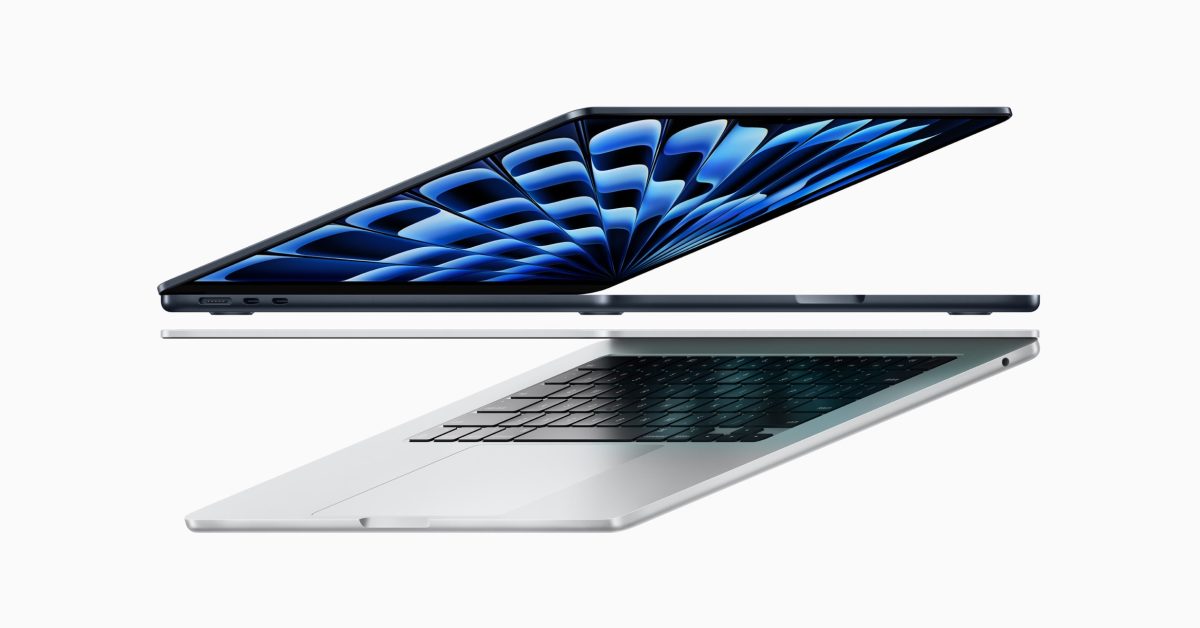

We’ve been hearing a lot of rumors about Apple working on multiple foldable devices. While most of them refer to devices similar to Samsung’s Galaxy Z Fold and Z Flip, analyst Ming-Chi Kuo has now reported that Apple has been actively working on a foldable MacBook.
Details about this future foldable MacBook are unclear at this point. However, Kuo says that the device will have a 20.3-inch screen. According to the analyst, this new MacBook is Apple’s only foldable device “with a clear development schedule,” suggesting that the company’s plans to launch a foldable iPhone or iPad are still quite experimental.
“Recently, I’ve received many inquiries about whether Apple plans to mass-produce the foldable iPhone or iPad in 2025 or 2026. My latest survey indicates that currently, Apple’s only foldable product with a clear development schedule is the 20.3-inch MacBook, expected to enter mass production in 2027,” Kuo said in a post on X.
This isn’t the first time Apple has been rumored to be working on a foldable MacBook. In 2022, Display Supply Chain Consultants (DSCC) analyst Ross Young revealed that the company had been exploring the idea of foldable notebooks. In the same year, Bloomberg’s Mark Gurman corroborated Young’s report and said that Apple was interested in launching a foldable device with a 20-inch display.
Earlier this year, The Information reported that Apple has been exploring the idea of a foldable iPhone since 2018 with two different prototypes. One of them looks more like a regular phone, while the other is more similar to an iPad that folds. However, a Chinese blogger said that Apple’s prototypes failed to pass quality tests and the projects were “temporarily shelved.”

Would you buy a foldable MacBook? Let us know in the comments section below.
FTC: We use income earning auto affiliate links. More.
We’ve been hearing a lot of rumors about Apple working on multiple foldable devices. While most of them refer to devices similar to Samsung’s Galaxy Z Fold and Z Flip, analyst Ming-Chi Kuo has now reported that Apple has been actively working on a foldable MacBook.
Details about this future foldable MacBook are unclear at this point. However, Kuo says that the device will have a 20.3-inch screen. According to the analyst, this new MacBook is Apple’s only foldable device “with a clear development schedule,” suggesting that the company’s plans to launch a foldable iPhone or iPad are still quite experimental.
“Recently, I’ve received many inquiries about whether Apple plans to mass-produce the foldable iPhone or iPad in 2025 or 2026. My latest survey indicates that currently, Apple’s only foldable product with a clear development schedule is the 20.3-inch MacBook, expected to enter mass production in 2027,” Kuo said in a post on X.
This isn’t the first time Apple has been rumored to be working on a foldable MacBook. In 2022, Display Supply Chain Consultants (DSCC) analyst Ross Young revealed that the company had been exploring the idea of foldable notebooks. In the same year, Bloomberg’s Mark Gurman corroborated Young’s report and said that Apple was interested in launching a foldable device with a 20-inch display.
Earlier this year, The Information reported that Apple has been exploring the idea of a foldable iPhone since 2018 with two different prototypes. One of them looks more like a regular phone, while the other is more similar to an iPad that folds. However, a Chinese blogger said that Apple’s prototypes failed to pass quality tests and the projects were “temporarily shelved.”
Would you buy a foldable MacBook? Let us know in the comments section below.
FTC: We use income earning auto affiliate links. More.
While many entrepreneurs are currently facing the harsh reality of a VC funding crunch, Qonto isn’t one of them. The Paris-based business banking startup still has hundreds of millions of cash on hand. And it is using an undisclosed portion of its cash reserve to acquire Regate, an accounting and financial automation platform.
Qonto originally started with online business accounts with debit cards specifically tailored for small and medium businesses. Over time, the company expanded its product offering to include invoicing tools, features to manage expenses and plenty of integrations with the fintech ecosystem to facilitate bookkeeping, payment reconciliation, etc.
And that modern take on business banking has worked surprisingly well as more than 450,000 companies now have a Qonto account. While France remains Qonto’s main market, the company also acquired its German competitor Penta — and moved Penta’s customers to its own platform — and is also available in Italy and Spain.
In 2022, near the peak of the funding frenzy of 2021 and 2022, the company raised a massive €486 million Series D funding round (that’s $529 million at today’s exchange rate). Now, Qonto wants to deliver on its original vision of building an all-in-one finance solution for small and medium businesses.
As part of this vision, Qonto is acquiring Regate, a French startup we covered after it raised a €20 million Series A round ($22 million at today’s exchange rate). Regate is an accounting automation software-as-a-service startup.
It integrates directly with existing accounting software platforms like Sage, Cegid and ACD so that Regate can focus on financial automation. Regate customers can easily track incoming payments, schedule payments to suppliers, sort through invoices and receipts, and even access their bank accounts from Regate’s interface.
Since 2020, Regate managed to attract 10,000 clients — 6,000 of them are already Qonto customers. The company also sells its product to accounting firms directly with 500 firms using Regate.
It’s a different go-to-market strategy and product philosophy compared to Pennylane, a newly minted French unicorn that wants to replace legacy accounting software entirely. Pennylane itself now also provides business bank accounts and moving into Qonto’s main product territory.
“We have grown our revenue by 3x in 2023,” Regate co-founder Laura Pallier told TechCrunch. But when Qonto approached Regate, they decided to sell the company to reach the next level. “We had a rather intense discussion on the subject . . . We’re convinced that the cockpit approach — with a tool that works for both SMEs and their accountants — makes a lot more sense than multiple products.”
With today’s acquisition, Regate’s team of 100 employees will all join Qonto’s current 1,400-people staff under a new business unit focused on financial tools for accountants. At first, there will be new integrations between both platforms.
After a while, Regate will be integrated in Qonto directly to improve several accounting automation features of Qonto, such as invoicing, accounts payables, accounts receivables, etc. As for accounting firms, they’ll also act as a new sales channel for Qonto.
“The idea is that these two platforms will gradually become one. But it’s going to be a gradual process, and we’ll always be very careful to maintain the customer experience for both corporate clients and accounting firms,” Pallier said.
While Regate’s acquisition is only the second acquisition in Qonto’s history, it’s most likely not the last one. In part because its executives are happy with how Penta’s integration went, but also because of its current opportunity window.
“We happen to have a planetary alignment. It would be a professional mistake not to look [at potential acquisitions]. We’re not the best at everything. So we should also stay humble and work with experts in their respective fields,” Qonto co-founder and president Steve Anavi told TechCrunch at Mobile World Congress in Barcelona last week.
“We have an in-house team that looks at opportunities. In the best-case scenario, we sign a deal. But even in the worst-case scenario, we can become partners because we’ve learned to know each other a little bit better over a very short process,” he added.
Qonto finds itself in a different position from Payfit, another French unicorn (or former unicorn) that provides a software-as-a-service tool focused on payroll. Yesterday, Les Échos reported that Payfit plans to lay off 14% of the company, or 110 employees.
Why are things looking better for Qonto? “We have a healthy business model. It means that when we acquire a customer, after a few months it’s a profitable customer. This is mainly because they pay — we don’t have any free offering. So, compared to a lot of fintech companies or startups in general that have a free offering and then try to upsell customers, we haven’t made that choice,” Qonto co-founder and CEO Alexandre Prot told TechCrunch.
“The second element is that we raised a very large amount of money two years ago. And we were a bit lucky because the timing was right,” he added. Finally, rising interest rates have also created a new revenue stream for the company. And given Qonto’s scale, the company is handling very large sums of money on behalf of its customers.
For these reasons, Qonto has plenty of cash to spend on acquisitions. As many fintech startups are struggling to raise a new funding round, Qonto could become a consolidator in the space. And we might be at the beginning of this consolidation phase.

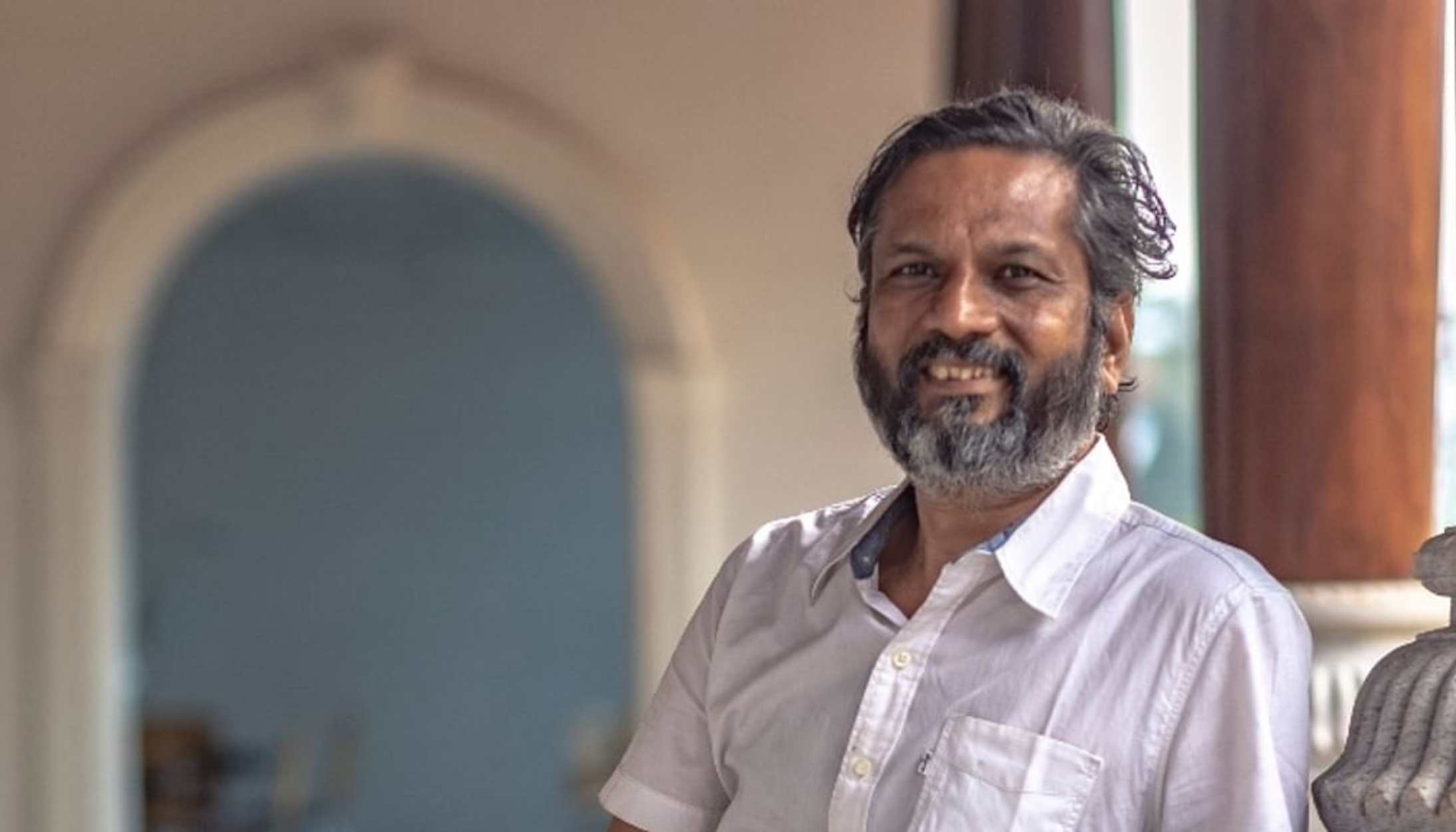
Zoho Corp, a Software-as-a-Service unicorn, revealed plans to invest approximately Rs 1,100 crore (SAR 500 million) for the digital infrastructure development in Saudi Arabia, aligning with the Saudi Vision 2030. The investment aims to establish strategic partnerships with local government entities to advance the kingdom’s digital transformation initiatives. “Zoho Corporation has a strong R&D foundation, as we have invested in building our full technology stack, including the data centres that are run using our proprietary patented technology,” said Sridhar Vembu, CEO and Co-founder of Zoho Corp.
To ensure compliance with Personal Data Protection Laws (PDPL), Zoho inaugurated two new data centres in Jeddah and Riyadh, bringing the total to 18 data centres worldwide. “Located in Jeddah and Riyadh, the two data centres are now fully operational…Zoho Corp. is a leading global technology company that encompasses prominent brands such as Zoho and ManageEngine,” the firm stated.
Apart from the infrastructure investment, Zoho Corp has earmarked Rs 221 crore to support Small and Medium Enterprises (SMEs) in Saudi Arabia. The initiative allows companies to utilize wallet credits annually over the next decade to access Zoho’s suite of 55+ cloud-based applications for training purposes. “These partnerships will help ease the adoption of digital technologies for SMEs in Saudi Arabia and promote digital upskilling amongst local businesses,” the firm emphasized.
In its financial report for FY23, Zoho reported consolidated revenue of Rs 8,703 crore, marking a nearly 30 percent year-on-year increase. However, despite revenue growth, the consolidated net profit saw a marginal rise of 3 percent year-on-year, amounting to Rs 2,836 crore. “Zoho on February 1 reported consolidated revenue of Rs 8,703 crore in the financial year 2023 (FY23), up nearly 30 percent year-on-year despite an overall slowdown in demand for the software industry across the globe,” the statement highlighted.

The investment landscape in the country is going through a shift never seen before, with more and more women founders and investors winning themselves a bigger share in the high-octane arena of the Indian startup space.
Be it Swati Nangalia Mehra of Sixth Sense Ventures, who directly ventured into the world of investing, or the founders-turned-investors Ghazal Alagh and Vineeta Singh, many of these trailblazing women have made their mark in the homegrown startup ecosystem. This is notwithstanding other veterans such as Kiran Mazumdar Shaw and Rekha Menon who have already set examples for many in the past.
Many of these women investors bring years of experience to the table and have today emerged as role models for the country’s youth. However, things were not the same a few years ago, the founder of She Capital Anisha Singh told Inc42.
“It was hard explaining to people that women are successful as entrepreneurs. Now that we have given mega returns to our investors, they’re excited… and understand that women are great business persons,” she added.
As sharp as a knife, these new-age women investors have their eyes on the stars and feet on the ground, and they are charging through with great perseverance. With numerous successful exits, Indian women investors are creating templates that will be followed by many in the years to come.
However, more importantly, women founders and investors possess something really important when it comes to building an enterprise and the world of investing.
“They will call a spade a spade and tell you things exactly as they are and not how they can be,” opines the cofounder and CFO of B2B building material marketplace OfBusiness Ruchi Kalra on what makes women great investors.
We, at Inc42, have collated some of the names that are making waves in the startup investment world. These are the names of the women that aim to build an equitable world of tomorrow and are leaving no stone unturned in their quest.
If you are a women investor or want to nominate a women investor in the startup ecosystem, nominate us at [email protected]. This is a running list, and we would love to add more women who are changing the investing landscape in the Indian startup ecosystem.
Note: This is not an exhaustive list or ranking of any kind. We have placed investors in alphabetical order.
The investment landscape in the country is going through a shift never seen before with more and more women founders and investors winning themselves a bigger share in the high-octane arena of the Indian startup space.
Be it Swati Nangalia Mehra of Sixth Sense Ventures, who directly ventured into the world of investing, or the founders-turned-investors Ghazal Alagh and Vineeta Singh, many of these trailblazing women have made their mark in the homegrown startup ecosystem. This is notwithstanding other veterans such as Kiran Mazumdar Shaw and Rekha Menon who have already set examples for many in the past.
Many of these women investors bring years of experience to the table and have today emerged as role models for the country’s youth. However, things were not the same a few years ago, the founder of She Capital Anisha Singh told Inc42.
“It was hard explaining to people that women are successful as entrepreneurs. Now that we have given mega returns to our investors, they’re excited… and understand that women are great business persons,” she added.
As sharp as a knife, these new-age women investors have their eyes on the stars and feet on the ground, and they are charging through with great perseverance. With numerous successful exits, Indian women investors are creating templates that will be followed by many in the years to come.
However, more importantly, women founders and investors possess something really important when it comes to building an enterprise and the world of investing.
“They will call a spade a spade and tell you things exactly as they are and not how they can be,” opines the cofounder and CFO of B2B building material marketplace OfBusiness Ruchi Kalra on what makes women great investors.
We at Inc42, have collated some of the names that are making waves in the startup investment world. These are the names of the women who aim to build an equitable world of tomorrow and are leaving no stone unturned in their quest.
If you are a women investor or want to nominate a women investor in the startup ecosystem, nominate us at [email protected]. This is a running list, and we would love to add more women who are changing the investing landscape in the Indian startup ecosystem.
Note: This is not an exhaustive list or ranking of any kind. We have placed investors in alphabetical order.
Aarti Gupta is the chief investment officer (CIO) of VC firm DBR Ventures. She heads the family office of DM Gupta and is the national head of the FICCI FLO Startup Cell.
In 2022 alone, she participated in investment deals for edtech startup SpeakIn and health tech startup Medyseva.
Earlier, she was a senior chairperson of the FICCI FLO Kanpur Chapter. She holds a PhD from IIT Kanpur and completed her postgraduation in economics from Northwestern University.
Aarti started her investment journey five years ago in 2017. So far, she has invested in four tech-driven startups operating in sectors such as health tech, edtech, foodtech and waste management.
Aarti believes in shoring up startup founders by helping them build their ventures and raise funds. Additionally, she is passionate about spreading financial literacy among professionals and homemakers.
Anisha Singh is the founder of women-focused VC firm She Capital. She founded the VC firm in 2020 to stimulate more women founders to enter India’s startup ecosystem. Some of the portfolio companies of the VC firm are Samosa Singh, Spark Studio, Elev8 Sportz, and Nova Nova.
Earlier, she founded ecommerce platform MyDala and also headed B2B startup Kinis Software as its CEO. She has also worked as a manager with Centra Software.
She is mostly seen talking about women’s empowerment and supporting women-focussed businesses and startups.
Bollywood superstar Alia Bhatt has also donned the hat of an investor and has quite an interesting portfolio. One of her prominent investments was in beauty ecommerce marketplace Nykaa. Her investment grew more than 10X within months to INR 54 Cr when Nykaa got listed on the Indian bourses.
Bhatt’s portfolio also includes Mumbai-based personal styling platform Style Cracker and Kanpur-based biomaterial startup Phool.
Besides investing in other startups, Alia Bhatt has also set up her startup, Ed-a-Mamma, which operates in the kidswear category.
Founder and chairperson of Avaana Capital Anjali Bansal has been actively investing in Indian startups. In 2022, Avaana funded four Indian startups — BambooBox, Gold Setu, and Groyyo, according to the Inc42 funding report.
In addition to the aforementioned startups, Anjali has invested in various startups – Delhivery, Urban Company, Darwinbox, and Nykaa, to name a few.
Currently, Bansal is a member of the ONDC steering committee. She is also on the board of various Indian companies such as Tata Power, Nestle India, and Piramal Enterprises. She has also worked with TPG Growth, Spencer Stuart, McKinsey, and Dena Bank
Anjali Sosale, partner at Waterbridge Ventures, plays a pivotal role in shaping the success of early stage technology companies for the VC firm. With a special focus on consumer tech, ecommerce, and marketplaces, Sosale wants to enable the next wave of rural Indian internet users
She is an active investor in startups such as BigFatPhoenix, BimaKavach, BitClass, CBREX, Downtown Club, EloElo, and Yellow Metal.
Waterbridge Ventures specialises in early-stage technology investments, providing $250K to $3 Mn to seed to Pre-Series A stage companies.
With a portfolio comprising 31 investments and collaborating with over 70 founders, Waterbridge takes a lead role in funding rounds and remains dedicated to supporting its portfolio companies throughout their growth journey, extending investments until Series C.
Ankita Vashistha is the founder of Saha Fund and StrongHer Ventures, which backs female-led early-stage startups operating in the fintech, health tech, consumer tech, and Web 3.0 segments.
She is currently associated with multiple names such as MySpaces, Tholons Capital, NASSCOM, Aureos Capital, and Abraaj Group. In her more than 10 years of professional journey, she has worked with tech ventures, private equity and VCs across the UK, the US, and Asia.
She is currently an active investor in Indian Angel Network. Her startup portfolio comprises startups such as Licious, Uniphore, Fitternity, LoveLocal, Zumata, and Insta Health.
She got her master’s degree from the Cranfield School of Management, Stanford University, and is an alumna of Ramaiah Institute of Technology.
Archana Jahagirdar is the founder and managing partner of Rukam Capital, which invests in early-stage consumer products and services companies.
Earlier, she headed companies like Textron, Angelworks and Espace Corporate and worked as a journalist with media organisations such as Business Standard, The Times of India, Zee News, Outlook, and India Today.
In the last few years, Archana has made more than 10 investments in startups like Yoho, Sleepy Owl Coffee, Anveya, Pilgrim, The Indus Valley, and GoDESi, among others. She completed her masters in English literature from St Stephen’s College.
Archana Priyadarshini is a founder of Forward Slash Capital, which backs pre-seed to pre-Series A stage tech startups. In 2022, she invested in four startups – Broomees, CogniSaaS, Ekank Technologies, and Threado.
Over the years, she has participated in more than 25 startup deals, which include Metastable Materials, Exprto Live, and VAMA, to name a few.
At the moment, she is working as a general partner at PointOne Capital. She has also worked with companies such as Wells Fargo, Bootcamp Fitness Studio, IBM and CGEY. She has done her B.Tech in chemical engineering from IIT Kanpur
Bala C Deshpande is the founder partner of Megadelta Capital, which is an India-focussed mid-market growth fund. It typically invests $15 Mn to 25 Mn of growth equity in startups across sectors such as consumer, healthcare, and enterprise tech.
Megadelta Capital’s portfolio includes startups such as ecommerce unicorn Firstcry and health tech startup GOQII, among others.
Deshpande has nearly two decades of experience in investment advisory. She started her investing career with ICICI Venture in 2001. Later, she joined global VC firm NEA to set up their India platform where she headed the practice for ten years and helped NEA US in investing and backing startups in the mid-market space.
Bharati Jacob is the founder and managing partner of Seedfund, which invests in startups operating in diverse industries. She holds more than 24 years of experience in venture investing, marketing, and financial services.
Earlier, she worked with venture capital firm Infinity Venture Fund, investment bank Lazard, and aviation company Northwest Airlines.
An XLRI graduate, Jacob completed her MBA in marketing from the Wharton School, University of Pennsylvania.
Bhawna Bhatnagar is the cofounder of We Founder Circle (WFC), which invests in pre-seed to pre-series A-stage startups.
So far, she has invested in edtech OLL and F&B direct-to-consumer (D2C) startup Bored Beverages. Besides, she has also participated in six startup deals, including ParkMate, ParkMate, Quizy, and Commaful.
Prior to founding WFC, she worked with leading companies such as ByteDance, Cheetah Mobile and India Today.
After completing her bachelor’s in biochemistry from Delhi University in 2009, she went to the Indian Institute of Mass Communication and then earned her master’s degree in East Asian studies from Delhi University in 2014.
Debjani Ghosh is currently the president of NASSCOM, an industry body representing the IT-BPM space. In her career of nearly three decades, she has worked with Intel Corporation and Yes Bank.
She has also been on Cisco’s India Advisory Board and served as an advisor to the FICCI S&T/Innovation Committee.
An MBA from S.P. Jain Institute of Management and Research, Debjani completed her graduation in political science from Osmania University.
With five startups in her portfolio, Bollywood actor Deepika Padukone has recently worn the investor’s hat. She began her entrepreneurial journey by founding 82°E in 2021.
82°E, which is led by Padukone and Jigar Shah, got $7.5 Mn funding from DSG Consumer Partners and IDEO Ventures, along with multiple ultra-HNIs and Padukone’s family office, Ka Enterprises.
Ka Enterprises mainly backs consumer and consumer-tech companies across the globe. Its portfolio companies include Epigamia, Furlenco, Blu Smart, Bellatrix, Playshifu, Atomberg, Front Row, Mokobara, Supertails, and Nua.
Mamaearth’s cofounder Ghazal Alagh is an active angel investor. In 2022, she backed 14 startups, including Humpy Farms, unScript AI, and Wishlink. Her startup portfolio also comprises companies like BlissClub, HumpyFarm and Uvi Health.
Before founding Mamaearth, she set up a fitness platform dietexpert.in, which shuttered its operations in 2013. She has a BCA degree from Panjab University and holds certifications in visual arts from New York Academy.
Harsha Kumar is a Partner at VC firm Lightspeed India Partners Advisors. Her journey began as a software engineer and product manager at Persistent Systems in 2009, followed by a stint at the American online gaming startup Zynga in 2012. She pursued an MBA degree from INSEAD while advancing her career.
In 2014, Kumar joined Ola as the product head, contributing to its exponential growth from 3,000 rides per day to a million rides a day by the time she concluded her tenure in 2016. Her instrumental role in scaling up Ola’s product significantly contributed to its unicorn valuation.
At Lightspeed Venture, Harsha has been actively involved in various investments over the past 7 years. Notable investments include API marker Setu, digital ledger OkCredit, vernacular audiobook app PocketFM, and product manager hiring platform Upraised.
Ishani Channa, partner investments at Sarcha Advisors, plays a pivotal role in managing family office investments and shaping capital allocation strategies across a diverse spectrum of assets, encompassing equity, debt, and alternative investment opportunities, with a significant focus on startups.
With investments in over 50 startups, including notable names like BluSmart, Josh Talks, STAGE, TrulyMadly, Prescinto, and The New Shop, and active participation in 20+ follow-on rounds, Ishani has been instrumental in nurturing entrepreneurial talent and fostering innovation.
In addition to her role at Sarcha Advisors, Chanana is an angel investor and has stakes in startups like JumpingMinds, BatX Energies, Yatrikart, Newmi, and Jobsgaar.
Prior to her current role, Ishani spent nearly four years at a hedge fund within Edelweiss Financial Services, where she honed her skills in buy-side research. Her work involved in-depth analysis of Indian-listed companies across diverse sectors, making valuable contributions to investment decisions within the fund.
Chanana holds a master’s degree in finance from Warwick Business School. Her investment track record includes successful exits and the ability to attract substantial investments from renowned investors to her portfolio companies, underscoring the prudence of her investment choices
Kanika Mayar is a partner of Vertex Ventures, which infuses money in seed to Series B-stage startups operating in Southeast Asia and India. Vertex’s portfolio companies include Grab, Patsnap, 17Live, Nium, FirstCry, Licious, AsianParent, Validus, and Warung Pintar, among others.
So far, Kanika has participated in four startup deals – Chatty Bao, Proactive For Her, Onato and Karkhana.io. She has also worked with leading companies such as IFC, TechnoServe, Goldman Sachs, and Ernst & Young.
A graduate of economics from the prestigious Lady Shree Ram College, Kanika completed her MBA from IIM Ahmedabad.
If you are a women investor or want to nominate a women investor in the startup ecosystem, nominate us at [email protected]. This is a running list (and not a definitive one), and we would love to add more names who are changing the investing landscape in the Indian startup ecosystem.
Namita Thapar is the executive director of India Business for Emcure, a pharmaceutical company. Thapar rose to fame after she joined the TV Show ‘Shark Tank India’ as one of the sharks.
So far, Thapar has participated in 11 startup deals, including Medulance, Ubreathe, Snitch, JhaJi Store, and TagZ Foods, among others.
She recently invested in ePharmacy when the startup bagged an investment of INR 2 Cr from multiple investors on Shark Tank India.
A chartered accountant from The Institute of Chartered Accountants of India, Namita holds an MBA degree from the Fuqua School of Business.
Nandini Mansinghka is the co-promoter and CEO at Mumbai Angels Network. She is also a founder investor at Digibooster, a content marketplace. Over the years, she has participated in more than 55 startup deals.
Founded in 2006, Mumbai Angels Network invests in early-stage startups in India. The network backs a slew of startups such as Adsparx, Adonmo, and BabyChakra, among others.
After her graduation (BCom) from the University of Calcutta, she completed her CFA from the Institute of Chartered Financial Analysts of India
Nruthya Madappa assumed the role of partner at the early-stage VC firm 3one4 Capital earlier this year, where her primary responsibility is to enhance and fortify the firm’s portfolio.
Her journey at the venture capital firm began in 2020 when she joined as a principal and took charge of growth and capital development.
Demonstrating exceptional leadership and strategic acumen, she swiftly progressed to the position of director for the growth and capital vertical in the subsequent year.
Padmaja Ruparel is one of the cofounders of the Indian Angel Network. She is also recognised as a key player in the Indian entrepreneurial ecosystem.
So far, she has participated in over 16 startup deals, which include names like Phool, Nivesh, Sirona Hygiene, goStops, and Dhruva Space, among others.
Last year, Indian Angel Network launched the IAN Alpha Fund, a SEBI-registered category II venture capital fund, worth INR 1,000 Cr.
So far, Indian Angel Network has invested in over 180 startups. Some of its portfolio companies are Zypp Electric, Crest, Huddle, Elctrifuel, Indium Finance, and Sirona Hyginene, among others.
Before starting her journey in the Indian startup ecosystem, Ruparel worked as the head of corporate communications at the UK-based Xansa.
Paula Mariwala has been an early-stage investor for the past 15 years, and is a founding partner of Mumbai-based Aureolis Ventures, and the founder of Stanford Angels & Entrepreneurs India.
A Stanford alumna, Paula invests in early-stage startups and has been a key investor in Tapchief, Tread, Browntape, Thinklabs, RedBus, and Carwale, among others. In terms of sectors, she has been actively investing in segments like technology, sustainability, social impact, women empowerment, and education.
Paula is a member of the governing council of the Foundation for Innovation and Technology Transfer, IIT Delhi. She is also on the board of the Center for Human Rights and International Justice at Stanford University.
Pearl Agarwal is a prolific angel investor, with investments in 16 startups across sectors such as web3, fintech, edtech, gaming, and SaaS. Some of her notable investments include InFeedo, BluSmart Mobility, GroMo, Trell, and Redwing Labs.
Pearl is also the founder and MD of Delhi-based VC firm Eximius Ventures, which has its investments in startups such as Eka.Care, Jar, iTribe, Fego, Zorro, KalaGato, Oyela, Flux, Stan, Fleek, and Skydo.
Before becoming a full-time investor, Pearl worked at Merril Lynch. Pearl has also worked in the private equity sector with names like UTIMCO and Global Infrastructure Partners.
She is also the cofounder of DotReview, a platform where first-time investors can learn about startup funding.
Pooja Mehta is the chief investment officer (CIO) at JITO Angel Network (JAN), a platform which connects angel investors with startups. She has expertise in evaluating startups, managing angel investment deals, and administering investment operations.
In the last two years, she has participated in 30 startup deals – KloudMate, Nexus Power, and NewsReach India.
Under her leadership, the JAN network has grown to over 350 members, with an investment of INR 100 Cr in various startups. Pooja is also the CIO at the JITO Incubation & Innovation Foundation.
A seasoned management professional with an MBA degree in finance, Pooja’s skillset ranges from business development, market research, and management to building business strategies and financial analysis
Priyanka Chopra, in her capacity as the COO and managing partner at CIIE.CO, assumes a pivotal role in the startup ecosystem, particularly focussing on digitisation, deeptech, climate tech, and financial inclusion.
With a dedicated commitment to empowering women entrepreneurs, she takes the lead in spearheading accelerator and incubation programmes.
These initiatives are designed to enhance skills, promote technology adoption, establish a robust online presence, drive customer engagement, and facilitate strategic partnerships.
Chopra has significantly influenced over 1,200 startups through various CIIE.CO programmes. Notable startups under her guidance include Razorpay, which turned into a unicorn in 2020.
Raakhe Kapoor Tandon runs a family office – The Three Sisters: Institutional Office – with two of her sisters, Radha and Roshini Rana Kapoor. Raakhe, Radha and Roshini are the daughters of Rana Kapoor, the founder and MD of Yes Bank.
Under the family office, Raakhe founded ART Capital (India), an investment vehicle. The Three Sisters also has its investments in Delhi-based Awfis Space Solution, a real estate tech startup.
A Wharton alumna, Raakhe has founded two more ventures under ART Capital – ART Housing Finance (India) and Rural Agri Ventures India.
While ART Housing Finance provides long-term mortgage finance to retail customers, Rural Agri Ventures is an incubation/project development firm focussed on agritech startups.
Rema Subramanian is the co-founder and managing partner at Ankur Capital Fund, which backs early-stage startups in the agritech, fintech, health tech, and edtech segments.
She is currently working as an advisor consultant at DY Works. Earlier, she has worked with various Indian companies such as Dasra, ADTS, Element K India, Zee Interactive Learning, Ion Exchange, Datamatics and JK (Raymonds).
So far, Rema has participated in more than four startup investment deals. These names include SportVot, Josh Talks, MyCaptain, and Banyan Environmental Innovations.
A cost accountant from ICFAI, Rema has worked across education and IT/ITES, taking young companies from scratch to midsize ventures.
Ritu Verma, the cofounder of Ankur Capital, has backed several startups over the years. Some of the companies in her portfolio include names like CropIn, ERC, HealthSutra, Big Haat, Niramai, Tessol, Suma Agro, and Karma Healthcare.
In 2022, Verma took part in more than 13 startup investment deals, including D-Nome, IBISA, Vegrow, Wasabi, and Offgrid Energy Labs, among others.
At present, she is acting as a board observer in various Indian companies such as BigHaat India, String Bio, AgricxLab and Niramai. She is also on the board of Tessol, Health Sutra and CropIn.
Earlier, she worked with Truven, Philips and Unilever. She has a PhD in physics from the University of Pennsylvania and an MBA from INSEAD.
Ruchi Kalra helms the financial affairs at one of the few profitable new-age tech startups in the country. The CFO of B2B building material marketplace OfBusiness also helped found the startup back in 2016 and has not looked back since then.
An alumna of the prestigious Indian Institute of Technology Delhi, Kalra studied chemical engineering and then went on to work at Evalueserve for a couple of years. Afterwards, Kalra enrolled at the Indian School of Business in Hyderabad and completed her MBA.
Immediately after that, Kalra landed a job at McKinsey & Company and was entrusted with overseeing the insurance and retail banking sector. After nine years working at the consulting firm, Kalra took the plunge into the world of entrepreneurship and helped found OfBusiness.
Not stopping there, she has helped scale the business to new heights while she has also continued investing in multiple other businesses as an angel investor. She has so far invested in as many as 10 startups, as an angel, including seafood marketplace Captain Fresh, tyre marketplace TyrePlex, women-led lifestyle brand FableStreet, and B2B pharmacy marketplace Saveo, among others.
Seema Chaturvedi, the Founder and Managing Partner of Achieving Women Equity (AWE) Funds, boasts an impressive 25-year track record in capital markets and financial management. Her primary mission is to drive gender equity in entrepreneurship.
A staunch advocate for entrepreneurship with a specific focus on women’s empowerment, Chaturvedi aims to empower 30 Mn women in India by 2030 through AWE Funds.
She also chairs TiE Global’s prominent initiative, the Project All India Roadshow for Women’s Economic Empowerment through Entrepreneurship (AIRSWEEE), securing funding from the US Department of State for six consecutive rounds.
Earlier this year, AWE Funds announced the first close of its maiden fund in India – the Achieving Women Entrepreneurs Early Growth Fund I – at $15 Mn. While promoting gender equity and climate action as a strategy, the fund aims to invest in scalable innovations in sectors such as climate tech, agritech, health tech, edtech and fintech.
Shagun Tiwary is a senior principal at Verlinvest, a Belgium-based investment firm. She is equipped with 12 years of work experience and has invested in companies across consumer and healthcare services such as Dr Lal PathLabs, Indira IVF, Epigamia, and Veeba.
Prior to joining Verlinvest, she worked at TA Associates and Nomura in Mumbai, where she focussed on growth equity investment and capital market transactions. She holds a master’s degree in economics from the Delhi School of Economics, University of Delhi.
Verlinvest is largely involved in late stage venture capital funding and mid-market private equity. Typically, the firm invests between $20 Mn and $200 Mn in startups, depending on the stage they are in.
Shanti Mohan is the founder of LetsVenture, a Bengaluru-based investor network that allows angels and HNIs to invest in startups. She has also founded trica, a platform that allows people to invest in startups and private equity.
In the last few years, she participated in more than 10 startup deals, which include Minko, Simply Services, Bimaplan, and Aulerth.
With LetsVenture, Shanti has invested in startups such as Absolute Foods, Agnikul, BharatX, CityMall, Dukaan, Trell, Yulu, Blusmart, and The ePlane Company, among others. Her personal portfolio comprises Siply, Minko, and Bimaplan.
Shanti is an active angel investor and part of the SEBI advisory AIF committee. She is also active with the RBI Council on startup funding. Further, Shanti is part of the startup committees of several states in India.
The founder of Hustle Hard Ventures, Shrishti Sahu, has been actively supporting Indian startups and has so far backed 30 startups, including Plum, Kutumb, Rupifi, Chingari, 10Club, Leap Club, Eeki Foods, GrowthSchool, Accacia, Descrypt, and Gold Setu, among others.
Sahu shared that she writes off cheques between INR 3 Lakh and INR 25 Lakh for homegrown startups.
Currently, she is a managing partner and angel investor at Swadharma Source Ventures. She has also worked with multiple companies like Emoha Eldercare, Facebook, Lumis Partners, Aqaya Source Foundation, and Aqaya. She completed her graduation from the University of Warwick.
Caha Capital founder Shruthi Iyer is an active angel investor, who is overseeing two early-stage startups’ expansion strategies. She administers Wharton Alumni Angels (South Asia) and HBS Alumni Angels.
Earlier, she worked with international companies such as Agate Medical Investment LP, PT Perintius, International Finance Corporation (IFC), and Eastern Energy Resources. She is one of the cofounders of the ecommerce startup Blend8.
She did her MBA from the Wharton School and completed her B.Tech from Visveswaraya Technological University, Karnataka.
Sowmya heads the impact and ESG functions at Aavishkaar Capital – an impact fund manager that invests in impact enterprises across India, South and South East Asia and East Africa. She is responsible for delivering significant impact, gender and ESG value across Aavishkaar’s various impact funds and portfolio companies.
At Aavishkaar, Sowmya has helped invest in sectors such as agritech, financial inclusion, and essential services. Some of the portfolio companies of Aavishkaar Capital include Nalanda Learning Systems, GoBolt, Milk Mantra, and Seven Ocean, among others.
Sunitha Viswanathan is a partner at the early stage VC firm Kae Capital. With over a decade of experience in venture investment, banking, and technology, she brings a wealth of expertise to her role.
Kae Capital, founded in 2012, has backed 81 startups, including notable names like Porter, Zetwerk, Nazara, and Tata 1mg.
Prior to joining Kae Capital, Sunitha spent over 8 years at Unitus Ventures, an early stage VC fund based in Bangalore. During her time there, she served on the boards of Cuemath, Masai School, Salesken, Awign, and Blowhorn, among others. She also gained experience working with mid-market clients at YES Bank.
Sunitha holds a bachelor’s degree in Electronics and Communications Engineering from PES Institute of Technology, Bangalore and a Master’s in Finance from S.P. Jain Institute of Management & Research, Mumbai.
Her investment focus spans sectors such as fintech, consumer tech, D2C, and Healthtech. Notable companies in her portfolio include Assurekit, Bold Finance, Everheal, Foxtale, Freightwalla, Nua, Supernova, Traya Health, and Wysa.
Surabhi Washishth, the founding partner of Paradigm Shift Capital, has been actively supporting the Indian startup ecosystem.
So far, she has investments in 20 startups, including Ixana, Zeda, Landeed, Praan, 10XAR, Samudai and Arcana Network. In her personal capacity, she writes cheques between $250K and $300K for startups.
At present, she is acting as a ‘Global Shaper’ with the World Economic Forum. She has also worked with multiple companies such as WeWork India, Headout, Target, AOL, and ING Life, among others. She has a B.Com degree from Christ University, Bengaluru.
A prolific investor, Swapna Gupta is currently a partner at Avaana Capital, a climate-focused VC firm. Before joining Avaana Capital, Swapna spent more than seven years at Qualcomm Ventures, where she led India investments.
She is an investor and board observer in multiple Indian startups, including Locus, Shadowfax, Ninjacart, Zuddl, FabHotels, MoveInSync, Reverie, Stellapps, and attune, among others.
Swapna also launched Qualcomm Women Entrepreneurs India Network (Qwein), a networking, learning, and mentoring programme for deeptech, and early-stage female entrepreneurs in India.
Swapna has recently been recognised by GCV among the Top 50 emerging leaders in the corporate venture community. Surprisingly, she is the only Indian on the list. She is also part of the prestigious Global Kauffman fellows programme.
Swati Mehra’s tryst with investments began long ago. One of her first jobs was to oversee investment research in the consumer space. The job came in handy when she decided to take the plunge into the world of investing.
In 2014, she helped cofound Sixth Sense Ventures, the country’s first domestic and consumer-focussed venture fund. Since then, the firm has invested in a host of new and emerging D2C brands that have created a niche for themselves.
Nangalia Mehra has helmed the venture fund, which has invested in a slew of emerging brands, including homegrown beer brand Bira91, men’s grooming and personal care brand Bombay Shaving Company, and gaming and entertainment platform Smaaash. She also has stakes in CarterX, Pariksha, and ProcMart.
Tarana Lalwani is a founding partner of InnoVen Triple Blue Capital, which has backed multiple startups such as Zetwerk, Chaayos, Ather, slice, and Bounce.
As an angel investor, Lalwani bets on startups working in the consumer, consumertech, health tech, fintech, and SaaS sectors. She also holds expertise in pre-seed to Series D funding rounds via equity and debt instruments.
Presently, she is an advisor at Aureolis Ventures and a senior director at InnoVen Capital India. Earlier, she worked with companies like Anand Rathi Securities, Kae Capital, SeedFund, Edvance Learning, Webaroo, Radian Group, and Morgan Stanley.
She is also on the advisory board of Oscar Foundation and CII. Not only this, Tarana is currently part of the venture capital and private equity committee of IMAI (Internet and Mobile Association of India).
She holds an MBA degree from Columbia Business School and a bachelor’s degree from La Salle University.
Vani Kola is the founder and managing director of the early-stage VC firm Kalaari Capital. She has led over 30 investments at Kalaari. Some of the prominent names include Dream11, Myntra, Cure.fit, and Snapdeal.
Vani is currently on the board of CXXO. She has also worked with Certus Software and RightWorks. She likes mentoring first-time entrepreneurs and ushering them into becoming seasoned business leaders. So far, she has participated in over 63 startup deals. Some of these names include Climbes, Bombay Play, Zocket, StanPlus and Zluri, among others.
After graduating from Osmania University, she completed her master’s degree from Arizona State University.
Varsha Tagare is the managing director at Qualcomm Ventures where she manages a $150 Mn fund dedicated to India and cross-border digital enterprise investments.
Prior to joining Qualcomm Ventures, Tagare served as an investment director at Intel Capital, responsible for global equity investments in mobile technology.
At Qualcomm Ventures, she has led and managed investments in Capillary Technologies, Ideaforge, MapMyIndia, among others.
Widely popular for being featured on Shark Tank India, Vineeta Singh is the CEO and cofounder of beauty and personal care brand SUGAR Cosmetics. Singh is an alumna of the prestigious Indian Institute of Technology, Madras and the Indian Institute of Management, Ahmedabad.
Singh is a serial entrepreneur and the founder of FAB BAG, a beauty and grooming subscription startup. Since appearing on Shark Tank India, Singh has shot to fame and has invested in a slew of Indian startups featured on the show.
As an angel investor, Vineeta Singh has participated in multiple fundraisers. Some of her bets include Padcare Labs, JhaJi Store, Snitch, and Josh Talks, among others.
Note: The information has been collected from available public resources and websites.
If you are a women investor or want to nominate a women investor in the startup ecosystem, nominate us at [email protected]. This is a running list (and not a definitive one), and we would love to add more names who are changing the investing landscape in the Indian startup ecosystem.
Last updated on March 7, 2024 | The list has been updated to include two more women investors.