One of the lessons that the wild Silicon Valley venture funding environment of the past few years has clearly taught is this: Bigger valuations are not always better.



One of the lessons that the wild Silicon Valley venture funding environment of the past few years has clearly taught is this: Bigger valuations are not always better.

Bolt says it has settled its long-standing lawsuit with its investor Activant Capital. One-click payments startup Bolt is settling the suit by buying out the investor’s stake “after which Activant will no longer hold any interest in Bolt,” the company said in a statement.

San Francisco’s AI startup boom is so big, even international founders who don’t run AI startups are relocating there to help their companies grow, according to several founders who recently moved.

While there’s no shortage of startups aiming to replace Google with AI-powered search (we’re looking at you, Perplexity), a startup called Exa has a different idea: a Google for AI.

Among all the young AI startups being ruthlessly pursued by VCs these days, GPTZero has already grown into profitability in its first year and a half of life, generating millions in revenue. Founded by 24-year-old Edward Tian and 26-year-old Alex Cui, who’ve been friends since high school, GPTZero offers a detection tool that helps identify whether a piece of content was AI generated.

Investor demand has been so strong for shares of hot HR startup Rippling – over $2 billion worth of term sheets, it says – that it is allowing former employees to also participate in its giant, tender offer sale, the company told TechCrunch.

Sword Health, an AI-powered virtual physical therapy startup, has raised $30 million and let employees sell $100 million worth of equity to new and existing investors, including Khosla Ventures. The round brings the nine-year-old company’s valuation to $3 billion, a 50% increase from the $2 billion value it garnered in its Series D in November 2021.

When Jeffrey Wang posted Monday to X asking if anyone wanted to go in on an order of fancy-but-affordable office nap pods, he didn’t expect the post to go viral. He said so many others wanted in, he could have ordered over 100 units.
“I had way too many people that I could handle,” Wang, cofounder of AI research startup Exa Labs, told TechCrunch. “I wanted to order two nap pods for ourselves, and see how they turned out. I had 100-plus demand.”
The post didn’t just hit a nerve with other X users who wanted a nap at work. Some people joked about the hygiene of sharing a bed with office mates. One replied, “The last thing I want to do is share bedsheets with my software developer coworkers.”
Many admired the particular features of these nap pods, or applauded the whole idea of office napping. “every modern office should have one no different than napping on a 15 hour flight some task require the better inference that rem sleep gets you [stet]” responded another.
A few pointed out the more obvious question. Why would an employer expect people to sleep in the office instead of go home? Or as one post responder put it: “Nothing is a bigger red flag that [stet] a potential employer showing off their ‘nap pods.’ I’d be outta there.”
The answer is simple: Silicon Valley startup hustle culture is back, especially in Cerebral Valley, the area of San Francisco filled with early-stage AI startups, often founded and staffed with 20-somethings who make their companies their whole lives. Hustle culture went out of favor in the post pandemic years, when people had moved away from both their offices and San Francisco.
But Hacker houses in San Francisco are popular again. And Cerebral Valley is its own cultural phenom, where those who believe in the future of AI (or fear it) live in such houses and go the same parties.
In the case of Exa Labs, the need for nap pods is a natural extension of its hacker house history. Exa is a 10-person startup that was, until a few weeks ago, in such a house, where co-workers of tiny companies work and live together.
“Like a lot of companies in that area, we worked out of our house. We converted two bedrooms into a big office,” Wang said, adding that everyone worked, hung out, ate together. “And that scaled to like nine people.”
So the nap pods maintain employees’ ability to stop work and sleep, rather than the idea that “employees are slaves,” he said.
“We live in a world where you don’t always get perfect sleep. As much as you prioritize it, sometimes you get a bad night,” Wang said. “If people are tired, they should be able to take a nap. Sleep is basic for productivity.”
But he also admits that, in his view as a founder, startup life requires an all-in commitment.
“Startup life is not for everyone. My co-founder and I went to Harvard and experienced, like, really, really hard grueling semesters,” he said. “But this is something on another level, you know? This startup thing is, like, way harder than I ever anticipated.”
The company is a Y Combinator-graduate that trains LLM models to perform search functions when they need to access sources of data, or the internet. Wang says its offering is being used by about 100 paying customers, and tens of thousands of developers, ranging from other AI startups to researchers and AI labs.
Employees at Exa Labs are “well paid” Wang said, and have equity. So the company’s attitude is, “if you’re not in, you’re out,” he says. “Maybe at some startups, it’s okay for the company to not be your main priority in life, but like, definitely not at a high-growth one.”
That translates into long hours and, if not living at the office, then at least napping there. As the saying goes, “Code, sleep, repeat.”
As someone who has covered the ups and downs of startups for many years, I can say definitively that there comes a time in a growing company’s life when such hustle culture has to be toned down, or what the company is really doing is poor project and employee management.
The time for reasonable work hour expectations should come when hiring has grown beyond the ability to dish out handsome early-employee equity; or at a size when more employment laws apply. Or simply when the team starts adding people with families who want to go home to them every night.
As for clean sheets in Exa’s nap pods, that won’t be a problem, Wang says. “We had a toga party to celebrate a rebrand and we bought 30-40 sheets. We have plenty of sheets.”

If you ask investors to name the biggest challenge for venture capital today, you’ll likely get a near-unanimous answer: lack of liquidity.
Despite investing in startups or VC funds that increased in value, due to the dearth of IPOs, those bets are not generating much, if any, cash for their backers. That’s the drawback of private investment versus the public market. Shares of companies in private companies like startups cannot be sold at will. The companies must authorize their existing investors to sell their shares to approved others, known as secondary sales.
Cash-hungry venture investors, whether VCs themselves or their limited partners are increasingly looking to sell their illiquid positions to secondary buyers.
Now, add in that many early-stage startups were overvalued during the fundraising frenzy that peaked in 2021 and that those shares may now be worth less. That presents a new and unique opportunity to buy stakes in seed stage VC funds, as well as shares in startups, at relative bargains.
Today, Cendana Capital, a fund of funds that invests in dozens of seed-stage venture firms and partner Kline Hill Partners, a firm focused on buying small previously-owned private assets, are announcing a new $105 million Kline Hill Cendana Partners fund, which is well above the $75 million target they had initially hoped to raise.
“Over the past two years, we’ve been hearing from our portfolio funds, ‘We have a family office that wants to sell their $2 million commitment. Would you be interested in buying it?’” said Michael Kim, founder and managing director of Cendana Capital.
Kim felt the opportunity to increase his firm’s ownership in venture funds and promising startups at a substantial discount was too good to pass up. But, since investing in secondary assets requires expertise that none of Cendana’s investors had, he decided to join forces with Kline Hill.
Raising money for this fund was easy, Kim said. Cendana’s limited partners were asking Kim to take advantage of this buyer’s market.
“We simply passed the hat around to our existing LPS at Kline Hill and Cendana,” said Kim.
What sets Kine Hill Cendana’s investing vehicle apart is that it’s buying secondary interest in seed-stage firms and individual companies from seed funds. Most existing secondary players are too large to go after this opportunity, according to Kim.

Michael Kim, founder and managing director of Cendana Capital
It’s hard not to see the symbiosis between the two firms. Cendana’s relationships with its portfolio funds, including Lerer Hippeau, Forerunner Ventures and Bowery Capital Kline, are helping it take the lead on sourcing secondary deals. It then passes these opportunities to Kline Hill, which values, underwrites and negotiates the transaction price.
While Kline Hill has been investing in secondary VC since the firm’s founding in 2015, Chris Bull, a managing director at the firm, said that partnering with Cendana brings the type of information that’s extremely valuable to the investment process.
“What’s most exciting for us is we’re able to get transactions done where I think either of us individually would have had difficulty getting across the line,” Bull said.
The current plan is to invest the whole $105 million fund through the end of 2024. The two firms are giving this joint venture a try, and if it goes well, they’ll raise a successor fund next year.
The two firms are not alone in noticing a large opportunity in scooping up previously owned venture stakes. Traditional secondary investors, such as Lexington Partners and Blackstone, recently raised their largest secondary funds ever. While these vehicles target all types of private assets, investors say a portion of that capital is bound to go to venture. In addition, Industry Ventures has picked up a nearly $1.5 billion fund dedicated to secondhand VC.
But billion dollar funds like these “typically focus on much, much larger, more multistage firms,” Kim said. Applying such big finance tactics to the seed stage is far less prevalent.
Kine Hill Cendana is on to something. With VC-backed companies tending to stay private longer than their investors’ 10-year fund cycles, the need for liquidity will likely only continue to grow.

Exactly how much Microsoft is paying all the investors of Inflection AI as part its oddly structured deal to abscond with the cofounders, much of the staff, and the rights to use the tech hasn’t been publicly revealed. And Microsoft declined comment when asked.
But unnamed sources tell the Information that it’s plunking out approximately $650 million: $620 million for non-exclusive licensing fees for the technology (meaning Inflection is free to license it elsewhere) and $30 million for Inflection to agree not to sue over Microsoft’s poaching, which includes cofounders Mustafa Suleyman and Karén Simonyan.
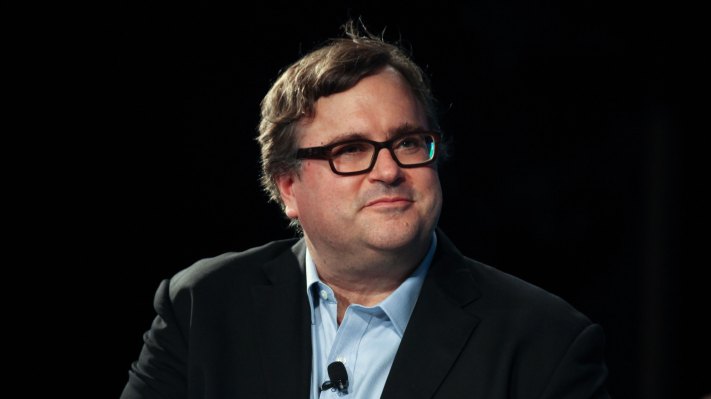
Microsoft board member Reid Hoffman, also a cofounder of Inflection and an investor in it, along with his VC firm Greylock, did promise “that all of Inflection’s investors will have a good outcome today, and I anticipate good future upside,” in a LinkedIn post earlier this week.
Investors in the early $225 million round will be getting 1.5 times their investment; those in the later $1.3 billion round will get 1.1 times their investment, according to the Information. While that math doesn’t add up to $650 million, these investors will also retain their equity in the skeleton of the startup that remains. The new company, however, will be pivoting away from building a personalized AI chatbot named Pi on a massive computer structure of 22,000 of Nvidia’s expensive, hard-to-find AI chips. It will now become an AI studio helping other companies work with large language model AI.
Inflection did not respond to a request for comment.
In its short life as an aspiring OpenAI competitor — it was founded in 2022 — Inflection raised its more than a billion at a $4 billion valuation — from a who’s who: Microsoft cofounder Bill Gates, Microsoft itself, as well as former Google CEO Eric Schmidt, Dragoneer Investment Group, Nvidia, and others.
Just to state the obvious: Microsoft provided a soft landing for Gates (who is technically no longer with the company but still a godlike figure there) and its board member’s VC firm, for their expensive, and possibly fruitless AI venture. The big cloud vendors have all already lined up with other chatbot partners: Microsoft with OpenAI, Google and Amazon with Anthropic; Cohere picking up assorted others like Oracle and Salesforce.
If and when Inflection ever perfected Pi on its enormous AI infrastructure, the race looked to be already lost.
Interestingly, the money Microsoft is spending to gut this startup may be worth it. True, Suleyman has a somewhat cloudy reputation as a boss, according a 2021 The Wall Street Journal investigation that alleged bullying behavior. But Microsoft itself, while kinder and softer under CEO Satya Nadella, still has a long history as a tough workplace.
And who better to hire than the founder and a technical geniuses behind Google DeepMind, now with experience building an LLM? The co-founders are familiar with Google’s secrets as well as well as next-gen AI. Simonyan’s, for instance, helped spearhead AlphaZero, the AI that mastered the board game Go.
Despite close ties with OpenAI, Microsoft also has many reasons to be needing a backup for it’s all-important AI gambit. For one, the FTC said it’s looking into its deal with OpenAI, as well as Anthropic’s deals with Amazon and Google. Should some sort of FTC mandates be issued, Microsoft would be wise to have options.
Plus, word is that some of Microsoft’s engineers and OpenAI’s engineers don’t have the most loving relationship, Business Insider has reported. Then there was the Sam Altman firing saga that had Nadella telling the world he was absorbing Altman and much of OpenAI, only to walk it back.
There are so many red flags with OpenAI that Microsoft is wise to wean its dependence.
Then again, just like Microsoft’s investment in OpenAI, we wonder if regulators will also have something to say about this deal.