


The RAW Dating App aims to shake up the dating scheme by shedding the fake, TikTok-ified, heavily filtered photos and replacing them with a more genuine, unvarnished experience. The app targets young professionals and students, particularly women aged 21 to 27, who seek genuine interactions.


Terra One aims to reduce the quantity of clean energy created significantly and then lost from the German grid owing to a lack of storage capacity. Lacking storage capacity is an entirely pressing need and one desperate for solutions, so it’s great to see companies thinking up ways to fix it and going after the funding to make it happen.

Welcome to Startups Weekly — Haje‘s weekly recap of everything you can’t miss from the world of startups. Sign up here to get it in your inbox every Friday.
We’ve been drowning in AI news this week. Google’s I/O set the pace: At its keynote, the word “AI” came up on average once per minute throughout its two-hour keynote. Yowzers! Here’s the DL on Google’s AI plans.
OpenAI just dropped GPT-4o — the AI model that’s ChatGPT on steroids. This new “omni” wonder-child can handle text, speech, and video like a multitasking prodigy hopped up on espresso shots. Also, OpenAI’s co-founder and chief scientist Ilya Sutskever decided to jump ship. The guy who basically helped build the brain of our future AI overlords is off to chase some “personally meaningful” rainbows.
Meanwhile, OpenAI is now considering AI-generated porn. Yes, you read that right — it seems like our future involves robots with an artistic flair for NSFW content. The company wants to “responsibly” generate explicit images and text without violating laws or rights. Between you and me, letting Skynet dabble in adult entertainment seems anything but responsible, but I guess you’ll have to stay tuned for more updates on this roller-coaster ride because it seems we’re hurtling toward an X-rated tech dystopia faster than you can say “algo-rotica.”
Oh, and it’s also worth noting that Anthropic has let kids join the AI party, but only if developers play by the company’s rules. Teens can access third-party apps using Anthropic’s AI — just not Anthropic’s own apps — provided these apps include safety features like age verification and content filtering and a wall of “comply with COPPA” signs plastered to every surface.
Did anything happen outside of AI land? Sure, let’s take a look …
Most interesting startup stories from the week
Ready to hand over your love life to a robot? Bumble’s Whitney Wolfe Herd thinks it’s time for bots to date other bots, all in the name of fostering “healthy and equitable relationships.” Picture this: An AI “dating concierge” critiques your insecurities and then sends its own bot on a test run with another bot. If sparks fly, maybe you get a match! It’s basically Tinder meets “Black Mirror” episode “Hang the DJ” minus the dystopian charm. While some folks are snickering, others are wondering if living vicariously through digital avatars is any worse than swiping right on someone because they have a cute dog in their profile pic. Truly, the modernest of romances.
- Ring ring, who is that? Your creaking bones: Ready to feel ancient? Oura’s new smart ring features promise to tell you just how decrepit your heart really is with the Cardiovascular Age metric. It’s like a magic mirror, but for your arteries.
- From cradle to cradle: Gather ’round, exhausted parents and eco-warriors! Alora Baby is here to rescue you from the endless parade of landfill-bound baby gear. The startup has decided that your little angel’s leftover crib shouldn’t have a one-way ticket to Trashville. Instead, it’s pioneering “remanufactured” products that are as good as new (or so they claim).
- Domo Arigato: Kyle Vogt, the man who, with Cruise, brought us self-driving cars that sometimes forget pedestrians exist, is back with a new venture: robots to do your chores. Vogt’s latest brainchild, the Bot Company, has already scored $150 million in funding. One can only hope these bots have better spatial awareness than his last project.

Most interesting fundraises this week
Ever lost a bet and ended up founding a company? Nicholas Johnson has, and now he’s here to save apartment-dwelling EV owners from the slow death of 120-volt outlets. Enter Orange Charger, peddling $750 smart outlets that’ll juice up your ride without landlords breaking into cold sweats over installation costs. The company raised a $6.5 million oversubscribed seed round
In a plot twist straight out of Silicon Valley’s soap opera, Permira is taking Squarespace private in a $6.9 billion cash deal. The website builder you probably used to start your probably-now-abandoned blog just got snapped up by some very serious people with very deep pockets. After riding the roller coaster of public trading and seeing its stock yo-yo like it was auditioning for Cirque du Soleil, Squarespace will be tucked away from prying market eyes once more.
- Layer? I barely know ’er!: QuickBooks, meet your new nemesis: Layer. This San Francisco-based startup has just snagged $2.3 million to unseat the accounting giant by embedding bookkeeping tools directly into platforms like Square and Toast.
- Spicy noms: In a world where Sysco and US Foods reign supreme, Pepper is the feisty underdog that’s shaking up the B2B food e-commerce scene. With a fresh $30 million cash injection led by ICONIQ Growth, Pepper is giving small distributors some serious tech muscle to fight back against the big boys.
- Won’t you be my neighbor?: Welcome to the world of PayHOA, where Kentucky charm meets SaaS brilliance. This once-bootstrapped startup just pocketed a cool $27.5 million in Series A funding — seems that even your local HOA needs cloud-based financial wizardry these days.

Other unmissable TechCrunch stories …
In the latest episode of “Elon Musk Does Whatever He Wants,” the social media platform formerly known as Twitter now flags the words “cis” and “cisgender” as slurs. Yes, really. While actual hate speech targeting marginalized groups skates by unscathed, using a term recognized by medical and government authorities will get you a full-screen warning. It’s almost like Elon is trying to make X a hostile environment for anyone who isn’t aligned with his new extremist fanbase. Never mind that the vast majority of people on the platform are cisgender — if you use the word (or just enjoy basic human decency), consider this your cue to exit stage left.
Oh, and apropos Musk doing whatever he damn well pleases … Guess what happens when you put Elon Musk and a profitable division in the same room? You fire it, of course! Tesla’s Supercharger network — an EV owner’s dream with its 50,000+ global charging ports — is now in complete disarray after Musk axed the entire team.
- Are you gonna go my way?: Uber’s latest brainwave to solve the concert traffic nightmare: shuttle buses. Inspired by their success in India and Egypt, Uber is launching a shuttle service in U.S. cities this summer for concerts, sports events, and airport trips — because everyone loves being packed like sardines with strangers.
- Crushing disappointment: Buckle up, folks, because Apple’s latest attempt at marketing the new iPad Pro is a masterclass in how to alienate your creative fanbase. In its “Crush” ad, they thought it would be super cool to show an iPad smashing traditional art supplies into oblivion. Spoiler: It wasn’t.
- Are you on tonight?: Ever wonder how to manage a mob of frontline employees without losing your mind? Enter Sona, the superhero workforce management platform that just bagged $27.5 million to revolutionize shift scheduling and timesheets for all those who keep society running while we binge-watch Netflix.
- Zeekr and you shall find: Zeekr, the Chinese luxury EV brand owned by Geely, made a grand entrance on the New York Stock Exchange, becoming the first major U.S. listing from China since 2021. Investors went wild, sending Zeekr’s stock price soaring 38% in minutes and valuing it at a cool $7 billion.
- A lightweight solution to a heavyweight problem: In a world where everyone’s either on a fad diet or popping miracle weight-loss pills, Sammy Faycurry decided to actually do something useful: create a startup that helps registered dietitians start their own practices and get covered by insurance.

Back in September 2021, Cloudsmith raised $15 million in Series A funding for its cloud platform that manages companies’ software supply chains. At the time, that was the largest Series A round for a Northern Ireland company since 2005, so it definitely got something right! I was delighted to look over Cloudsmith’s deck to see how it did it. The deck included some redacted numbers, but there was still enough data to get a good picture.
We’re looking for more unique pitch decks to tear down; here’s how you to get involved. Read our 90+ Pitch Deck Teardowns here.
Slides in this deck
The presentation has 36 slides — 25 make up the main deck, eight are in the appendix and three are addenda. While it is substantial, there is room for improvement. For example, I’d remove unnecessary slides like the organizational chart (nobody cares and certainly not in an intro deck) and combine similar slides, such as the competition and competitor pricing slides. While there is much to appreciate about the deck, let’s take a closer look to identify other areas for refinement.
- Cover slide
- Mission
- Summary
- Problem / cause slide
- Problem / impact slide
- Solution — logistics slide
- Solution — Cloudsmith slide
- Case study
- Accumulating trust slide (customer list)
- Product slide
- Ecosystem slide
- Positioning slide
- Customer segmentation slide
- Go-to-market slide
- Market size slide
- Market penetration map slide
- Traction slide
- Forecast slide
- Pricing slide
- Partners slide
- Organization chart
- People slide (team)
- Use of funds slide
- Raising Series A (ideal investor slide)
- Closing slide
- Appendix interstitial
- Roadmap
- Product
- Target logos
- Competition
- “Why we win“
- “What’s your dream?“
- Competition pricing
- Addendum interstitial
- Net revenue retention
- Growth plan
Three things to love about Cloudsmith’s pitch deck
Cloudsmith originally submitted its deck months ago, and every time I looked at it, I was frustrated by how much of the deck was redacted. It was hard to get a feeling for what impressed its investors to hand over the cash. But there’s still a lot to learn, even with information missing, so I decided to dive in. (Hey, startup founders: This is your very unsubtle hint to submit your own deck to the Pitch Deck Teardown series!)
Here are some slides that I liked:
A promising summary

The summary slide for Cloudsmith effectively sets the stage for a comprehensive and enticing company overview. It functions as an engaging opener within the pitch deck, designed to clearly articulate what Cloudsmith does and its impressive performance to date. This all but ensures that potential investors understand the promising nature of the opportunity from the get-go.
This slide captures the essence of Cloudsmith’s operations and achievements in a compact yet potent format. It presents key information that informs and excites, creating a compelling case for why investment is not only an opportunity but also a strategic move for those looking to capitalize on emerging tech trends.
Although some figures are redacted, the visible metrics are quite promising, suggesting strong performance and potential. Even the redacted portions are “correct.” It’s a little sus to hide your NPS (net promoter score) — come on, that’s hardly a business secret — but you definitely want to show your ARR (annual recurring revenue), MRR (monthly recurring revenue), number of customers, etc.
However, the slide could be even more effective by including the financial “ask”: how much capital Cloudsmith is seeking and what the funds will be used for. Detailing the specific use of funds could help bridge the gap between investor interest and action, making a stronger case for why an investment now could be pivotal for Cloudsmith’s trajectory — and help build a little FOMO right out of the gate.
What’s now? What’s next?

The remarkable “Now and Next” slide is a dynamic way to show the company’s substantial achievements and ambitious future plans. This slide artfully blends past triumphs with aspirations for growth, providing investors with a captivating narrative.
The slide illustrates Cloudsmith’s capabilities and solid foundation. It articulates the company’s practical benefits, simplifying complex technical concepts for investors. This clarity ensures that even those unfamiliar with the technical intricacies can grasp the significant value Cloudsmith brings to its customers.
Transitioning from the present to the future, the slide invites investors to embark on a shared vision with the company. The outlined expansion plans are not just about growth; they are also about leveraging existing strengths to build a thriving future.
Cloudsmith’s plans are not really detailed enough to be fully credible, however; this slide evokes my “Sure, yeah, and how are you going to do that?” snark. But I’m certainly paying attention at this point, and loving the forward-looking hint at the substantial growth the company is envisioning.
Helloooooo, traction

The best form of traction is revenue, and Cloudsmith has a graph displaying its ARR from August 2019 to April 2021, which looks healthy. Now, as the numbers are redacted, I can’t be certain exactly how healthy, but the graph is pointing in the right direction, and Cloudsmith knew that it needed to share those figures.
The company also included other useful metrics on its traction slide, indicating customer numbers, LTV (lifetime value) and CAC (customer acquisition cost), among others. Again, the figures are redacted, but assuming they’re healthy, this is a good example of what to include on a traction slide. There are no vanity metrics, and it’s not trying to use a crystal ball to look into the future, which by definition isn’t traction.
Now, given that this is a Series A financing, we’re talking about growth here, and most growth rounds are done exclusively on traction. If you have it, the fundraise will be pretty straightforward. If you don’t, well, you’re in for a tough time. So I have to ask: Why are we only getting this chart on slide 17? If this were my pitch deck, this would be slide 3 or 4; this is exponential growth(ish), and looking great. Lead with that!!
Three things that Cloudsmith could have improved
Before you start flinging your deck into the general direction of VCs, take a beat. Examine each slide in your deck. Ask yourself, “Does this slide actually help raise cash?” If not, ditch it. Sometimes, less is more. One killer slide can pack a bigger punch than a couple of lackluster ones. Trim the fat and keep your audience hooked on what really matters: your fundraising goals.
A quick shuffle that would help trim the fat and streamline the deck:
- Delete slides 2, 21, 24, 29, and 32.
- Merge slides 30 and 33, then move to the main deck and create single, better problem and solution slides.
- Move slide 8 to the appendix and slides 28 and 31 to the main deck.
OK, with that reshuffle out of the way.
Two solution slides? Are you sure about that?

Let’s get real about solution slides: They’re supposed to be your strategic ace up your sleeve, not a deep dive into the nitty-gritty. They should give a bird’s-eye view of how your company plans to tackle the big, bad problem you’ve laid out. But here we are, with two slides that seem to have forgotten their purpose in life and are lost deep in the weeds. It’s like Cloudsmith is trying to show off how much it knows rather than focusing on the strategic overview. Keep it high level, folks.
There’s slide 6, strutting around with its three boxes that scream, “I’m useful!” but whisper, “I’m not solving anything.” Sure, it’s packed with info, but it’s like that guest at the party who talks a lot but doesn’t really say anything important (I know this all too well, because I’m frequently that guest, but hear me out). These boxes might feel good about themselves, but they’re not doing the job of moving us toward a solution. It’s time to refocus and make sure every element on that slide is there to contribute to the solution, not just to take up space.
And don’t get me started on the full problem/solution quartet. The company has a narrative as clear as mud here. Four slides of dense text that probably seemed like a good idea at the time, but in reality, they’re just a homework assignment for your audience. If you had paired that bloated slide 5 with a streamlined slide 7, you’d have a sharper problem statement and a solution that doesn’t require a map and compass to understand. Instead, cut the clutter and make it easy for everyone to see the genius of your solution.
Hello, faces

Oh, Cloudsmith, your team slide is a paradox wrapped in a PowerPoint. It’s somehow managing to give too much and too little at the same time: a magic trick no investor wants to see. There’s a deluge of details about the core team, which isn’t exactly what is needed to wow investors at this stage. They want the juicy stuff about why your founders are the chosen ones to lead this venture. You’re teasing with hints, but come on, give the full story. Dive deep and show why they’re the captains of this ship. And while you’re at it, throw in their LinkedIn profiles. It’s the digital age; investors are gonna stalk. Make it easy for them.
And speaking of unnecessary info, while it’s great to know who’s keeping the ship steady, a play-by-play on every core team member for a Series A pitch isn’t needed. What would spice things up is a quick mention of your overall headcount. It provides a glimpse of your scale and scope without bogging everyone down with the minutiae. Keep it sleek, keep it smart, and keep the focus on what really matters: making the investors believe you’ve got the best team to take this “to da moon,” as the crypto kids like to say.
Here’s some money — now tell me what you’re going to spend it on

Could this half-assed financial riddle slide be any more vague? It dances around the topic of money like it’s a hot stove, vaguely hinting at how the company will spend the cash but clamming up regarding the actual amount it’s looking to raise. Here’s a tip: When you’re asking for money, don’t be shy. Spell it out, loud and clear. How much do you need? Don’t leave investors guessing or they might guess themselves right out of the meeting room.
And on that subject, ditch the percentages. They’re about as helpful as a chocolate teapot. Use hard numbers, dates and details. Say when you’re planning to make those key hires, and what these new knights in shining armor will cost you. More importantly, what dragons are they going to slay? Lay out the goals these hires will help you achieve, and please, for the love of clarity, make it specific — the how, what, when, where and why. Offer investors the roadmap, not just the destination.
Now, about those goals: You’ve got aspirations, but how are you going to turn those daydreams into reality? What needs to happen? Do you need people, tools and infrastructure? And how much will these dreams cost? Once you’ve sorted all that, dazzle with the potential benefits. What wonders will these investments work for your company? Remember, it’s all about SMART goals here: specific, measurable, achievable, relevant and time-bound. Tell the investors what they’ll get for their money, and make it clear that if you hit those goals, you’ll be able to raise a chunky Series B to keep chasing that ARR figure up and to the right.
The full pitch deck
If you want your own pitch deck teardown featured on TechCrunch, here’s more information. Also, check out all our Pitch Deck Teardowns all collected in one handy place for you!

Welcome to Startups Weekly — Haje‘s weekly recap of everything you can’t miss from the world of startups. Sign up here to get it in your inbox every Friday.
Look, I know this is our startups weekly newsletter, and as the most valuable company in the world, Apple is kind of the ultimate “not a startup,” but judging by the traffic on the site, y’all are such rabid fans that it seems rude not to do a quick roundup: Apple ran a short, 40-ish minute event this week, where it showed off new iPad Airs, new iPad Pros (with a fancy new stacked screen technology), a new Magic Keyboard, a new Pencil Pro, brand-new M4 chips, and much more. Oh, and they finally “admitted” that iPads are more like little laptops than big iPhones, so the company moved the camera to the landscape edge — where it shoulda been all along, honestly.
Ooh! And I have some fun personal news: I’m joining the TechCrunch Equity podcast as a co-host, alongside the formidably wonderful (and wonderfully formidable) Mary Ann Azevedo. You know, just in case you wanted my zany humor in your ear-holes, in addition to into your eye-holes.
Most interesting startup stories from the week
Buckle up for a wild ride as we delve into the saga of Newchip, an accelerator that promised startups a golden ticket to success, but instead led them straight to bankruptcy court. Lacey Hunter thought she’d hit the jackpot with her AI humanitarian aid startup TechAid when she joined Newchip’s program. Spoiler alert: She didn’t. Instead of accelerating to glory, Newchip filed for bankruptcy and auctioned off warrants from 1,000+ startups in an equity yard sale. And poor Hunter? She had no choice but to shut down TechAid amid this hot mess.
In a spicy turn of events, Microsoft just hit CTRL + Z on U.S. police departments using its Azure OpenAI Service for facial recognition. This update to their T&Cs was as subtle as a rhino in a china shop. In a nutshell: If you have a badge, a handlebar mustache and a pair of mirror aviators, then no AI face games for you!
- Rabbit R1 isn’t actually meant to be good (yet): The rabbit r1 is an AI gadget that apparently came out of the oven quicker than a batch of undercooked cookies. Packed with more quirks than app integrations, this lil’ carrot muncher makes you question if it could’ve just been another app on your phone. But for now, that’s kinda the point, Devin argues.
- I got 99 problems, but the tech ain’t one: Rappers Kendrick Lamar and Drake have taken their feud to new heights — or should we say, depths? It’s all fun and games until Tupac gets deepfaked into your track.
- On yer bike: In today’s episode of “How to Tank a $50 Billion Company,” Peloton, the once glittering star of home fitness, continues its trudge on the sad treadmill of misfortune. They’re axing 15% of their workforce (that’s about 400 people for those allergic to percentages), proving that math is indeed a cruel mistress.

Trouble in the transportation trenches
Henrik Fisker’s EV startup, Fisker Inc., is having a bit of a midlife crisis. After launching two prototypes last August — the Pear and Alaska — it has allegedly stiffed the engineering firm that helped develop them. The firm, Bertrandt AG, filed a $13 million lawsuit claiming Fisker stopped payments and held on to their intellectual property like some jilted lover refusing to return your favorite sweatshirt. It seems it isn’t just a one-off: It’s more like an episode of “Judge Judy” with over 30 lawsuits alleging lemon law violations, claims for unpaid wages from former employees and suppliers suing for overdue bills. Even though Fisker’s VP of communications insists Bertrandt’s lawsuit is “without merit,” this smorgasbord of legal troubles suggests there may be more cracks in the company than in Humpty Dumpty after his unfortunate wall incident.
- Tesla’s flirtation with lidar: Oh, the delicious irony! Elon Musk once called lidar sensors a “crutch” for self-driving cars but Tesla is now Luminar’s top customer. The company splashed out on so much of this supposedly unnecessary tech that it accounted for over 10% of Luminar’s Q1 2024 revenue. That’s $2 million worth of crutches! Luminar itself is struggling, though, and just laid off 20% of its staff.
- Rivian on the ropes: Here I was thinking my financial skills were questionable, but despite raking in a whopping $1.2 billion in Q1 revenue, they still managed to lose $1.45 billion! It seems their cost-cutting measures need a little more elbow grease before they can start dreaming of profitability.
- Hyundai breaks open the piggy bank: Meanwhile, Hyundai, in a bid to save us from the terror of our own driving skills, has forked out nearly $1 billion on Motional. This “generous” investment will give Hyundai the majority stake and keep this self-driving startup rolling (pun intended). It’s like a Cinderella story but instead of a pumpkin turning into a carriage, it’s your cash turning into autonomous vehicles.

Most interesting fundraises this week
Iconiq Capital, the private office that’s been babysitting Mark Zuckerberg’s and Jack Dorsey’s cash piles since 2011, has just raised a whopping $5 billion across two funds for its seventh flagship fund. This hefty fundraise puts them in the spotlight while other big players like Tiger Global tripped on their shoelaces with a mere $2.2 billion haul (their smallest since 2014, after attracting criticism that it was deploying its cash too fast).
- The cloud is making it rain: Alternative clouds are the new cool kids on the block, folks! CoreWeave just raised a whopping $1.1 billion and is now valued at $19 billion. Why? Because GPUs (those pricey tech powerhouses) are hot stuff for training AI models, but not everyone has deep enough pockets to buy their own.
- Let’s take a look inside: Remember when Vinod Khosla, founder of Khosla Ventures, boldly declared radiologists would be obsolete in five years thanks to AI? Yeah … about that. Turns out, we’re not quite there yet (shocker!). Now, after presumably realizing robots aren’t ready to play doctor just yet, Khosla is investing $50 million into Rad AI — a startup aimed at making radiologists’ lives easier without trying to replace them with machines (yet).
- Appraise the roof: Itai Ben-Zaken is living proof that a startup stumble is just a cha-cha move in the entrepreneurial dance: He’s back with Honeycomb Insurance, leveraging AI to turn aerial shots of roofs into property inspections for landlords, scoring $36 million for the company’s Series B.

Other unmissable TechCrunch stories …
Every week, there’s always a few stories I want to share with you that somehow don’t fit into the categories above. It’d be a shame if you missed ’em, so here’s a random grab bag of goodies for ya:
- All deepfakes, all the time: While we’re used to seeing Katy Perry dressed like an enchanted chia pet, this year she wasn’t even there — but you wouldn’t know it from the 10 million views her faked mossy-gowned image received on social media.
- Newer saw the sun, shining so bright: So it seems Jack Dorsey has ghosted Bluesky faster than a Tinder date who just discovered you own a tarantula. Mr. “I’m too cool for social media platforms” casually dropped in a conversation on X that he has left the board of his pet project, Bluesky. He didn’t even bother to give any reason or tweet some cryptic haiku about change and evolution — just responded with a plain old no when asked if he was still on the board.
- Apple’s new ad is disgusting: Apple’s latest ad crushed our hearts as it literally crushed a stack of creative tools and analog items into the shape of an iPad. Oh, we get it, Apple! You’re saying this skinny (who asked for that?) new iPad can replace all these things, but your vision of a future without physical instruments or paper books feels pretty dystopian, and we don’t like it.
- A tail with a happy ending: In the latest episode of “Whale, Actually,” scientists have been eavesdropping on sperm whales with a little help from machine learning. Turns out, these mammoth mammals have been chitchatting using their own secret language! With a series of clicks (called “codas,” if you’re feeling fancy), the whales seem to be forming words and sentences that we’ve never understood before. How flippering cool.
- LMGTFY: Stack Overflow has decided to play nice with OpenAI. After initially giving ChatGPT the boot due to a fear of spammy responses, they’ve had a change of heart (or code?). They’re now teaming up to improve AI responses on programming-related tasks.

Welcome to Startups Weekly — Haje’s weekly recap of everything you can’t miss from the world of startups. Sign up here to get it in your inbox every Friday.
Musk’s 10-month-old baby, xAI, is closing in on a whoppin’ $6 billion funding round. The social network X, née Twitter — also part of Elon’s tech family — is already a shareholder. The deal was initially supposed to raise just $3 billion, but then everybody wanted in and the price tag bumped. Investors include Musk’s BFFs from Sequoia Capital, Future Ventures and some other chums who may also be joining this AI party — it’s all very Mean Girls “You can’t sit with us” at this point. The thing that really frustrates me, though, is how smug Musk probably is about all of this. It’s fine, I’m just bitter that none of my startups ever raised $6 million — never mind three orders of magnitude more.
Sure, it may be on the eve of getting banished from the U.S. altogether (although, I hasten to add, the previous administration tried that, too, and TikTok’s still here, going strong), but TikTok may be sneaky in more ways than one. Word on the street (or should we say web?) is that TikTok is playing a bit of hide-and-seek with Apple. Instead of giving Apple its 30% cut for in-app purchases, it appears they’re trying to guide users into buying their digital tipping coins directly from their website. But shh … it’s a secret! The feature is apparently only visible to certain users (lookin’ at you, high spenders). Will Apple give them the boot like they did Fortnite? Only time will tell.
Your founding team sucks: In a brutally honest chat with me at TechCrunch Early Stage, Tom Blomfield, ex-Monzo Bank founder and current Y Combinator partner, spilled the tea on venture capitalist decision-making. He says investors are looking for unicorns that can deliver 1,000x returns — anything less is an epic fail. They’re not just judging your business model or product. No, they’re eyeing YOU up to see if you have what it takes to make their cash multiply like rabbits.
Most interesting startup stories from the week

Hello? Is that iPhone? Why are you so quiet today? Image Credits: Vectorian / Getty Images
Oh, EyeEm, you sly dog! The once “Insta-challenger” Berlin-based photo-sharing app that nearly went belly-up last year has found a new way to milk its users — by training future AI overlords! Yup, they’re selling your snaps to train machine-learning models. Users were graciously given 30 days to pack up their digital photo albums and scram or forever hold their peace (and surrender their photos). Are you opting out, though? Not as easy as swiping left on Tinder — you need to manually delete your pictures. But wait for it … the real kicker is if you decide in a fit of rage to delete your account altogether, no more payouts for you. Womp-womp, sad trombone.
It’s like “Game of Thrones” but in the tech world. Welcome to Techstars’ latest season, where CEO Maëlle Gavet is fighting battles on all fronts within her kingdom! She’s got a bank collapse, an international accelerator program shutdown, and dodgy LinkedIn posts. And that’s just for starters. Throw in the Swedish labor law conundrums and you’ve got more drama than an episode of The Real Housefounders. As if that wasn’t enough, she’s also dealing with a company-wide revolt against her reign, as well as her cost-cutting measures leading to a toxic work culture, and hiring folks with as much startup experience as my pet goldfish. (It died back in 2007. RIP, Knee-mo.) Stay tuned for this gripping saga of power struggles, corporate drama, questionable financials and strategizing — I can’t guarantee dragons or White Walkers but there will be plenty of fire-breathing and icy glares!
A couple of fun exits

Mark Cuban wrote a check to Truffle Shuffle. Nobody will comment on whether it was a good exit for the company. Image Credits: Christopher Willard / ABC via Getty Images
Rubrik, the cybersecurity company, decided to take a leisurely stroll onto Wall Street this week and BAM! Shares shot up 16% on their public debut. They were initially priced at $32 per share (just a smidge above their target range) and settled down to a cushy $37 by end of trading. Now, that’s one way to make an entrance! This little outing bumped their valuation from $3.5 billion in 2019 to a dizzying $6.6 billion today. Not bad for a company that’s not even turning profits yet! Their secret sauce? Subscription revenue — it went from 73% to 91% in just a year. But, hey, who needs profitability when you’ve got stickiness, right? While this may seem like the start of an IPO party parade with Reddit and Ibotta leading the conga line, potential interest rate cuts could play party pooper soon enough. No doubt, Greylock is giggling maniacally all the way to the bank.
ButcherBox, the meat-obsessed startup that bootstrapped its way to a juicy $600 million revenue, just sunk its teeth into “Shark Tank” darling Truffle Shuffle. The acquisition is less about gobbling up competition and more about helping ButcherBox’s customers stop burning their steaks. Truffle Shuffle was born out of sheer desperation when founders Jason McKinney and Tyler Vorce found themselves with $20,000 worth of truffles but no restaurants to sell them to, thanks to our dear friend COVID-19.
Most interesting fundraises this week
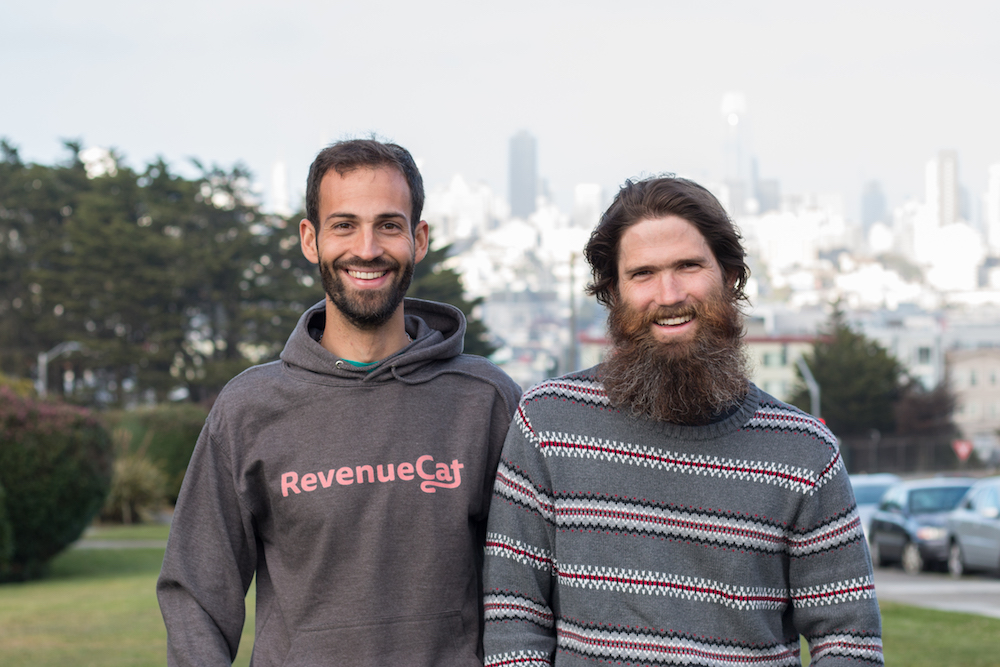
RevenueCat founders Miguel Carranza (L) and Jacob Eiting (R). Image Credits: RevenueCat
- Here, kitty, kitty: RevenueCat, the fairy godmother of app subscriptions, has just landed a cool $12 million to expand its magic kingdom to the web. Purr-fect. It powers 30,000 apps and is handling over $2 billion in annual subscriptions. Noice.
- Like a flip phone, but house-ier: Step right up, folks! Backflip just snagged $15 million to help real estate investors flip houses. Because why sweat it out doing old-fashioned physical labor when you can just toss some cash at the problem and watch your property’s value do the gymnastics?
- Sure, I think AI needs some more dollars: The OpenAI Startup Fund is at it again, quietly raking in $15 million from two investors who clearly enjoy their anonymity (hmmmmmm). Ian Hathaway, the fund’s manager and sole partner — because why share the fun — was named in the paperwork. Remember last year when eyebrows were raised after it came out that OpenAI CEO Sam Altman had all the say-so? They said it was “temporary,” but that stirred up some drama!
Other unmissable TechCrunch stories …
Bad news for healthcare privacy this week. UnitedHealthcare CEO says “maybe a third” of U.S. citizens were affected by their recent hack, and Kaiser pissed away a bunch of customer data as well. Gee, thanks, you clowns.
Anyway. Here’s a few other stories that are fun. Maybe. Or at least interesting. Or maybe they just got a metric crapton of traffic this week. Who knows what my selection criteria is, but … just read the stories, okay?
- The cloud is, well, making it rain: Google Cloud is rolling in the dough. The business unit just outshone Wall Street’s expectations with a whopping 28% increase, making it rain thanks to an insatiable demand for AI tools that cloud infrastructure supports.
- It’s all “go go to” … Noooo, not that way!: Welcome to another episode of “Autopilot Antics” starring Tesla and the National Highway Traffic Safety Administration (NHTSA)! After a thrilling investigation into hundreds of crashes where drivers treated Autopilot like a seasoned chauffeur instead of an assist system, the NHTSA closed the case with 13 tragic, fatal plot twists.
- I’m just padding this part of the newsletter: iPadding, that is. Just when you thought Apple might have had its fill of shiny product reveals, they’ve sneakily scheduled another event. Rumor has it we’re getting a new iPad Pro and Air, an updated Apple Pencil and keyboard case combo. I’ll be there, reporting alongside the hardware team — stay tuned.
- The soup is terrible and the portions are tiny (ahem): Meta’s new AI chatbot, Llama 3, has been let loose on the world. It’s like that party guest who regurgitates random web search results without excelling at anything particular. But hey, it’s free!
- I wish this had existed when I was learnding the engelish: Google is once again proving it’s not just for stalking your exes and settling bar trivia debates. They’re testing a new feature called “Speaking practice” that uses AI to help users get chatty in English, and no, it doesn’t involve talking about the weather or asking where the library is.

Butcherbox is known for grinding its way forward, bootstrapping to more than $600,000 worth of revenue. The company hasn’t traditionally been on the M&A path, but it today announced it is acquiring Truffle Shuffle – who you may remember from a Shark Tank episode back in 2021 (or, perhaps, The Goonies). The acquisition helps Butcher Box customers get better at cooking – and potentially broadens the appeal (and product line) for more its customers.
Truffle Shuffle’s goal is to make us home cooks feel like pros, which it does by offering easy-to-follow cooking shows. When I tried it out during the pandemic, I was struck how the company was able to make even pretty advanced dishes accessible and fun: with attitude and lots of little tips and tricks along the way, including breaks for making cocktails and dance parties where the home cooks show off how far into the process they are and how tasty the meals look as they are getting cooked.
The companies declined to share the terms of the deal, but a spokesperson from ButcherBox confirmed that it was a cash-only offer.
Bringing Michelin-star cooking to your kitchen
As ever, one of the most important parts of starting a startup is founder-market fit, and the two founders – Jason McKinney and Tyler Vorce – have a hell of a story on that front: they met at Michelin-star-studded restaurant French Laundry, and decided to start a Truffle business.

Truffle Shuffle chef Tucker Ricchio was the winner of Gordon Ramsay’s Next Level Chef. Image credit: Jay Maidment / Next Level Chef
Truffle Shuffle was founded with the dual purpose of assisting chefs and consumers in sourcing genuine truffles and developing its own range of truffle-infused products. However, the pandemic meant that they suddenly found themselves with $20,000 worth of highly perishable, premium truffles on their hands, and no open restaurants to purchase them.
That’s when scrappy founders up their game. In response to these extraordinary circumstances, the team, made a pivot to direct-to-consumer sales and introducing a unique live cooking experience. This innovative shift saved the business – and was the birth of a new idea.
From there, the business evolved: the team launched a platform that offered guests the opportunity to choose a dish they wished to learn to cook. Once a selection is made, the company sends them all the necessary ingredients to prepare a Michelin-quality meal in the comfort of their own home. This solution not only helped the company manage excess inventory but also brought a gourmet cooking experience into the kitchens of food enthusiasts nationwide – and eventually caught the eye of ButcherBox.
“Jason and Tyler are incredibly scrappy entrepreneurs and extremely talented chefs,” said Mark Cuban in a statement to TechCrunch. “It’s been a pleasure watching them expand their community of home chefs and seeing the impact they’ve had on so many households in such a short time. Their approach to teaching people to cook will continue to inspire the Truffle Shuffle community and be an invaluable tool to the ButcherBox community too.”
It turns out that Shark Tank wasn’t the team’s only brush with television celebrity: Another of the company’s featured chefs, Tucker Ricchio, won $250,000 as part of Gordon Ramsey’s Next Level Chef, back in May last year, which can’t have harmed Truffle Shuffle’s profile and public awareness any.
Acquisition by ButcherBox
ButcherBox has been growing rapidly for a while and recently expanded its business into a line of pet food called ButcherBox For Pets.
The company says the Truffle Shuffle purchase is its first acquisition to date, and seems like a logical extension to the company’s ‘Just Cook’ recipe and learn-how-to-cook-better site. For now, however, the acquired company will operate under its own brand while the company works to see how best to integrate it into the ButcherBox brand more permanently – but the company says it’s excited to give ButcherBox customers access to this content more immediately.
“In my eyes, Truffle Shuffle is more than just a recipe and video platform. The community the team has cultivated was what really set them apart,” said Mike Salguero, founder and CEO of ButcherBox, in an interview with TechCrunch.” They’ve empowered and celebrated individuals who are learning to cook in their own kitchens, while also upskilling those who are further on their culinary journey, all while having fun and eating better. As a brand, our purpose is to help people eat better and while we’ve been focused on helping them eat higher-quality protein, now through the Truffle Shuffle integration, we can inspire and educate the way they are preparing our proteins too.”
ButcherBox, meanwhile, is continuing its mission to make meat consumption healthier and more conscious. Meat will always been a morally complex area (especially when seen from a climate angle), but the company says it is doing what it can. Among other things, it’s a registered B-Corp, and has invited animal welfare organizations to keep it accountable.
Newer Posts