

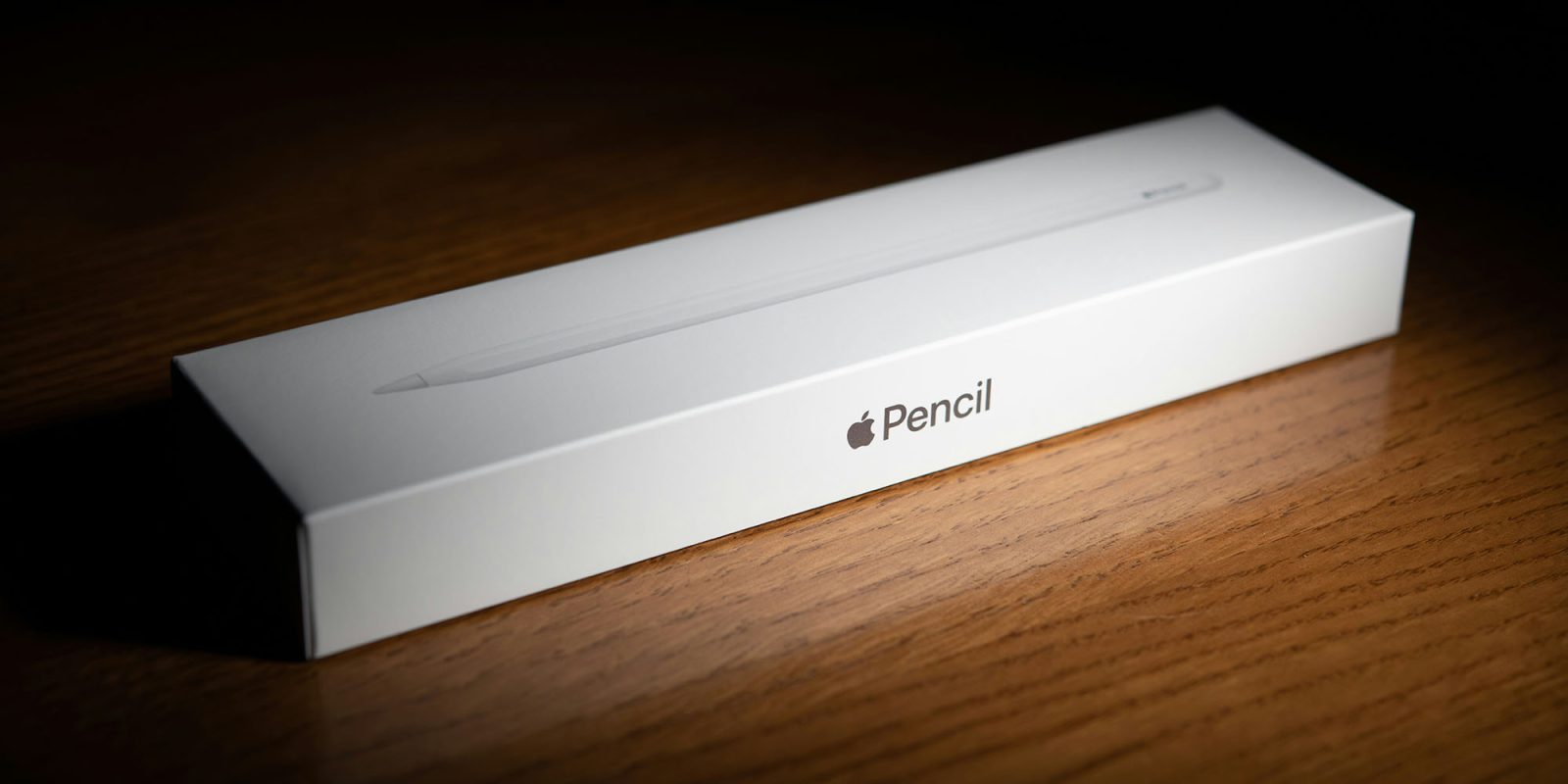
A recent report suggested we might be seeing some form of Apple Pencil for Vision Pro, and that idea appears to be supported by an Apple patent application published this week.
The lack of a physical surface to press against means that things like drawing and handwriting can be tougher in a virtual environment, and Apple describes a couple of interesting solutions to this …
Previous reports
The story earlier this week said that Apple is planning to bring Apple Pencil support to Vision Pro, seemingly through a new version of the device.
The report doesn’t dive into many details, but says that Apple “has internally tested a new Apple Pencil with visionOS support.” The feature could work for text input as well as drawing in apps such as Freeform and Pixelmator.
It was last year reported that an Apple Pencil 3 is on the way, probably launching alongside the new iPad Pro models in May. One possibility is that this model will also add Vision Pro support.
Apple Pencil for Vision Pro patent
Patently Apple spotted the patent application, filed last September and published yesterday. The document doesn’t refer to the Apple Pencil by name, rather an “input device” for a “virtual pointer,” but such generalized language is usual in Apple patents.
Apple notes that the lack of physical resistance of a surface may result in unwanted movements being processed.
In some examples, because of the one-to-one relationship between the movement of the input device and the movement of the virtual pointer element, the respective movements are mapped precisely which may cause undesirable artifacts (e.g., flaws due to handshaking and/or hesitations) appearing in the generated virtual object.
One solution, it says, is to introduce some “elasticity” into the physics model used, so that some micro-movements are effectively ignored.
In some examples, to reduce undesirable artifacts (e.g., flaws due to handshaking and/or hesitations) from occurring in the virtual object, a virtual pointer element is offset from a portion of an input device and is used to generate the virtual object in a three-dimensional environment. In some examples, to improve the visual characteristics of the generated virtual object, an elasticity model can be applied which includes various modes of physics.
Apple also suggests that audible feedback may help the user ensure they are creating the desired movements.
In some examples, sound is generated in response to movements of the virtual pointer element.
As with all Apple patents, we include our usual caution that the company patents many more things than ever make it into products.
Photo by Kouji Tsuru on Unsplash
FTC: We use income earning auto affiliate links. More.







