

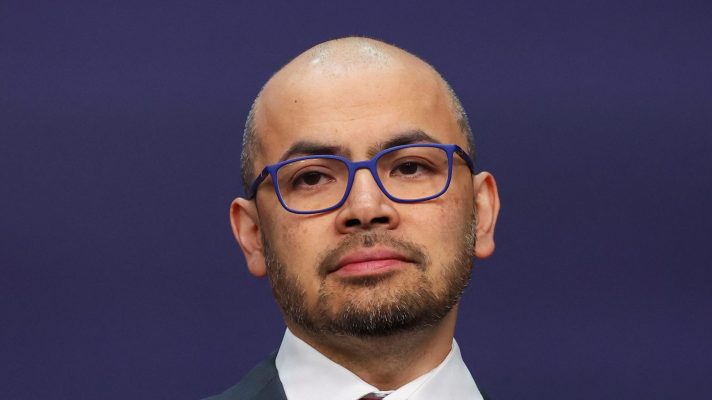
Demis Hassabis, CEO and one of three founders of Google’s artificial intelligence (AI) subsidiary DeepMind, has been awarded a knighthood in the U.K. for “services to artificial intelligence.”
Ian Hogarth, chair of the U.K. government’s recently launched AI Safety Institute and previously founder of music startup Songkick, was awarded Commander of the Order of the British Empire (CBE) for services to AI; as was Matt Clifford, AI adviser to the U.K. Government and co-founder of super-early stage investor Entrepreneur First.
Prodigy
Hassabis was born in London in 1976, emerging as a prodigy in a number of disciplines, and reaching master status at chess by the time he was a teenager. He subsequently became lead programmer at fabled U.K. video game developer Bullfrog Productions; graduated from the University of Cambridge with first-class honors in Computer Science; and worked in various AI and computer science roles before gaining a PhD in cognitive neuroscience from University College London (UCL).
Alongside Shane Legg and Mustafa Suleyman, who Microsoft hired from AI startup Inflection AI last week, Hassabis founded DeepMind out of London in 2010.
Hassabis was awarded a CBE in 2017 for “services to science and technology” in the wake of some high-profile achievements at DeepMind — this included developing an AI system that beat the world champion of strategy board game Go. However, the company also courted controversy after signing data-sharing deals with the U.K.’s National Health Service (NHS). Fast forward seven years, and it’s telling that his knighthood was awarded specifically for services to “artificial intelligence,” a field that has catapulted into the mainstream consciousness over the past 18 months due to technologies such as OpenAI’s ChatGPT.
The U.K. has been eager to position itself at the forefront of the AI revolution, driven by initiatives such as the AI Safety Summit which it hosted in England last November. And it sits among the top-tier AI countries globally in terms of R&D investment, behind the U.S. and China, with DeepMind serving as one of the U.K.’s greatest AI exports. After snapping up DeepMind in 2014 for north of $500 million, it has emerged as one of Google’s most critical assets, as the major technology companies battle it out for AI dominance — alongside Google Research, DeepMind is responsible for Gemini, Google’s rival to OpenAI’s GPT-branded family of large language models.
So it does make sense that the U.K. would seek to honor one of its most high-profile AI figureheads. Other notable figures from the technology world to receive knighthoods include Apple’s Jonathan “Jony” Ive back in 2011 for “services to design and enterprise.”
In centuries gone by, knighthoods were typically reserved for military achievements, but today they are usually awarded for services and achievements of national significance — that could be contributions to science, sport, entertainment, and technology. A knighthood is usually proposed by the Prime Minister, government department, members of Parliament, or even members of the public, with the head of state — i.e. the King or Queen at that given time — technically making the final decision on who receives them.
The recipient doesn’t get any meaningful privileges off the back of their knighthood, but they get the cultural and social kudos associated with being allowed to prefix their name with “Sir.”







