

A YouTube creator is bridging nostalgia and cutting-edge technology, fusing generative AI with a nostalgic love of Nintendo’s iconic Pokémon gaming franchise to show how you can build your very own AI-powered Pokédex.
In the Pokémon universe, a Pokédex is a digital encyclopedia in the world that records data on species of the colorful monsters, including their traits, abilities, and habitats. Trainers use a Pokédex to track their Pokémon encounters and learn about each species.
The AI Pokédex project is the brainchild of Abraham Haskin, a former Google engineer and host of the Abe’s Project YouTube channel. They wanted to create a real-world version of the handheld device, and tapped modern technologies to fill that void.
“It was mostly just realizing that I could do it,” Haskin told Decrypt in an interview. “I think there’s always cool projects in film and cartoons and sci-fi [that make you think]: Wouldn’t it be awesome if this existed?”
Originally launched in 1996 by Tokyo-based Game Freak as Pocket Monsters, the global phenomenon Pokémon came to the United States in 1998 with the release of Pokémon Red and Blue on the original Game Boy to coincide with the launch of the tie-in anime series on U.S. television.
Nintendo and The Pokémon Company have released various Pokédex replicas in the past, but they’ve been simple toys—not working tools that recreate actual functionality from the familiar video game and anime gadget.
Realizing that technology has advanced enough to make a real-life Pokédex possible, Haskin turned to OpenAI’s flagship AI model, ChatGPT, to bring the device to life. The DIY Pokédex, attached to a local Wi-Fi network, uses calls to ChatGPT and the Pokémon API—a fan-made database—to identify the individual creatures when the DIY Pokédex is pointed at an image or toy.
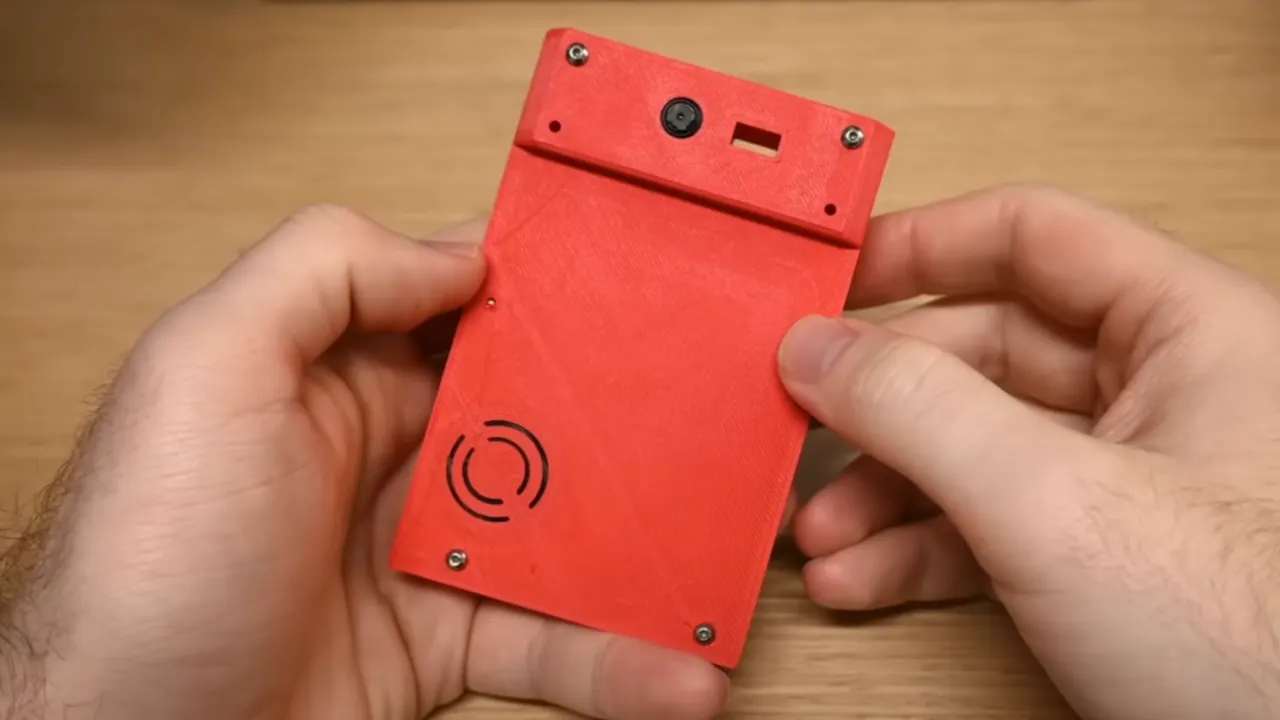
In the demo, Haskin showed that the DIY Pokédex is able to identify a full-color Pokémon on a screen, but has a harder time with toys and miniatures.
Haskin said that while using GPT-4 technology can be expensive if making hundreds of calls to the system, the Pokémon project only costs pennies when it comes to the AI implementation.
“If you were going to make a web app or something that did the same thing to upload a photo to recognize Pokémon, that would get probably pretty expensive, pretty quick,” Haskin said, adding that the voice cloning aspect of the project used the free tier of the Play HT audio generative AI platform.
Another generative AI creation that leverages the pop culture power of Pokémon includes a Georgia Institute of Technology project called POKE ‘LLMON, which uses AI to understand and master Pokémon game battles with human-like skill.
AI hallucinations have been an ongoing issue in the AI industry since the public launch of ChatGPT early last year. Haskin said that while the project did require dealing with ChatGPT’s quirks, the AI did not come back with overly concerning responses or non-Pokémon-related answers.
“It’s flaky, for sure. In fact, I thought about adding in a feature, like a check, to ask ChatGPT the same question twice,” Haskin said. “Because some percentage of the time, it’s just wrong and it doesn’t think it sees anything—like there’s nothing in that image.”
However, when prompted again, Haskin said ChatGPT would respond with the correct answer. It’s just part and parcel of dealing with emerging technology like generative AI and large language model tools like ChatGPT, Claude AI, and Gemini.
A large language model (LLM) refers to AI that generates human-like responses based on user inputs, enabling it to answer questions, compose texts, and generate images.
“There is a gooeyness to these LLMs; they don’t have that rigidity you’re used to when working with computer systems,” Haskin said. “So there is a bit of give and take where you have to deal with that fuzziness a bit,” they said. “But it wouldn’t get worse, because each prompt to ChatGPT is an independent event. The model is not updating or learning from me, so it wouldn’t impact it anyway.”
Returning to their love of nostalgia, Haskins said the Pokédex project may not be the last iconic ’90s technology project for the channel.
“I really love doing things that seem on the edge of what’s possible, and if there’s another thing that is feasible, I would definitely think about doing it,” Haskin said. “I would love to do some revivals of things people made in the 90s. I would love to remake and see what cooler stuff we could do with modern technology.”
Edited by Andrew Hayward







