
Business and Finance
Saab Challenges Lockheed Martin in Fighter Jet Bid as Canada Reviews Air Force Procurement
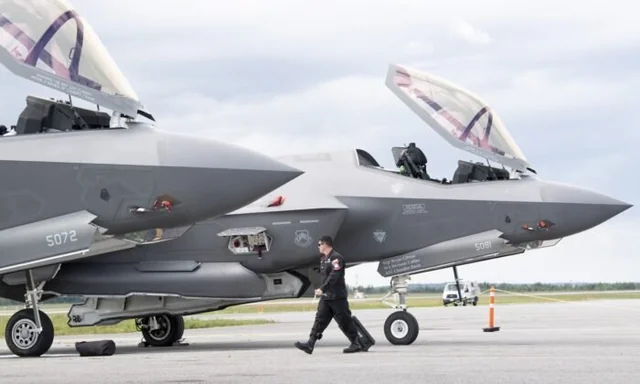
Saab’s Gripen Fighter Jet Back in the Spotlight
Swedish defense manufacturer Saab is making headlines once again as it continues to challenge Lockheed Martin in international fighter jet procurement programs, including the recent Canadian Air Force tender. According to CBC News, while Canada has already chosen the F-35 as its next-generation fighter aircraft, Saab remains an active player in global defense discussions — particularly with its Gripen fighter jet, known for its affordability, flexibility, and advanced technology.
The renewed attention on Saab highlights the shifting dynamics in global defense procurement as nations balance cost, capability, and political alliances in their air force modernization efforts.
Saab’s Global Strategy and Gripen’s Competitive Edge
The Saab Gripen — a multirole fighter jet developed in Sweden — has been marketed as a high-performance yet cost-effective alternative to the American-made F-35. The aircraft has found success in countries such as Brazil, Hungary, the Czech Republic, and Thailand, where defense budgets are more constrained but operational demands remain high.
Defense analysts note that Saab’s strategy focuses on flexibility and local industrial cooperation. The Gripen fighter jet offers modular design and interoperability features that allow easy upgrades — a key selling point for nations looking to maintain long-term air defense capabilities without being locked into expensive supply chains.
“The Gripen remains one of the most efficient and technologically adaptable aircraft in its class,” one defense expert told CBC News. “Its open-architecture systems make it appealing to countries seeking independence from U.S. defense export controls.”
Canada’s Air Force Procurement and the Saab Factor
While Saab did not secure Canada’s contract — which went to Lockheed Martin’s F-35 — the Swedish company’s involvement in the bidding process left a lasting impression. Many Canadian defense experts argued that the Saab Gripen offered a strong balance between capability and cost, potentially saving billions in long-term maintenance.
However, geopolitical considerations played a significant role. As a member of NORAD and NATO, Canada faced strong strategic incentives to align its air fleet with U.S. and allied forces that already operate the F-35 platform.
“Canada’s decision wasn’t just about technology — it was about interoperability and alliance cohesion,” a senior defense official told CBC.
Gripen Fighter Jet: A Symbol of Swedish Innovation
The Gripen fighter jet has long symbolized Sweden’s commitment to independent defense innovation. Saab’s continued success in international markets demonstrates the country’s ability to compete with major defense giants like Lockheed Martin, Boeing, and Dassault Aviation.
The Gripen E, Saab’s latest variant, features cutting-edge avionics, electronic warfare systems, and a new engine developed in collaboration with General Electric. Despite being smaller than many of its rivals, the Gripen offers impressive combat range and advanced data fusion capabilities that rival the F-35’s systems.
Saab’s Broader Defense Partnerships
Beyond fighter jets, Saab continues to expand its footprint in radar systems, submarines, and command-and-control solutions. The company has deepened partnerships across Europe and Asia, leveraging its strong reputation for reliability and engineering excellence.
Analysts predict that as global tensions rise and defense budgets expand, Saab’s emphasis on cost efficiency and interoperability will help it secure new contracts — especially from smaller NATO members and non-aligned countries seeking versatile defense platforms.
Lockheed Martin vs. Saab: A Tale of Scale
While Lockheed Martin dominates the global fighter jet market, Saab’s competitive approach lies in adaptability and collaboration. The Gripen fighter jet program allows customer nations to participate directly in manufacturing and maintenance, providing local economic benefits and technical know-how — a contrast to the more centralized model of U.S. defense giants.
This localized approach has strengthened Saab’s diplomatic and industrial relationships, especially in emerging markets seeking technology transfer as part of defense deals.
The Future of Saab’s Gripen Program
Despite losing some high-profile tenders, Saab remains optimistic about future prospects. The company continues to pitch the Gripen to several European and Asian air forces, emphasizing the fighter’s cost advantage, upgrade potential, and combat readiness.
The rise of multipolar defense competition — with players like China’s AVIC and South Korea’s KAI entering the global arena — could further boost Saab’s relevance as nations seek diversified procurement options beyond U.S. and Russian aircraft.
Final Thoughts
The Saab Gripen continues to stand as a testament to smart engineering and strategic adaptability. While it may not have won Canada’s Air Force contract, Saab’s commitment to innovation and independence ensures it remains a formidable player in global defense.
As the race for next-generation fighter jets intensifies, Saab’s balanced blend of affordability, performance, and sovereignty offers a compelling alternative for countries charting their own defense paths.
Stay Updated on Defense & Tech Innovation
For more insights into global defense, aerospace, and startup innovation, visit StartupNews.fyi.