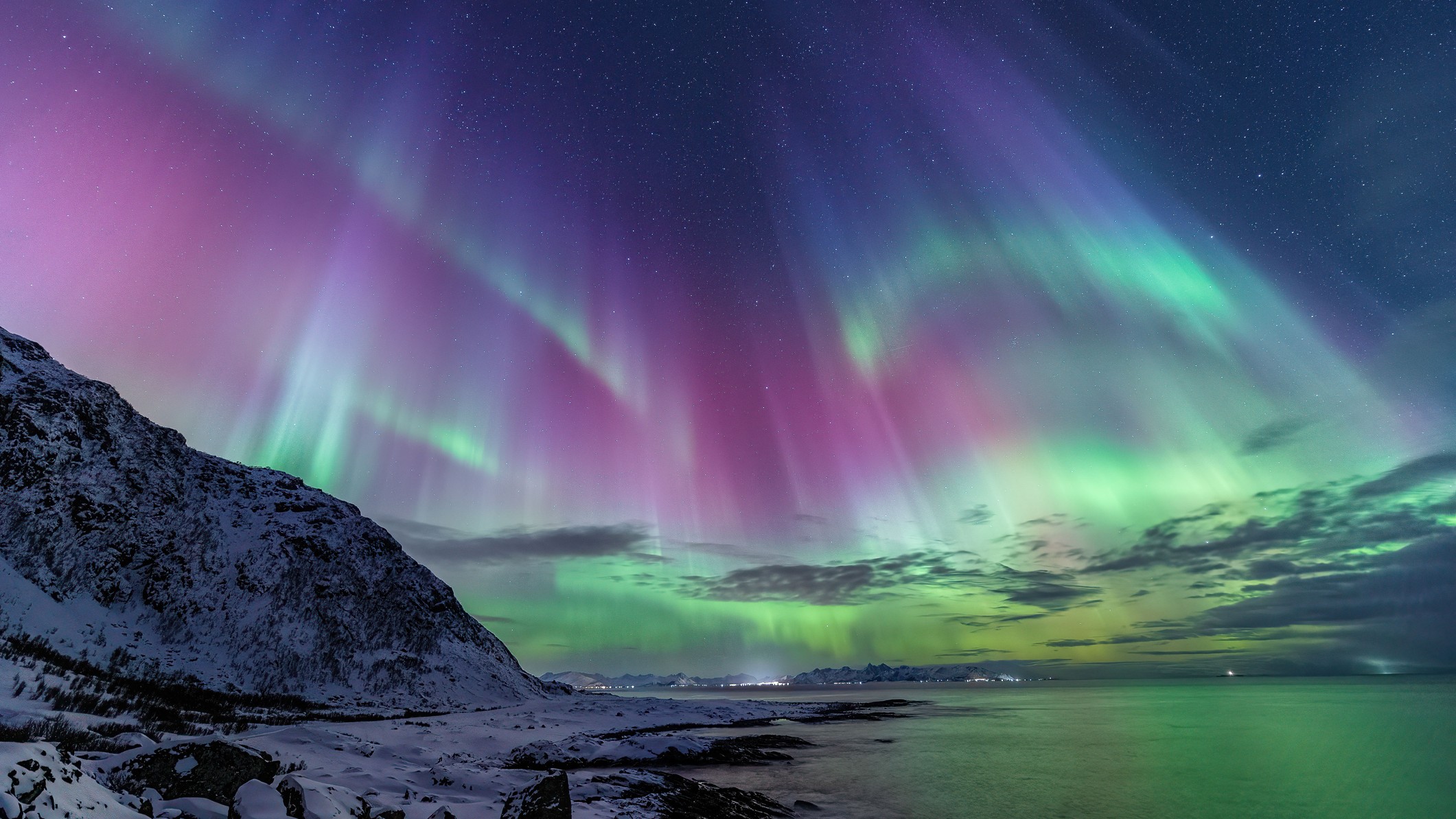
Northern Lights Expected in Rare Southern Display
A spectacular northern lights display is set to illuminate the skies across 21 U.S. states tonight, November 11, and into the early hours of November 12, following a powerful G4 geomagnetic storm, according to the National Oceanic and Atmospheric Administration (NOAA). The agency’s Space Weather Prediction Center predicts that the aurora borealis may be visible far beyond its usual northern reach — stretching as far south as Illinois, Indiana, and even parts of Georgia.
The event is the result of charged solar particles colliding with Earth’s magnetic field, creating vivid shades of green, pink, and purple that could light up skies across the country.
Where and When to See the Northern Lights Tonight
NOAA’s latest aurora forecast map indicates that residents across the Midwest, Great Lakes, and parts of the Northeast will have the best chance to see the northern lights tonight between 6 p.m. and 6 a.m. Central Time.
The G4 geomagnetic storm — among the strongest classifications of space weather events — has expanded the viewing zone well beyond Alaska and Canada, where auroras are typically seen.
Here’s the full list of states expected to witness the colorful night spectacle:
- Alaska
- Idaho
- Illinois
- Indiana
- Iowa
- Maine
- Massachusetts
- Michigan
- Minnesota
- Montana
- Nebraska
- New Hampshire
- New York
- North Dakota
- Ohio
- Pennsylvania
- South Dakota
- Vermont
- Washington
- Wisconsin
- Wyoming
Northern Lights Tonight: Rare Sightings in Major U.S. Cities
For skywatchers in major metropolitan areas, the phenomenon could be particularly exciting. Weather experts say that, depending on visibility and light pollution, people may catch a glimpse of the northern lights tonight in Chicago, Cleveland, and even parts of Atlanta and Houston — something that happens only a few times each decade.
In Houston, the forecast indicates faint but possible auroral activity in northern suburbs, while in Atlanta, experts suggest heading north to higher elevations for the best chance to witness the display.
“Geomagnetic storms of this magnitude can push the aurora much farther south than usual,” said a NOAA spokesperson. “Even if the glow isn’t intense, the sight will be one for the history books.”
What Causes the G4 Geomagnetic Storm
The current G4 geomagnetic storm is linked to a Coronal Mass Ejection (CME) — a massive burst of plasma and magnetic field released from the Sun’s atmosphere earlier this week. When these solar particles reach Earth, they interact with the planet’s magnetosphere, producing the northern lights.
Experts note that G4 storms are relatively rare and can occasionally disrupt satellite communications, GPS systems, and power grids. However, NOAA has assured the public that no severe disruptions are expected.
The northern lights tonight are expected to be strongest in the northern regions, but weather conditions will play a major role in visibility. Clear, dark skies away from city lights will offer the best experience.
How to Watch the Northern Lights Tonight
If you’re hoping to catch a glimpse of this rare event, experts recommend:
- Find a dark location away from city lights.
- Look north around midnight local time for the best visibility.
- Avoid using phone flashlights or bright screens to allow your eyes to adjust to darkness.
- Bring a camera with manual exposure settings — long exposures will capture colors invisible to the naked eye.
A Reminder of Space Weather’s Power
This northern lights event comes as scientists continue to monitor heightened solar activity ahead of the solar maximum expected in 2026 — a period of increased sunspot and solar flare frequency.
Astronomers note that events like this highlight how interconnected our planet is with space weather phenomena.
Final Thoughts
With a G4 geomagnetic storm lighting up the skies, millions of Americans from Wyoming to Maine and beyond will have a rare opportunity to witness the northern lights tonight — a cosmic spectacle blending beauty and science in one unforgettable show.For more updates on space, science, and startup innovations, visit StartupNews.fyi.