SpaceX Expands Starlink Constellation with Another Successful Mission
SpaceX continues to lead the global space industry, marking another successful launch on November 10, 2025, as a Falcon 9 rocket carried 29 Starlink satellites into low-Earth orbit from Cape Canaveral Space Force Station, Florida. The mission, streamed live via Spaceflight Now, highlights SpaceX’s relentless momentum in expanding its Starlink internet constellation, now one of the largest and most advanced satellite networks in history.
This latest launch adds to the company’s ambitious goal of providing high-speed, low-latency internet access to even the most remote corners of the world. With this deployment, SpaceX has now launched over 6,000 operational Starlink satellites, reinforcing its dominance in satellite-based communications.
Falcon 9’s Precision Performance
The launch took place from Space Launch Complex 40 (SLC-40) at Cape Canaveral, with liftoff occurring just after 8:30 p.m. Eastern Time following a short weather delay. The Falcon 9 rocket, known for its reliability and reusability, performed flawlessly throughout the mission.
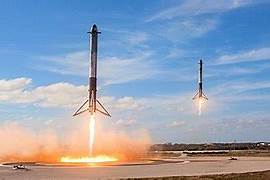
After separation, the first-stage booster — completing its 14th flight — executed a perfect landing on the droneship “A Shortfall of Gravitas” stationed in the Atlantic Ocean. The booster’s recovery marks another milestone for SpaceX’s cost-efficient, reusable rocket system that continues to revolutionize modern spaceflight.
SpaceX engineers confirmed that all 29 Starlink satellites were successfully deployed into their designated orbit approximately 65 minutes after liftoff, further expanding the network’s coverage footprint across North America, Europe, and Asia.
Strengthening Global Internet Coverage
Starlink’s newest batch of satellites forms part of SpaceX’s Gen2 constellation, which provides enhanced bandwidth, improved latency, and increased coverage for users worldwide. The company’s upgraded satellites feature laser interlinks, allowing for faster data transfer between spacecraft without relying on ground stations.
This technology enables global internet connectivity, including over oceans and polar regions — areas that have traditionally lacked reliable broadband access. According to SpaceX, Starlink now serves more than 3.2 million subscribers across 80+ countries, with particularly strong adoption in rural communities, maritime operations, and aviation networks.
SpaceX’s Expanding Launch Cadence
The successful Starlink mission marks SpaceX’s 126th orbital launch of 2025, bringing the company closer to its record-breaking goal of 150 launches this year. No other private or national space agency has ever maintained such an aggressive and consistent launch cadence.
SpaceX’s near-weekly Starlink launches not only expand internet infrastructure but also provide vital test data for the Starship program, which aims to enable interplanetary missions and commercial space travel in the coming years.
“Every successful Falcon 9 mission brings us a step closer to sustainable, reusable space transportation and a more connected planet,” SpaceX mission control commented after the launch.
The Broader Impact of Starlink
Starlink’s expansion carries significant implications for global communications and geopolitics. In regions where terrestrial internet infrastructure remains limited or unreliable, Starlink offers a transformative solution.
Recent deployments have seen Starlink terminals used in disaster recovery, military communications, and remote education initiatives, proving the service’s versatility and strategic value. The network’s growing presence has also sparked competition from global telecom and aerospace firms, accelerating innovation in satellite broadband technologies.
While SpaceX continues to face regulatory and orbital traffic challenges, its pace of progress remains unmatched. The company’s ability to reuse boosters and rapidly deploy satellites keeps operational costs low, giving it a decisive edge over emerging rivals.
Future Missions and Goals
SpaceX’s next major launch is scheduled later this week, with another batch of Starlink satellites set to lift off from Vandenberg Space Force Base, California. The company is also preparing for its upcoming Starship test flight, which aims to demonstrate full reuse of both stages — a milestone that could redefine the economics of space travel.
Meanwhile, the company is expanding its Starlink Direct-to-Cell program, designed to connect smartphones directly to the satellite network, eliminating the need for terrestrial towers. This initiative, developed in collaboration with major telecom carriers, is expected to debut commercially in 2026.
Elon Musk’s Vision: Connecting Earth and Beyond
For Elon Musk, SpaceX’s founder and CEO, Starlink remains a cornerstone of his long-term vision to fund interplanetary exploration. The revenue generated from the satellite network is expected to support the Starship program, which aims to transport humans to Mars within the next decade.
“Starlink is not just about internet access — it’s about creating the communications backbone for humanity’s future in space,” Musk said during a recent briefing.
As SpaceX continues to refine its technology and expand its reach, the company stands as a symbol of innovation and ambition in the modern space era.
Conclusion
The latest SpaceX Starlink launch once again showcases the company’s engineering excellence, operational consistency, and visionary goals. With 29 more satellites now in orbit and reusability milestones continuing to pile up, SpaceX is paving the way toward a fully connected, multi-planetary future.
As Starlink’s constellation grows denser and its technology more advanced, the impact on global communications, commerce, and exploration will only deepen — reaffirming SpaceX’s position at the forefront of the space industry.
For more updates on global innovation, space technology, and startup breakthroughs, visit StartupNews.fyi — your trusted source for the latest in business and science news.