

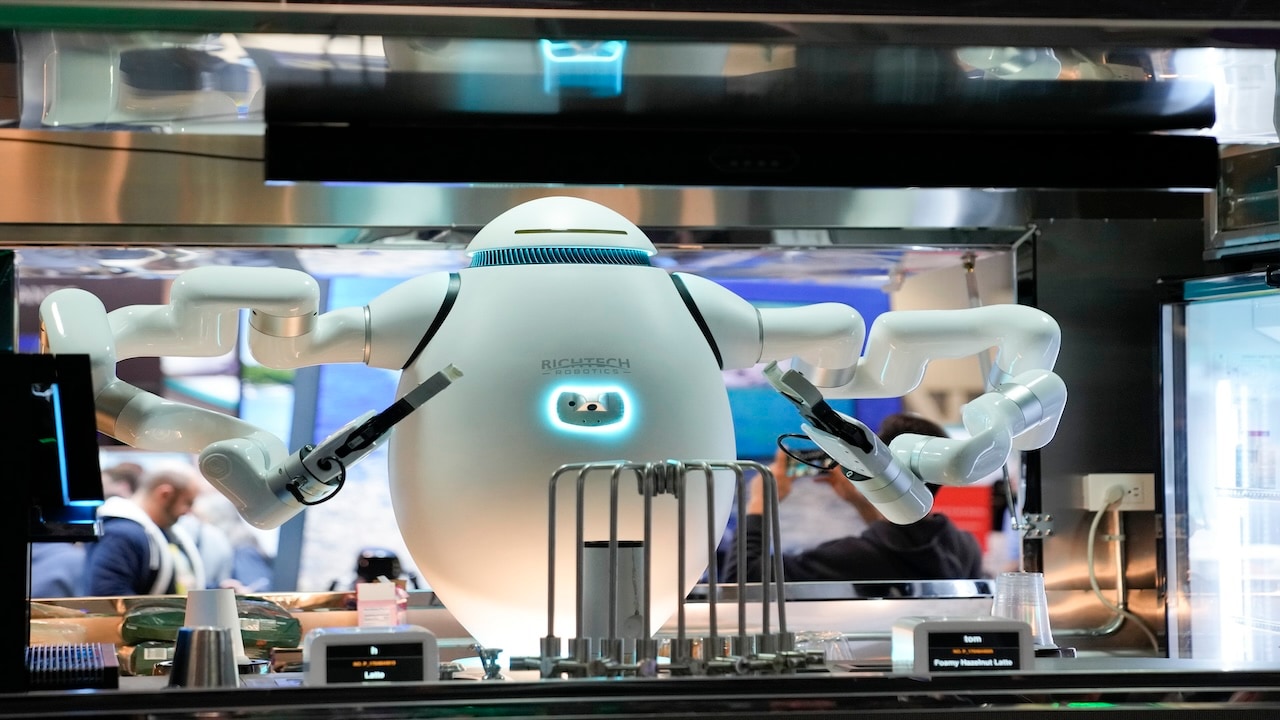
A recent survey from Pew Research Center reveals that a significant portion of the global population believes robots and AI replacing human labour is contributing to economic disparity.
Among the countries surveyed, Brazil and Colombia topped the list, with nearly half of adults acknowledging automation as a major factor in inequality. India, with 73% of people from lower social classes recognising the risks, ranks among the most affected nations.
As we head into 2025, automation, particularly in the form of AI, remains one of the largest risks, according to Eurasia Group’s annual risk report. Despite AI’s transformative potential, the firm warns that regulations are lagging behind technological advancements.
Marco Argenti, Chief Information Officer of Goldman Sachs, highlights the coming wave of AI’s integration into business, predicting that hybrid teams combining humans and AI will become common by 2025. While this could improve efficiency, it could also lead to job displacements, particularly for lower-skill workers, which is a growing concern in India.
Amazon Inc., one of the largest global employers, is a prime example of the rapid pace at which automation is changing industries. In 2024, the company deployed over 750,000 robots, working alongside its 1.5 million employees. While Amazon continues to increase its robot workforce—up from 520,000 robots in 2022 and 200,000 in 2019—it has also seen a reduction in its human workforce, with over 100,000 employees cut since 2021.
For countries like India, the rapid expansion of AI presents both an opportunity and a challenge. AI’s influence on sectors like manufacturing, agriculture, and customer service is undeniable, but without the proper regulatory framework, it could worsen income inequality.
India’s vast workforce, many of whom are in lower-income jobs, is particularly vulnerable to automation’s impact. As AI technologies, including advanced robotics, begin to reshape industries, India must navigate the dual challenge of fostering innovation while protecting its most vulnerable workers.
Experts predict a shift toward “expert AI” by 2025, with specialised AI systems for sectors such as healthcare, finance, and education. This could offer substantial benefits, but also raise concerns about access and equity. In India, where education and skills gaps already exist, ensuring that workers are equipped to thrive in an AI-powered economy will be critical.
Also Read: AI and HR in 2025: These are five game-changing trends for the future of work







