
10th Indian Delegation to Dubai, Gitex & Expand North Star – World’s Largest Startup Investor Connect
CleanTech

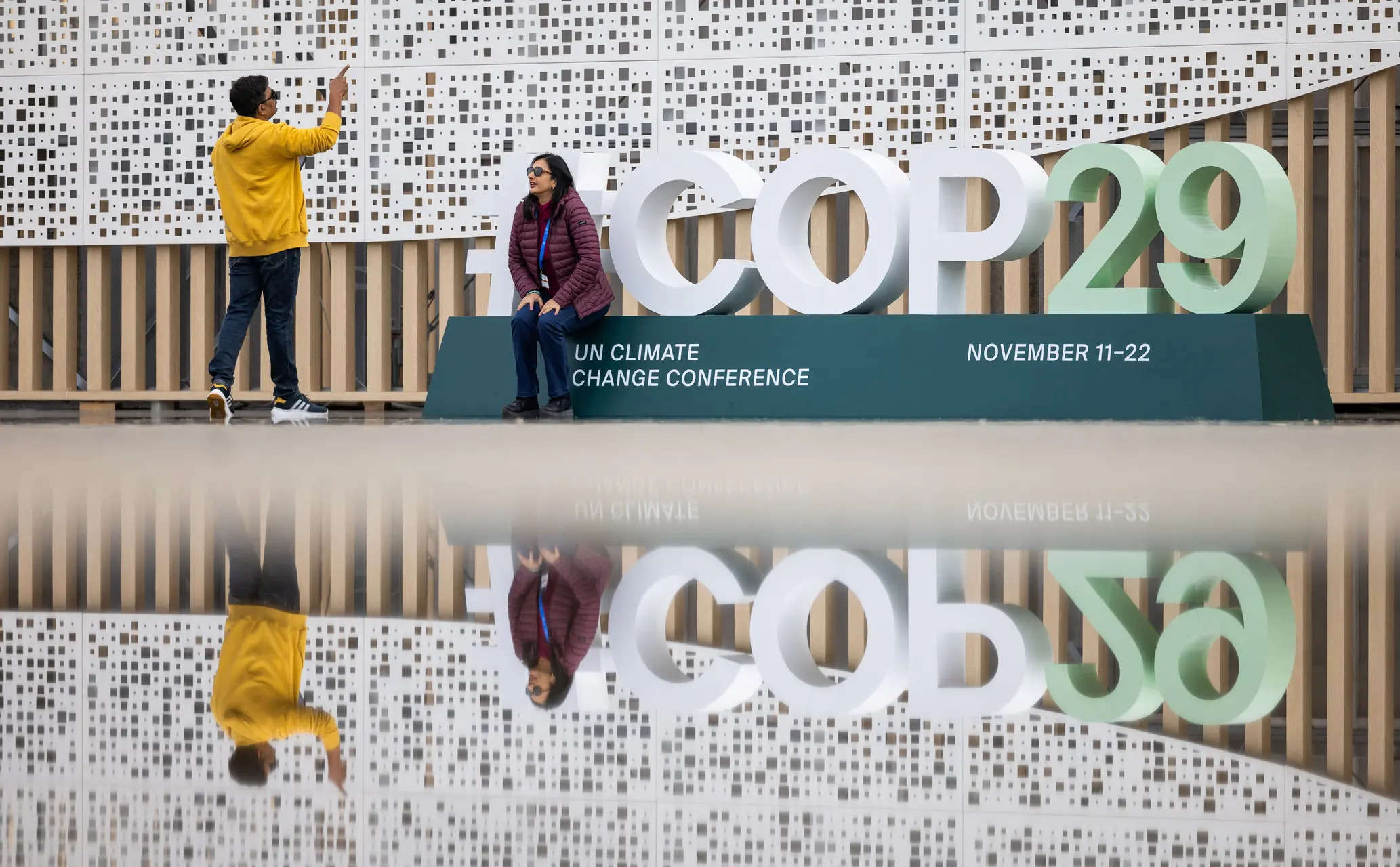
EU softens stand on major sticking point in Baku climate talks


BAKU: The European Union on Monday urged “wealthier high-emitting” developing nations to voluntarily contribute to climate finance, signalling a shift from its earlier position that had stalled progress in the UN climate talks. Securing a new climate finance package to help developing countries reduce emissions and adapt to climate change is the top priority of this year’s UN climate talks. Developing nations need at least $1.3 trillion annually to tackle worsening climate impacts.The EU and some developed countries argue that such a large sum can only be achieved if “wealthier high-emitting” developing nations, like China and Gulf states, also contribute. However, this proposal has been a major sticking point, as many developing countries view it as an attempt to shift responsibility away from those who historically benefited from industrialisation.

European Commissioner for Climate Action, Wopke Hoekstra, suggested a compromise on Monday, proposing voluntary contributions from these nations without changing the traditional classification of developed and developing countries.

“We will be welcoming to those countries who do make such a step because, in the end, this is not about dogmatism. This is about solving one of the largest problems humanity is facing,” Hoekstra said.

He said that affluence brings responsibility. “Others also have a responsibility to contribute based on their emissions and economic growth,” he added.


Meanwhile, Azerbaijan, hosting COP29, expressed concern over the slow pace of negotiations.COP29 President Mukhtar Babayev said countries still have significant disagreements on the structure, funding amount, and contributors to the new climate finance goal. He urged ministers arriving this week to act decisively. “Politicians must engage immediately and constructively,” he said.Babayev also called for leadership from G20 heads of government, meeting this week in Rio de Janeiro, Brazil, to drive progress. “Their commitment is essential. I urge them to send a positive signal and provide a clear mandate for action,” he said.

UN Climate Chief Simon Stiell echoed these concerns, urging countries to resolve less contentious issues early to focus on the toughest topics later.

“Ministers need to roll up their sleeves and dive into the difficult discussions,” he said.

While highlighting some progress in the conference’s first week, Stiell described the situation as “a mixed picture” heading into the crucial second week.




Source link

by The Economic Times

As sustainability evolves from a boardroom priority to a consumer expectation, packaging has quietly become the next frontier of India’s green transition. With single-use plastic bans tightening and eco-consciousness deepening among urban consumers, demand for bio-based, compostable materials is rising across the food, fast-moving consumer goods (FMCG), and hospitality sectors. According to industry estimates, India’s sustainable packaging market is expected to grow at over 18% annually, driven by new regulations under the Plastic Waste Management… Source link

by The Economic Times

BELÉM, BRAZIL: As the United States torpedoes climate action and Europe struggles to realise its green ambitions, a surprising shift is taking hold in many large, fast-growing economies where a majority of the world’s people live. Countries like Brazil, India, and Vietnam are rapidly expanding solar and wind power. Poorer countries like Ethiopia and Nepal are leapfrogging over gasoline-burning cars to battery-powered ones. Nigeria, a petrostate, plans to build its first solar-panel manufacturing plant. Morocco is creating a battery hub to supply… Source link

by The Economic Times

Promoting sustainable farming is central to our agricultural strategy, says Yashika Singh, Chief Corporate Affairs Officer and Head of Sustainability, PepsiCo India & South Asia. In an interaction with ET Digital, Singh highlights the range of sustainable initiatives undertaken by PepsiCo India to support farmers through technology, training, and improved market access. She notes that, globally, PepsiCo aims to implement regenerative farming practices that improve soil health, optimise water use, and strengthen livelihoods across 10 million acres by… Source link



